

Excelsior Correspondent
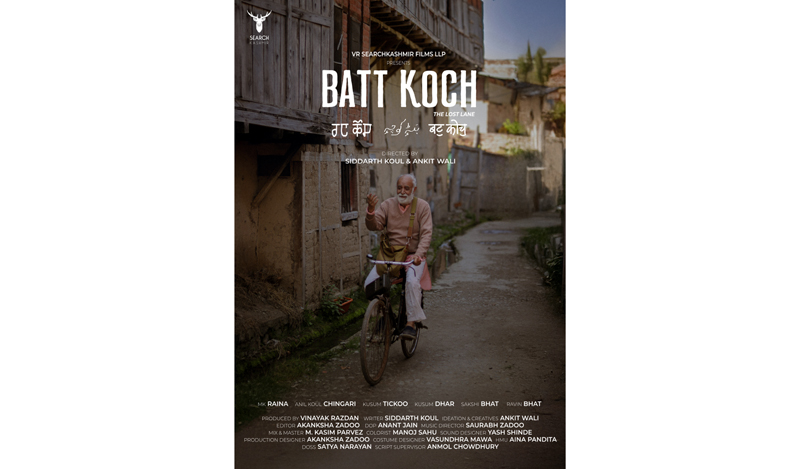
JAMMU, Jan 11: Batt Koch -a Kashmiri language feature film rooted in memory, silence, and home, is all set for a theatrical release very soon as it received a U (Universal) certificate from the Central Board of Film Certification (CBFC), bringing an end to months of waiting and uncertainty.
Written and directed by Siddarth Koul, and co-directed by Ankit Wali, the film is produced by Vinayak Razdan. Batt Koch — a phrase that literally refers to a Kashmiri Pandit lane — becomes, in the film, a metaphor for lanes of memory, where stories linger in kitchens, courtyards, and quiet pauses between conversations.
Some films do not merely seek an audience — they seek acknowledgement. Batt Koch, The certificate, issued on December 30, 2025, carries significance beyond formal approval. For the first time, Kashmiri has been officially recognised as a principal language on the CBFC’s e-CinePramaan portal — a space where, until now, Kashmiri cinema had no rightful name to call its own.
At the heart of the film is a deeply moving performance by M.K. Raina, the legendary theatre artist and of Tare Zameen Par fame whose presence lends gravity and warmth to the story. He is joined by renowned ensemble from Jammu & Kashmir’s cultural landscape, including Kusum Tikoo, Anil Chingari Koul, and Kusum Dhar, whose performances feel lived-in rather than performed.
The film’s soul is shaped by artists who understand Kashmir not as a backdrop, but as a feeling.
The film’s production design and editing are handled by Akanksha Zadoo, who carefully constructs spaces that feel inhabited — homes that breathe, walls that remember, and silences that speak louder than words.
The music, composed by Saurabh Zadoo, flows gently through the narrative, echoing nostalgia without overpowering it. His score does not demand attention; it stays, like a remembered tune from childhood.
The visual language of Batt Koch is captured by cinematographer Anant Jain, whose frames hold restraint and tenderness.
The story follows a Kashmiri Pandit family caring for an ageing grandfather battling memory loss. As his recollections fade and resurface, the film quietly reflects on displacement, inheritance, and the fragile act of remembering — themes deeply familiar to many families in J&K.
The delay in certification, the filmmakers clarified, had nothing to do with content. Instead, it stemmed from the absence of Kashmiri as a selectable language in the certification system itself. The matter was eventually resolved after Union Minister, Ashwini Vaishnaw intervened, ensuring that Kashmiri, a Constitutionally recognised language, receives its due place.
 Follow our WhatsApp channel
