

Excelsior Correspondent
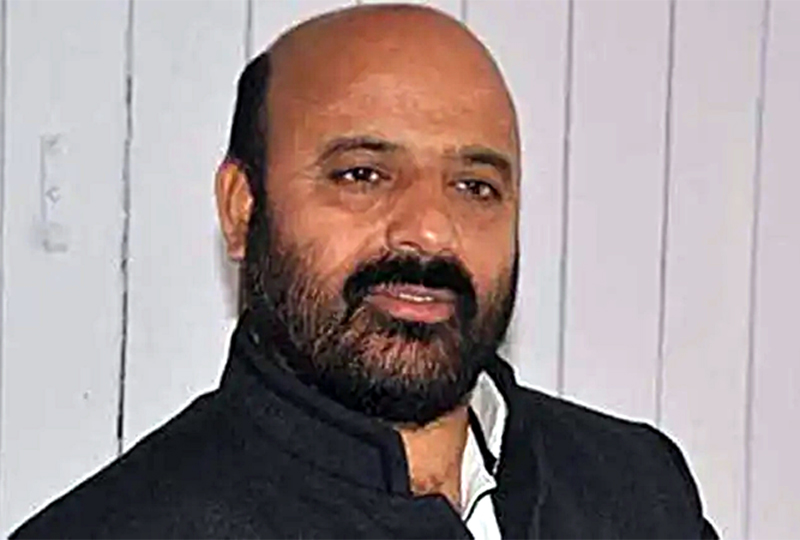
JAMMU, May 3: Bali Bhagat, senior BJP leader and former Social Welfare Minister, has raised serious concern over the educational qualification criteria in the State Marriage Assistance Scheme, terming it as unjust and discriminatory towards the most underprivileged sections of society.
In a press statement issued here today, the former minister stated that the primary objective of the State Marriage Assistance Scheme is to extend financial support to poor families for the marriage of their daughters. “However, making a minimum education qualification of 8th class pass or equivalent as an eligibility requirement defeats the core purpose of the scheme,” he said.
Bali Bhagat strongly objected to this criterion, stating that it inadvertently excludes many deserving beneficiaries from economically weaker sections, particularly in remote and marginalized areas where access to education is still a challenge. “There are still numerous poor families in Jammu & Kashmir who cannot afford to educate their daughters due to financial constraints and lack of proper infrastructure. Denying them assistance on the basis of educational qualification is grossly unfair,” he remarked.
The senior BJP leader pointed out that the scheme should be rooted in inclusivity and compassion rather than conditional eligibility that filters out the most needy. “The assistance should be based on economic need, not academic qualifications,” he emphasized.
Pertinent to mention here that the State Marriage Assistance Scheme was introduced on 2nd December, 2015 when Bali Bhagat was the Minister of Social Welfare Department and there was no education qualification criteria at that time.
Appealing to the CM Omar Abdullah led Government, Bali Bhagat urged for immediate removal of the minimum educational qualification from the eligibility criteria of the scheme. He said that such rigid conditions only deepen inequality and deprive genuinely needy families of crucial support.
“Education should be encouraged, but it should not become a barrier to access welfare. The Government must review and amend the policy to ensure that no poor girl is left out due to educational limitations,” he said.
 Follow our WhatsApp channel
