

Dr. Kanika Gupta
gkanika68@yahoo.in
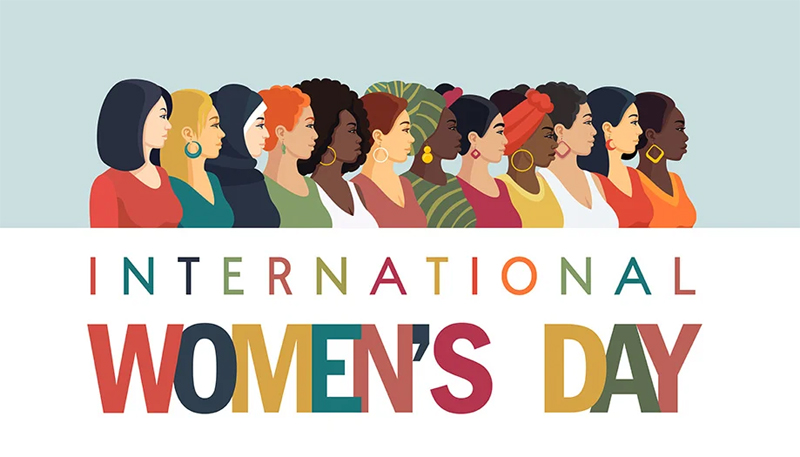
Every year on March 8, the world observes International Women’s Day, a day dedicated to celebrating women’s achievements and advocating gender equality. The theme for 2026 – “Give to Gain” reminds us of a simple yet powerful truth: when society invests in women and girls, the entire nation gains in strength, prosperity, and humanity.
Yet the question remains-are we truly living by this principle?
“We worship Shiv and Shakti in temples, but fear their balance in real life.”
In Indian culture, the divine union of Shiv and Shakti symbolizes harmony, equality, and cosmic balance. While we revere this spiritual philosophy, the same balance is often missing in everyday life.
We teach our children to fold hands before Shiv, but do we teach them to respect Shakti at home?
This contradiction lies at the heart of gender inequality. Girls are celebrated symbolically but restricted socially. The true essence of this year’s theme, “Give to Gain,” lies in transforming this mindset giving girls equal opportunities, respect, education, and safety so that society can gain progress and harmony.
Women and Girls in Jammu & Kashmir: Between Progress and Challenges
The situation in Jammu & Kashmir reflects both encouraging progress and persistent challenges. According to education data, over 10.5 lakh girls are currently enrolled in schools across the Union Territory. In recent years, girls have also consistently outperformed boys in Class 10 and Class 12 board examinations, highlighting their determination and academic excellence. However, the path forward is not without obstacles. The transition rate from secondary to higher secondary education is around 57 percent, meaning many girls discontinue education due to poverty, safety concerns, distance from institutions, and social pressures. In rural and border districts, these barriers become even more pronounced.
Disabled Girls: The Invisible Struggle
Within this narrative, one group remains particularly invisible “Girls with Disabilities”.
For them, gender discrimination intersects with disability stigma, creating multiple layers of exclusion. In many parts of Jammu & Kashmir, disabled girls face barriers such as inaccessible schools, lack of assistive devices, limited rehabilitation services, and social isolation. Many are denied education not because they lack ability, but because systems lack accessibility.
True empowerment under the theme “Give to Gain” means ensuring that disabled girls are not left behind. Inclusive education, accessible infrastructure, trained teachers, and community awareness are essential steps toward making empowerment meaningful.
Shakti Was Never Meant to Be Controlled
Our cultural traditions remind us that feminine power is sacred.
Shakti was never meant to be controlled; she was meant to be awakened.
When girls are allowed to grow, learn, and lead, their potential transforms families, communities, and nations. Jammu & Kashmir itself offers inspiring examples of girls who have awakened this Shakti within them.
Hansja Sharma created history by becoming India’s first female pilot of the Rudra attack helicopter in the Indian Army. Sheetal Devi a remarkable para-archer born without arms who has won international medals and represented India globally. Her determination shows how disability does not limit potential. Tajamul Islam, the young kickboxing champion from Bandipora, brought global recognition to the region and now trains other girls in self-defense. Nasira Akhter, an innovator from Kulgam, has received national recognition for her environmental work. Sandhya Dhar, a disability rights advocate from Jammu, continues to champion inclusive education and empowerment for children with disabilities. These women prove that when society gives opportunity, it ultimately gains strength, innovation, and resilience. These all highlighted as a powerful example of women’s empowerment and “Nari Shakti”, showing how education and support from family can help daughters reach the highest levels of service to the nation.
The Real Meaning of “Give to Gain”
Empowering women and girls are not an act of charity; it is an investment in a stronger future. It requires:
Equal access to education, including for disabled girls, safe and inclusive public spaces, healthcare and nutrition support, respect and equality within families and communities.
A society that empowers its girls does not lose tradition it gains a stronger future.
A Moment for Reflection
As we mark International Women’s Day 2026, let us move beyond celebration and symbolism. Let us question the contradictions that exist between worship and reality. Because the true spirit of our culture is not just in temples it is in how we treat the women and girls around us. If we truly believe in the power of Shiv and Shakti, then the responsibility before us is clear: awaken the Shakti in every girl, including those with disabilities.
Only then will the promise of “Give to Gain” become a lived reality
(The author is Human Development Professional and Disability Inclusion Advocate; and currently working as an Assistant Professor, SPPND GDC, Samba)
 Follow our WhatsApp channel
