

Thakur Satish Manhas
Atal Bihari Vajpayee: Man who guided Modern India’s developmental destiny
Atal Bihari Vajpayee: An unending political legacy
Atal Bihari Vajpayee: A magnetic voice
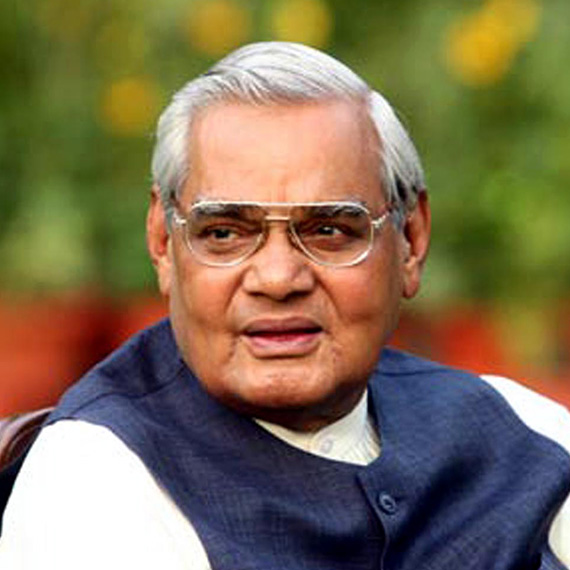
Atal Bihari Vajpayee: The Poet-Statesman Who Shaped Modern India: Atal Bihari Vajpayee, one of India’s most beloved leaders, left an indelible mark on the nation’s political landscape through his vision, diplomacy, and poetic eloquence. As a three-time Prime Minister of India, Vajpayee is remembered not only for his significant policy contributions but also for his ability to bridge divides among antagonists with grace and humility. His journey from a young political activist to a statesman of global repute showcases his unwavering commitment to India’s progress. Born on December 25, 1924 in Gwalior, he was deeply influenced by nationalist movements and joined the Rashtriya Swayamsevak Sangh (RSS) in 1939, where he began shaping his ideological convictions. Vajpayee’s political career began in earnest during the 1940’s when he became an active member of the Bharatiya Jana Sangh (BJS), the political arm of the RSS. In 1951, he worked closely with Syama Prasad Mukherjee, the founder of the Jana Sangh, and quickly rose through the ranks due to his oratory skills and political acumen. His parliamentary career began in 1957 when he was elected to the Lok Sabha from Balrampur, Uttar Pradesh. His speeches in Parliament soon earned him recognition as a leader with exceptional command over language’ vision and ideas for which he was praised by the then Prime Minister Sh. Jawahar Lal Nehru. Almost all political opponents acknowledged his eloquence and depth of understanding on critical issues. The Emergency imposed by Indira Gandhi in 1975 was a turning point in Indian politics. Vajpayee was among the leaders who opposed the authoritarian regime and was jailed during this period. Following the Emergency, the Jana Sangh merged with other parties to form the Janata Party, which came to power in 1977. Vajpayee served as the Minister of External Affairs in the Morarji Desai government, where he impressed the world with his diplomacy, particularly through his speech in Hindi at the United Nations General Assembly in 1977—a first for any Indian leader. After the collapse of the Janata Party in 1980, Vajpayee, along with Lal Krishna Advani and others, founded the Bharatiya Janata Party (BJP), today the world’s largest successful political party having more than 10 crore workers as it’s active karyakartas. All this has led to today BJP emerging as a political force with a vision of nationalism rooted in cultural heritage and development. Vajpayee has an unforgettable role laying this foundation. One reason BJP became the only party in India’s post independence political history to cross 300 mark in Parliament. Vajpayee became the party’s first president, steering it toward national prominence with his vision, will, positive political and social manipulation and oratory skills which a permanent mark on the thought of Indian population. Vajpayee’s first term as Prime Minister lasted only 13 days due to a lack of parliamentary majority. Despite this brief stint, his dignified resignation speech in Parliament won widespread admiration, further enhancing his reputation as a principled leader. He preferred losing vote of confidence in Parliament but never made any Immoral and corrupt political bargain. Such was his political stature. During this term as PM in 1998, he demonstrated his bold vision by conducting nuclear tests at Pokhran in May 1998, asserting India’s status as a nuclear power. While the tests attracted international sanctions, Vajpayee’s diplomatic efforts helped India overcome them and establish strategic partnerships with global powers. This period also saw Vajpayee’s commitment to peace with Pakistan. He initiated the historic Lahore bus Service in 1999 and signed the Lahore Declaration, aimed at improving bilateral relations. However, the goodwill was short-lived as the Kargil War erupted later that year. Vajpayee’s leadership during the conflict was decisive, earning him respect for balancing military action with diplomacy. Vajpayee’s third term as Prime Minister is widely regarded as a period of transformative governance. He launched several ambitious programs, including the Golden Quadrilateral highway project, which revolutionized India’s infrastructure and today we all are seeing world class roads, highways, rural roads and much more. This blueprint was envisioned by Sh. Atal Bihari Vajpayee. His government also introduced reforms in telecommunications, banking, and insurance, paving the way for economic liberalization and growth. Vajpayee’s emphasis on rural development led to initiatives like the Pradhan Mantri Gram Sadak Yojana (PMGSY), aimed at connecting villages with modern infrastructure. Under his leadership, India’s GDP growth reached unprecedented levels, and the IT and software industries flourished. In foreign policy, Vajpayee continued to strengthen India’s global standing. His government’s strategic partnerships with the United States, Russia, and China underscored his pragmatic approach. Vajpayee also sought to improve relations with Pakistan through the Agra Summit in 2001, although the talks ultimately failed. But, despite his achievements, Vajpayee faced challenges such as the Gujarat riots in 2002, which tested his leadership and the secular fabric of India. While his critics questioned his handling of the situation, his supporters emphasized his calls for adherence to “Raj Dharma” (the duty of governance). Vajpayee stepped down as Prime Minister after the BJP’s defeat in the 2004 general elections. He retired from active politics in 2005 but remained a revered figure across party lines. He was awarded Bharat Ratana, the highest civilian award by the Narender Modi government in 2015 by declaring his birthday as the, “GOOD GOVERNANCE DAY ” a tribute to his commitment to transparency and accountability in governance. Apart from his political achievements, Vajpayee was an accomplished poet whose works reflect his deep philosophical insights and patriotism. Collections like Meri Ekyaavan Kavitayen showcase his literary prowess. His ability to connect with people through words—whether in Parliament or poetry—made him a unique leader and that is why Atal Bihari Vajpayee is a statesman par excellence. Today’s sab ka sath, sab ka Vikas, sab ka vishwas and sab ka paryas seems a reflection of Vajpayee’s more than 25 party’s successful coalition from 1999 to 2004.
Conclusion; Atal Bihari Vajpayee passed away on August 16, 2018, leaving behind a legacy of statesmanship, vision, and humanity. But he remains an enduring symbol of political moderation, consensus-building, and national pride. In an era often marked by divisive politics, Vajpayee’s life serves as a reminder of the power of dialogue, integrity, and a commitment to the greater good. His contributions to India’s political and economic landscape, combined with his poetic soul and humane approach, ensure that his legacy will continue to inspire generations to come. The nation in particular and world in general miss and remember equally this greatest ever statesman on his birthday. Naman and Shardhanjali
The author is serving as Assistant Director in Forest Department Government of Jammu and Kashmir
 Follow our WhatsApp channel
