

Brigadier Pankaj Chib, SM, VSM, Retd
Pakistan military establishment has a lot of fascination for dates specially when it is to do with nuclear issues. Two decades back, when they started numbering their Strategic Missiles Groups (SMG; brigade equivalent nuclear military field formations) they displayed this fascination. They grouped these SMGs as 14,8,47 SMGs, 23,3,40 SMGs and 28,5,98 SMGs to indicate Youm-e-Azadi (14-8-47 ie Pakistan Independence Day), Youm-e-Pakistan (23-3-40 ie Pakistan Day, the day Pakistan was declared on banks of River Ravi by Jinnah) and Youm-e-Taqbir (28-5-98 ie Day of Greatness; the day Pak carried out nuclear tests at Chagai) respectively. One wonders as to how come Asim Munir couldnot get a slot of 09 Aug (the day US used nuclear weapons on Nagasaki) to make that statement in Florida. Probably he did not want to annoy US .
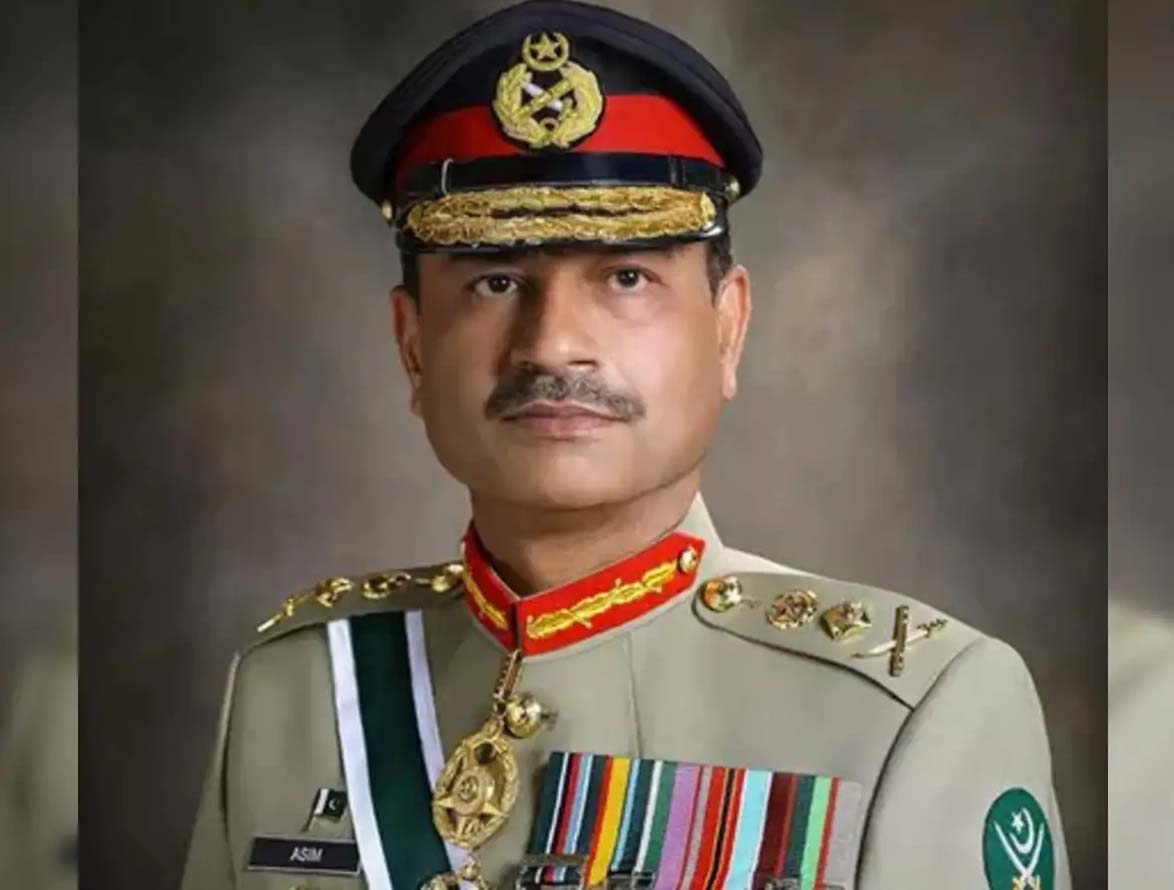
Florida event was reportedly a “black-tie” event with no mobile phones, recording devices allowed. So, what has been reported in media is what the audience heard Asim Munir saying. Reportedly, there were few statements which he made with respect to India. The one giving analogy of Mercedeez (India) versus Dump Truck (Pakistan) was like making a mockery of his own country. The other statements which caught the attention of many strategic analysts are :-
(a) Kashmir is not an internal matter of India, it is Pakistan’s jugular vein.
(b) Indus River is not the Indians’ family property. Humein missilon ki kami nahin hai, al Hamdu’lillah. (By God’s grace, we have no dearth of missiles)
(c) We are a nuclear nation. If we think we are going down, we will take half the world down with us.
Some of the analysts feel that since there are no recordings of the speech, it is not known if all these statements (specially where he threatens at Pakistan’s nuclear option) were made in same context. Keeping in view Asim Munir’s statements made earlier this year, it is no doubt that these statements were made against India. But what is different this time is that so far we had heard such communications being conveyed to us through media/third party immediately after an incident which can lead to war, but this time with no war clouds in horizon, Asim Munir chose nuclear sabre rattling.
It appears that Asim Munir’s remarks in Florida reflected a deep sense of frustration. Unable to take direct action while India keeps the Indus Waters Treaty (IWT) in abeyance, he possibly recognises that Pakistan’s options are limited. His statement that Pakistan would “take half the world down” if its existence were threatened can also be read as a broader expression of resentment toward the international community, which, in his view, has failed to act or hold India accountable over the treaty’s suspension. In essence, the rhetoric seemed aimed not only at India but also at a world order he perceives as indifferent to Pakistan’s grievances.
Asim Munir’s frustration is, in many ways, understandable. However, to fully grasp the context, one must examine the training being imparted by NDU to Pakistan military leaders on matters of national and military security – particularly in relation to safeguarding vital national interests, the principles of deterrence, and the thresholds for its application. We need to also consider Pakistan’s nuclear policy, and its efficacy during Op SINDOOR. Analysing these elements together can provide deeper insight into the mindset behind his rhetoric and help explain why he resorted to such unguarded and provocative statements and what possibly Pakistan is expecting hereafter.
It is very apparent that being a lower riparian state, Pakistan considers water security is a vital national interest. Since, Pakistan defence system is based on canal system, any increase in India’s water regulating capability further exacerbates its vulnerability to safeguard territorial integrity. As per NDU reading material on National Security, vital national interests are directly connected to the survival, safety, and vitality of a nation and if these are unfulfilled, it will have immediate consequence for core national interests. It further states:-
“To preserve vital interests, there can be no compromise or hesitation about going to war. If a certain interest is declared as vital, it must be backed up by military power; otherwise the opponent may consider it as a bluff. The vital interest transcends to the shade of survival interest where the very existence of the nation is in peril. This condition arises, when there is an imminent credible threat of massive destruction to the homeland if another state’s demands are not met. Therefore, the nation must be ready to fight a war in case the vital interests are threatened”
NDU, in its Nuclear Strategy package, which is part of Military Security Leg, teaches deterrence. In its hundred-odd pages Nuclear Strategy Book, NDU explains that Deterrence has three main components ie Capability, Credibility and Communication. It is the subsets under Credibility and Communication which one needs to read to understand Florida Statements. These are:-
(a) Credibility
(i) The decision to use nuclear weapons can be termed as the most irrational decision of any leadership or govt for its enormous destructive potential, yet, for deterrence to be effective, the deterer must make his adversary believe that its leadership is irrational enough that it would take the decision to use nuclear weapons when required and hence the rational of irrationality.
(ii) If deterring side is believed to act rationally in the event of crisis and would opt to avoid devastation of nuclear war, the deterrence is not likely to work and will fail.
(b) Communication. This is the ability to intimate to the adversary in an unambiguous manner that should leave no doubt in his mind regarding the possible consequences of a misadventure. This is easier said than done. Public statements, private messages and demonstrative actions may all have to be used to convey accurately and successfully a particular message to a rival state.
8. In yet another précis issued to senior military leaders on Military Methodology, NDU teaches about formulation of ‘hypotheses’ which is nothing but Pakistan’s visualization of adversary’s likely courses of actions or scenarios. These scenarios are considered for making any strategy and same is applicable while making nuclear strategy. Pakistan’s Strategic Planning Division (SPD; a secretariat to National Command Authority) visualizes different scenarios and formulates nuclear strategy. In one such scenarios wherein a direct threat is visualized against Pakistan’s nuclear weapons, Pakistan’s Nuclear Strategy, directs National Command Authority (NCA) to exercise nuclear option. The scenario also states that India, through superior strategy will try and ensure that Pakistan is restrained to take any action after it has posed threat to its strategic assets. It is a known fact that Kirana (Sargodha), apart from housing Central Ammunition Depot (CAD) also houses minimum one storage sites of 47 SMG. Pakistan’s failure to respond to India’s actions on 10 May 25 further added to Asim Munir’s frustration.
Over the years, numerous Pakistani authors have written on the importance of the Indus Waters Treaty and the catastrophic consequences its suspension could have for Pakistan. Yet, few truly considered that such a scenario might materialise, and the treaty was largely taken for granted – aided by India’s long-standing magnanimity in upholding it. Today, however, Pakistan is confronted with a stark reality: its survival could be at stake. Faced with this unprecedented situation and a sense of helplessness in altering the course, the frustration voiced by Asim Munir becomes more understandable.
There is no doubt that water security is vital interest for Pakistan and to safeguard same, it may explore diplomatic and/or military means. At the same time it is also very clear that over the years, Pakistan military leadership has learnt an art of “cultivated irrationality” something which NDU says “rational of irrationality”. Had NDU come out with any précis / reading material on negotiations, it would have established linkages between this cultivated irrationality and negotiations as follows :-
(a) Increase Leverage. The other side may make concessions to avoid triggering “irrational” actions.
(b) Distort Risk Perception . Opponent is forced to recalculate, thinking “If they’re really willing to do something extreme, we better back off.”
(c) Lower Predictability. Predictable actors are easier to counter; appearing irrational forces the other side to act cautiously.
India has played its cards well – a move that many may wish had come much earlier. For the first time, Pakistan is truly feeling the pinch and it will keep on displaying its cultivated irrationality through nuclear sabre rattling. While New Delhi need not be overly concerned by rhetoric, what is to be seen is if India can sustain international pressure which Pakistan will endeavor to muster claiming that keeping IWT suspended will lead to humanitarian catastrophe. If India is able to maintain pressure, Pakistan, through back channel, may try to negotiate. But it will try to keep these negotiations restricted to IWT and not to J&K Issue. So while the key for India will be to remain steady and resist any pressure from Western powers, its acid test will be to push Pakistan for permanent solution to J&K issue at its terms and conditions.
A long term solution in dealing with Pakistan lies in what Pakistan Army’s General Officer Commanding (GOC) Strategic Forces South (SFS) said during the summing-up of nuclear leg of Exercise Azm-e-Nau in Jul/Aug 2009. During this wargame, while GOC Strategic Forces North (SFN) was heading Blueland (representing Pakistan) Syndicate, GOC SFS was heading Foxland Syndicate (representing India, as Pakistan calls India as Foxland). GOC SFS, during the summing-up said, if India makes de-nucleraisation of Pakistan as its political aim, the J&K issue will automatically get resolved. On 15 May 25, while addressing Indian Army troops in Srinagar, Mr Rajnath Singh, Raksha Mantri said “Are nuclear weapons safe in the hands of such an irresponsible and rogue nation? I believe that Pakistan’s nuclear weapons should be taken under the supervision of IAEA”. What Mr Rajnath Singh said on 15 May 25 amounts to de-nuclearisation of Pakistan and that is the permanent solution which was proposed by GOC SFS in 2009.
(The author delivered the lecture on above subject in Department of Regional and Strategic Studies, Jammu University on 13 Aug 25. He also wrote on similar subject, titled “How India Called Pakistan’s Nuclear Bluff, published in Daily Excelsior on 22 Jun 25 and another one titled “Claiming Victory After Setback : Pak Way of Notion of Victory”, published in Daily Excelsior on 09 July 2025)
 Follow our WhatsApp channel
