

CAIRO, Mar 15: Yemen’s Iran-backed Houthi rebels have so far remained on the sidelines as the Iran war widens across the Middle East, raising questions about why – and when the battle-hardened group might join the fight.
Iran has retaliated against the United States and Israel with missiles and drones, targeting American military bases and other locations in Gulf Arab countries, disrupting trade routes, choking fuel supplies and threatening regional air traffic.
Iran’s new supreme leader, Ayatollah Mojtaba Khamenei, suggested on Thursday in his first written statement since succeeding his father, who was killed in the war’s opening salvo, that Iran may open up new fronts in the conflict – a sign, analysts say, the Houthis may get involved soon.
Until now, the Houthis have been reluctant to fight, fearing assassinations of their leaders, internal divisions in Yemen and uncertainties over weapons supplies, the experts said.
But that may change as Iran seeks to increase pressure on global oil supply routes through potential attacks by the Houthis, who have had previous success targeting oil facilities in the region, the analysts said.
Iran has asserted its influence across the Middle East through its proxy forces in Gaza, Syria, Lebanon, Iraq and Yemen’s Houthis.
Some of its closest allies have already joined the conflict, with Hezbollah resuming strikes on Israel within two days of the attack on Iran – and just 15 months after the last Israel-Hezbollah war ended in a November 2024 ceasefire. Militias linked to the Islamic Resistance in Iraq have claimed drone strikes on U.S. bases in Irbil.
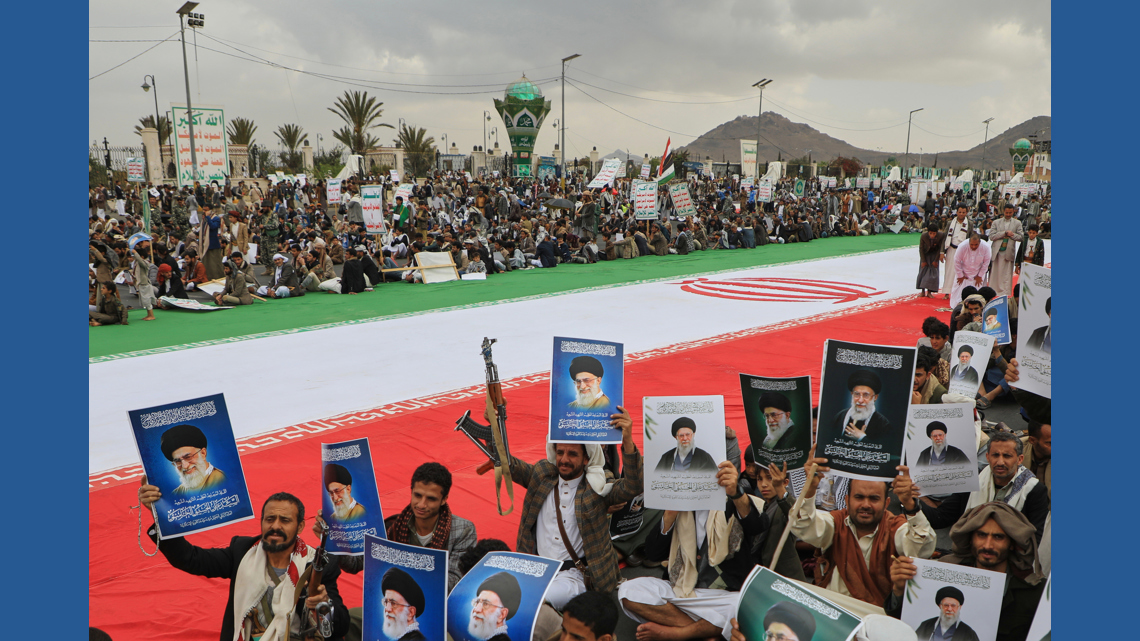
Meanwhile, the Houthis have only held protests and issued declarations condemning the Iran war, in contrast to the waves of missile and drone attacks they launched on Israel and shipping in the Red Sea after the Oct. 7, 2023, Hamas attacks on Israel sparked the war in the Gaza Strip.
Here’s a look at the Houthis’ military capabilities and where they stand in the conflict.
Houthi ties to Iran
——————-
Armed by Iran, the Houthis seized most of Yemen’s north and its capital, Sanaa, in 2014, pushing the country’s internationally recognized government into exile. A Saudi-led coalition backing Yemen’s government entered the conflict the following year, and the Houthis have since fought a long-running but largely stalemated civil war in Yemen.
While the Houthis share some political and religious ties with Iran, they follow a different doctrine of Shiite Islam and are independent of Iran’s supreme leader, unlike the Lebanese militant Hezbollah group and several Iran-backed Iraqi militias.
Still, they are key to Iran’s regional influence and the current war is unlikely to weaken that, according to Ahmed Nagi, a senior Yemen analyst at the International Crisis Group think tank.
“From Tehran’s perspective, the Houthis have proven themselves to be a capable and effective front, able to generate real pressure,” Nagi said.
He said the Houthi leaders’ decision to distance themselves from the conflict is a calculated choice that has been fully coordinated with the Iranians.
Two Houthi members of the group’s media and political offices told The Associated Press that the rebels’ weapons stockpile is running low after its attacks during the Israel-Hamas war. The Iran war has further impeded the flow of weapons, said the officials, speaking on condition of anonymity because they weren’t authorized to talj to the media.
Still, the group has a large stockpile of drones, said another official, who spoke on condition of anonymity to discuss the weapons issue, about which he is well-informed.
Nagi said the Houthis appear to be building up their forces by recruiting more fighters, relying on local weapons production and sending reinforcements to Yemen’s western coastline on the Red Sea, signaling they are preparing for escalation.
“The decision is not about unwillingness to intervene, but about timing,” Nagi said. “Iran’s broader strategy seems to be to avoid throwing all its cards on the table at once, instead using its partners and capabilities gradually as the confrontation evolves.”
The Houthis are likely to step in if the conflict widens, Nagi added, or if they perceive an existential threat to Iran, such as significant deterioration in military capabilities.
Houthis have targeted oil shipping and infrastructure
——————————————————–
Houthi leader Abdulmalik al-Houthi has repeatedly emphasized the group is ready to intervene, claiming their “hands are on the trigger,” though its unclear what that involvement would entail.
?Houthis, of course, are always ready for any war,” said Farea al-Muslimi, a research fellow at the Chatham House think tank in London. “Some weaponry moved in different areas inside Yemen recently … but it’s still not clear whether it’s for a military escalation.”
If the Houthis enter the war, they will most likely resume attacks on shipping in the Red Sea and the Gulf of Aden, while also striking Israel, Nagi said. They could also join Iran’s attacks on Gulf countries, targeting U.S. military assets and interests.
Attacks on vessels during the Israel-Hamas war upended shipping in the Red Sea, through which about $1 trillion worth of goods passed each year before the war. The rebels also fired drones at Israel.
Should the Houthis join the Iran war, their primary targets would likely be oil tankers, the analysts said, since shipping offers the most immediate pressure point and attacking it would signal escalation while impacting energy supply chains.
Attacks on oil installations could also be considered. The Houthis have previously struck oil facilities in Saudi Arabia during their long-running conflict against the Saudi-led coalition.
Meanwhile, US military sites in the region might also become targets, Nagi said.
What’s at risk
————-
Abdel-Bari Taher, a political analyst and former head of the press syndicate in Yemen, said any decision to join the war is impacted by the internal situation in Yemen, including recent deadly clashes in south Yemen, public opposition in Sanaa to joining the war and heightened caution among Houthi leaders after high-profile assassinations.
The two Houthi officials from the group’s media and political offices said the U.S. has sent warnings via Omani mediators against participating in the war. They said Houthi political and security leaders have also been alerted that their cellphones are under surveillance by the US and Israel. Fearing potential Israeli assassinations, Houthi leaders have been instructed not to appear in public, the officials said.
?Despite these constraints and the complex domestic and regional dynamics, Houthi involvement in the conflict remains a possibility,” Taher said.
Al-Muslimi, the Chatham House analyst, said the Houthis don’t have the military capabilities or an internal Yemeni interest that would force them to join the war, and the group seems committed to a ceasefire with the U.S. that was brokered by Oman last year.
“They hope to fight, especially with Israel, but they can’t be the ones to fire the first shot,” al-Muslimi said.
He said the Houthis would likely need a local Yemeni cause to join the fighting – a reason that would strengthen support among their local base.
Notes al-Muslimi: The Houthis “are a local group that Iran uses and supports, but didn’t create.” (AP)
 Follow our WhatsApp channel
