

By Dr. Tariq Iqbal
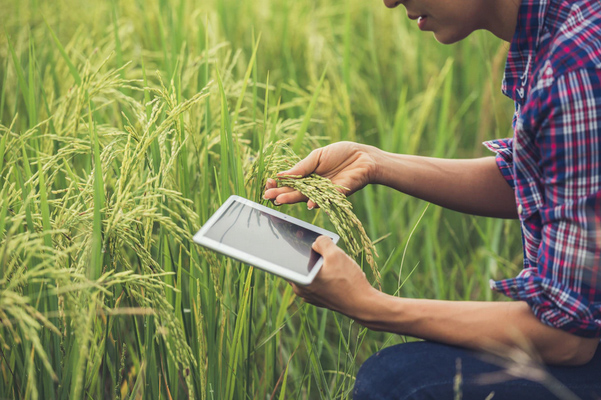
The agricultural sector of Jammu and Kashmir, once predominantly traditional, is undergoing a quiet yet powerful revolution driven by contemporary technology. With its varied agro-climatic zones and rich natural resources, Jammu and Kashmir possess immense potential to emerge as a model for tech-enabled, sustainable agriculture. The integration of modern technology is transforming every facet of the sector — from crop production and soil health management to irrigation, marketing, and value addition — ensuring higher yields, efficient resource utilization, and enhanced livelihoods for farmers.
One of the most significant breakthroughs has been the adoption of precision agriculture. Using tools like drones, GPS-based soil mapping, and satellite imagery, farmers can now monitor crop health, estimate yields, and manage inputs like water and fertilizers more effectively. In districts like Pulwama and Baramulla, pilot projects using drones for pesticide spraying have shown remarkable efficiency, covering vast fields in a fraction of the time and cost involved in manual application.
The spread of climate-smart agriculture has also gained momentum, especially in response to erratic weather patterns and shrinking snowfall in the region. Farmers are being trained to use automated weather stations, mobile-based advisory services, and resilient crop varieties developed by SKUAST (Sher-e-Kashmir University of Agricultural Sciences and Technology). These innovations help them make informed decisions on sowing, harvesting, and input management, reducing crop failure risks.
Protected cultivation is another game-changer. The use of polyhouses and low-cost greenhouses is allowing farmers in areas like Ganderbal and Budgam to grow high-value vegetables, exotic flowers, and seedlings throughout the year. Combined with drip irrigation and fertigation systems, this method conserves water and boosts productivity per square meter.
The role of ICT (Information and Communication Technology) cannot be overstated. Mobile applications like Kisan Suvidha, mKisan, and region-specific platforms developed by Krishi Vigyan Kendras are bridging the knowledge gap. They provide timely updates on market prices, weather, pest outbreaks, and government schemes. Internet kiosks and rural e-centres are bringing agricultural extension services closer to even remote farmers in Doda, Kishtwar, and Kupwara.
Post-harvest technologies and agro-processing units are also picking up pace. Cold storage chains for apple and cherry growers in Shopian and Sopore, vacuum drying for saffron in Pampore, and grading units for walnuts and almonds are reducing post-harvest losses and improving market value. Furthermore, the establishment of FPOs (Farmer Producer Organizations) is enabling collective bargaining, better logistics, and access to national e-markets (eNAM).
Importantly, hydroponics and vertical farming have made their way into urban and peri-urban areas of Srinagar and Jammu, offering innovative solutions for year-round vegetable cultivation with minimal land and water. Startups by local youth are experimenting with organic hydroponic farming, supported by the UT government and central schemes like RKVY and PM-KUSUM.
Moreover, the digitization of land records, integration with GIS (Geographic Information System), and use of AI in crop prediction are contributing towards better planning and resource allocation at the policy level.While these advancements are promising, challenges remain. Limited digital literacy, high initial investment, and inadequate last-mile connectivity can hinder the widespread adoption of these technologies. Therefore, a coordinated effort is needed — involving government agencies, research institutions, NGOs, and the private sector — to build farmer capacity, provide financial support, and ensure inclusive technological penetration. The application of contemporary technology in the agricultural sector of Jammu and Kashmir is not just a modern-day necessity but a critical pathway towards sustainable growth, climate resilience, and rural prosperity. As the region embraces the tools of the future, it is sowing the seeds for a new era of intelligent, inclusive, and innovative agriculture
orwarded Message ——
From: “Tariq Iqbal” <tariqiqbal1991@gmail.com>
To: “Neeraj Rohmetra” <editor@dailyexcelsior.com>; editor65@dailyexcelsior.com
Sent: 6/26/2025 4:32:03 PM
hanks and regards
Dr. Tariq Iqbal
(SMS-Agri.Extension, KVK-Kulgam, SKUAST-K)
 Follow our WhatsApp channel
