

No timeline for finalization despite expiry of consultation
Economic Survey highlights capacity, skips roadmap
Mohinder Verma
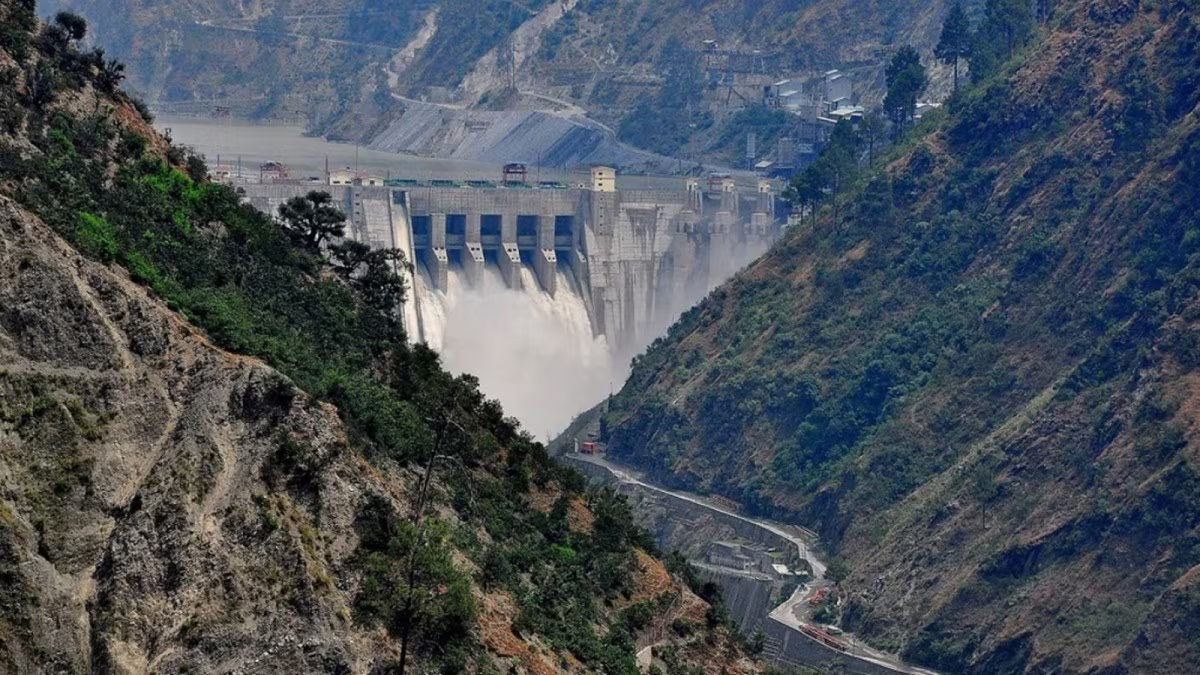
JAMMU, Feb 15: The ambitious promise to unveil a new Hydropower Policy to unlock Jammu and Kashmir’s vast energy potential, prominently announced by Chief Minister Omar Abdullah during the Budget speech for 2025-26, has conspicuously disappeared from the Budget for 2026-27, with the Government failing to indicate any timeline for its finalisation or notification.
While presenting the Budget for the Financial Year 2025-26 in the Legislative Assembly on March 7, 2025, Omar Abdullah, who also holds the Power and Finance portfolios, had declared that his Government would introduce a new Hydropower Policy to accelerate development, attract private investment and drive sustainable energy growth in the Union Territory. The announcement had raised expectations of a structured roadmap to harness J&K’s vast untapped hydropower potential.
However, in the Budget speech for 2026-27 delivered in the Legislative Assembly on February 6, 2026, there was no reference to the finalization, notification or implementation of the proposed policy–a silence that has sparked concern over the pace of decision-making in the power sector.
Interestingly, even the Economic Survey tabled in the Legislative Assembly by none other than the Chief Minister is completely silent on the finalization of the Hydropower Policy, although emphasis has been laid on the necessity of doubling hydropower generation capacity through the development of micro, mini and major projects.
Moreover, in a written reply to BJP MLA Dr Rameshwar Singh in the ongoing Legislative Assembly session, the Chief Minister, in his capacity as Minister Incharge of the Power Development Department, merely stated that the draft Hydropower Policy stands prepared and is in the public domain for stakeholder comments, without committing to any timeframe for its conclusion.
As per the information available with EXCELSIOR, the draft policy was placed in the public domain on December 8, 2025, for a period of one month. Despite the lapse of more than one month since the consultation window closed, the Government has neither shared feedback received from stakeholders nor announced the next course of action.
“The absence of a defined timeline has created uncertainty at a time when J&K is seeking to position itself as a major hydropower hub”, official sources said. The Union Territory possesses an estimated hydropower potential of over 20,000 MW, but only a fraction has been harnessed so far. The proposed policy was expected to address long-pending concerns relating to private participation, project clearances, rehabilitation frameworks and revenue-sharing mechanisms.
“The delay reflects a broader pattern wherein major policy announcements are made in Budget speeches but remain stuck in prolonged consultative or drafting stages without firm deadlines for implementation”, sources remarked, adding, “unless the Government moves beyond drafting and consultation into decisive action, the promise of unlocking J&K’s full hydropower potential risks remaining confined to budget rhetoric rather than translating into tangible development on the ground”.
It is pertinent to mention here that the Government of Jammu and Kashmir had earlier notified policies for the development of hydropower through IPP (Independent Power Producer) mode in 2003 and 2011. Having regard to the learning from the outcomes of past policy measures and to address viability challenges in hydropower development in the face of cheaper renewable energy alternatives, the need was felt to revise the Hydropower Policy to make private sector investment in harnessing the remaining hydro potential more attractive in the UT.
The revised policy is imperative to harness the vast hydropower potential of J&K by encouraging private sector participation in the development of hydroelectric projects (HEPs) up to 100 MW by offering attractive investment opportunities.
Further, there is a need to ensure long-term energy security for J&K at competitive tariffs. In addition, the policy needs to recognize and leverage the broader developmental benefits of hydropower such as enhanced grid stability, improved connectivity and the socio-economic upliftment of communities residing in remote and inaccessible areas of J&K.
As per sources, the policy will categorize hydroelectric projects into two segments: Small Hydroelectric Projects (up to 25 MW) and Large Hydroelectric Projects (above 25 MW and up to 100 MW). The Jammu and Kashmir Energy Development Agency (JAKEDA) will be the nodal agency for projects up to 10 MW, while the Jammu and Kashmir Power Development Corporation Limited (JKPDCL) will oversee projects above 10 MW.
 Follow our WhatsApp channel
