

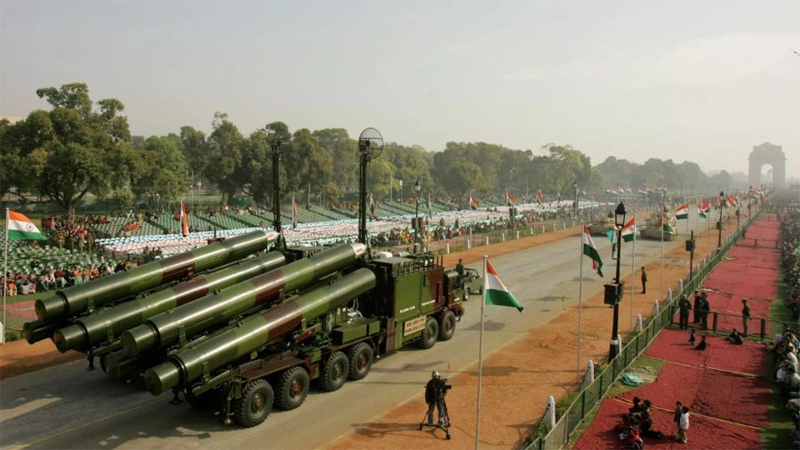
The Army’s achievement of indigenising over 90 per cent of its ammunition and precision munitions marks a decisive shift in India’s approach to national security. History, geopolitics and recent global conflicts all underline one stark truth: wars are rarely short, and nations that cannot sustain ammunition supplies domestically risk strategic paralysis at the most critical moments. India has learnt this lesson the hard way. During past direct and indirect conflicts, dependence on foreign suppliers repeatedly exposed vulnerabilities. One of the most telling examples was the Bofors episode. While the gun itself proved decisive during the Kargil conflict, the blacklisting of the supplier severely constrained ammunition availability, forcing India into an uncomfortable position during an active conflict. The lesson was clear-importing weapons without secure, indigenous ammunition pipelines can undermine even battlefield success. Recent global conflicts have reinforced this reality. Wars have turned into prolonged contests of industrial capacity as much as military skill. Countries with robust domestic ammunition ecosystems have been able to sustain operational momentum, while others have struggled amid disrupted supply chains, political conditionalities and shifting alliances. In today’s geopolitical environment, there are no permanent friends or foes-only interests. A supplier willing today may refuse tomorrow, precisely when the need is greatest.
Against this backdrop, India’s progress is significant. Over the past five years, the indigenisation of nearly 90 per cent of the Army’s close to 200 ammunition variants has fundamentally altered India’s preparedness posture. The remaining 10 per cent are already under development through coordinated efforts involving research agencies, public sector units and private industry. This transition has also conserved precious foreign exchange while instilling confidence in the ability to face any security challenge independently. Equally important is the structural shift in how ammunition is produced. The era of legacy, monopolistic manufacturing is fading. Procurement reforms have encouraged competition, vendor diversification and multiple sourcing options, including a growing role for the private sector.
With an order book worth tens of thousands of crores under “Make in India”, it has energised the domestic industry, modernised manufacturing infrastructure and strengthened supply resilience. This push aligns squarely with the broader vision of Aatmanirbhar Bharat and “Make in India – Make for the World”. Step by step, India is bridging critical capability gaps. In an uncertain world, ammunition self-reliance is no longer an option; it is a necessity, and India is focusing on this.
 Follow our WhatsApp channel
