

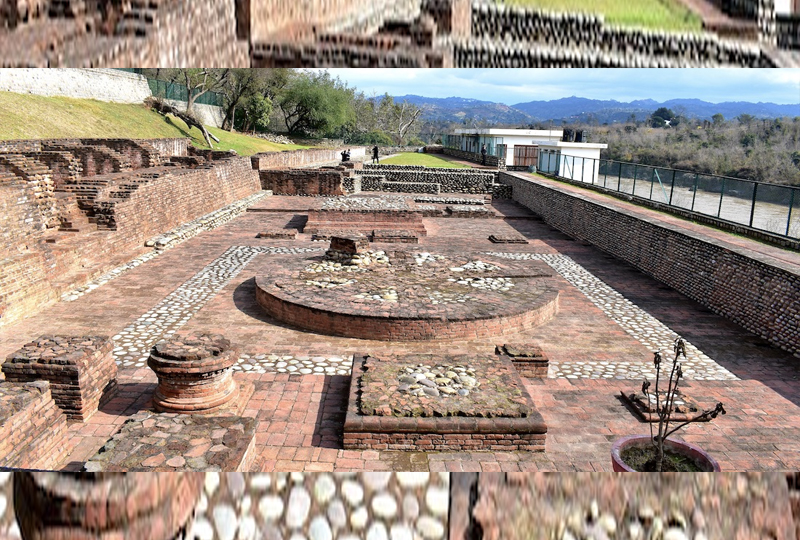
Akhnoor, nestled on the banks of the mighty Chenab, stands as one of the most historically rich yet tragically neglected regions of northern India. From the Harappan site at Manda-the northernmost outpost of the ancient Indus Valley Civilisation-to the Buddhist monastic complex at Ambaran, Akhnoor bears witness to an unbroken human legacy that stretches back over five millennia. Yet despite this profound historical and archaeological wealth, Akhnoor has failed to emerge as a major tourist or heritage destination-a failure that reflects not the absence of history, but the absence of vision and promotion. Since time immemorial, rivers have been the lifelines of civilisations. They provided water, food, and transport – the essential ingredients for the growth of early human settlements. The Chenab, with its majestic flow through the plains of Akhnoor, served precisely this purpose. Civilisations rose here long before the age of machines or modern infrastructure. Even in the early twentieth century, Chenab’s waters were used to float logs from upper forests down to Akhnoor-a living continuation of the region’s age-old dependence on the river. The presence of the Pandava caves, the ancient fort, and the Ambaran Buddhist site together mark Akhnoor as an enduring cradle of civilisation along the Silk Route, a pathway once connecting India to Central Asia and beyond.
The discovery of the Ambaran site, the oldest known Buddhist monastery in Jammu and Kashmir, should have transformed Akhnoor into a global centre for Buddhist tourism-much like Sarnath or Bodh Gaya. But despite the site’s extraordinary historical significance and even His Holiness the Dalai Lama’s 2011 visit, the place remains largely ignored. Poor infrastructure, lack of research facilities, and negligible publicity have kept this heritage in the shadows. Sites cannot speak for themselves; they need advocacy, conservation, and interpretation.
The onus lies squarely on the government and heritage bodies. Akhnoor deserves more than token attention – it requires a dedicated development plan integrating archaeology, tourism, and education. A Buddhist research and cultural centre, better connectivity, and ecotourism along the Chenab could unlock the area’s immense potential. Once a vibrant node on the ancient Silk Route, Akhnoor today waits in silence for the recognition it rightfully deserves – a jewel of history awaiting rediscovery.
 Follow our WhatsApp channel
