

Excelsior Correspondent
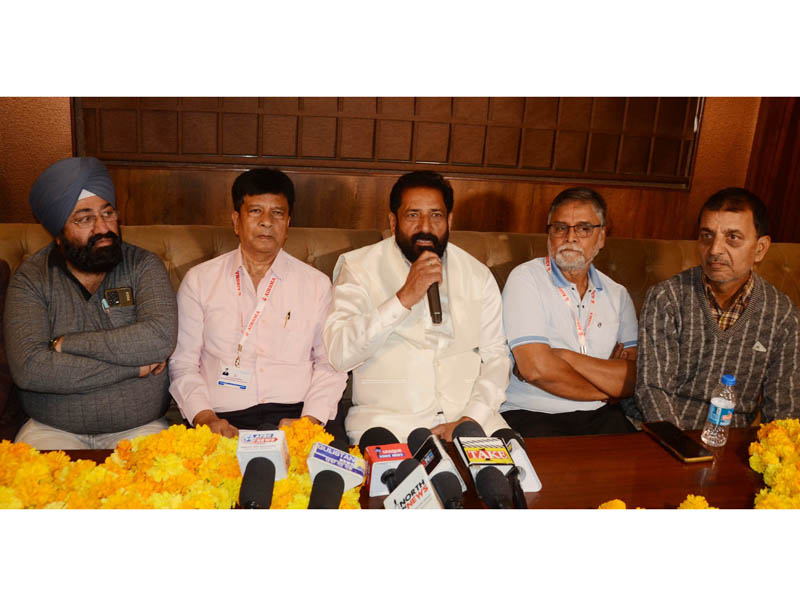
JAMMU, Nov 16: In a significant move aimed at addressing longstanding concerns of retired railway employees, the All India Retired Station Master’s Association (AIRSMA) held a meeting of its central executive council, here today.
The meeting was held under the leadership of K K Sharma, vice president of AIRSMA and was attended by Station Masters from various parts of the country.
The announcement was made by K K Sharma in a press conference.
Sharma said, “During the meeting, the members adopted a series of resolutions focusing on pension reforms, medical facilities, allowances and recognition of the association by the government.”
The resolutions highlight grievances and propose strategic action plans on issues ranging from MACP anomalies to court matters concerning AFSA and running allowances.
The association has pushed for rationalising pension commutation by reducing the restoration period from 15 years to 10.8 years, citing financial relief for retirees.
A major demand includes increasing the Fixed Medical Allowance (FMA) to a minimum of Rs 5,000 per month, along with a further 25% hike whenever Dearness Relief (DR) exceeds 50%.
The association emphasized that the FMA is the only financial support retirees receive for post-retirement medical needs.
Concerns regarding medical treatment were also raised, particularly the need to remove the compulsory referral system and allow pensioners to avail treatment at nearby hospitals.
It further urged Railways to reimburse expenses for robotic surgeries and other advanced procedures conducted by private hospitals.
The members also urged the Railway Board to adopt the Payment of Gratuity Act formula instead of the current pension rules, which they argue are less beneficial.
Another key resolution demanded that the Department of Personnel and Training (DoPT) officially recognize the association and include it in all JCM meetings, especially proceedings related to the upcoming VIII Central Pay Commission (CPC).
The association also sought interim relief before the formal implementation of the VIII CPC, refund of last-month basic-pay collections under RELHS and establishment of a Pay Commission every five years to replace the current 10-year cycle.
These resolutions reflect the growing concerns of railway retirees and their expectations from the government as the VIII CPC process moves forward.
 Follow our WhatsApp channel
