

Excelsior Correspondent
JAMMU, Mar 19: All India Institute of Medical Sciences (AIIMS) Jammu has successfully performed two advanced Hyperthermic Intraperitoneal Chemotherapy (HIPEC) procedures, marking a major leap in complex oncological surgery within the Government healthcare system. Notably, it is currently the only Government centre in the region offering this highly specialized treatment.
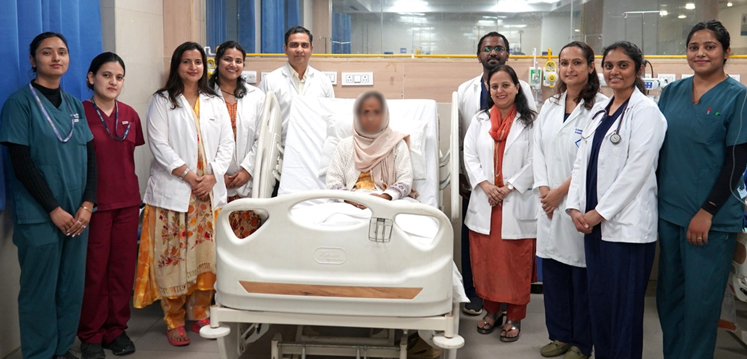
The two patients, hailing from Doda and Muthi in Jammu, have been successfully discharged and have initiated further systemic treatment, reflecting positive early outcomes. The achievement underscores a growing capacity to deliver resource-intensive cancer care in the public sector.
The surgeries were led by Dr Paras Khanna, Assistant Professor, Department of Surgical Oncology, with critical intraoperative support from Dr Raksha Kundal, Associate Professor, Department of Anaesthesia, and her team.
Explaining the procedure, Dr Paras Khanna said HIPEC is an advanced treatment used for select abdominal cancers, including ovarian, colorectal, gastric, appendiceal cancers, and pseudomyxoma peritonei. The procedure combines Cytoreductive Surgery (CRS), where visible tumor deposits are removed, followed by circulation of heated chemotherapy inside the abdomen for 60-90 minutes. The heat enhances drug effectiveness while minimizing systemic side effects.
Unlike conventional chemotherapy, HIPEC delivers high concentrations of drugs directly to the tumor site, improving outcomes in carefully selected patients. Such procedures are among the most complex and require close coordination between surgical oncology, anaesthesia, critical care, and nursing teams.
Dr Sunaina Gupta, Additional Professor and Officiating Head, Department of Anaesthesia, emphasized the role of meticulous preoperative preparation and comprehensive perioperative care in ensuring success.
Prof D N Sharma, Executive Director & CEO, AIIMS Jammu, termed the development a major step forward, noting that while HIPEC is not suitable for all cancers, it can significantly improve survival and quality of life in selected cases. He added that performing such advanced procedures locally reduces the need for patients to travel outside the region, easing financial and emotional burdens.
 Follow our WhatsApp channel
