

Satyarth Pandita
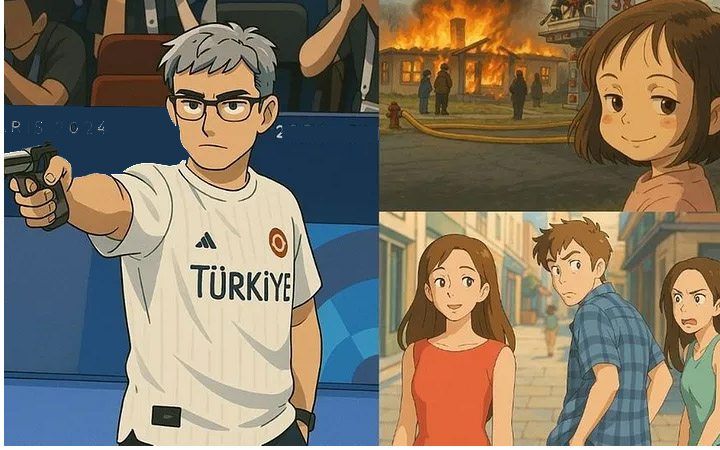
On 26th March, 2025, OpenAI introduced a new update to ChatGPT, which took X (formerly Twitter) and the Internet by storm. The update allowed people to transform their images into the Studio Ghibli animation style. Within hours, all social media platforms were flooded with animated pictures. People posted the animated version of their pictures with their loved ones?parents, children, friends, pets, and family. Since the feature was only available in the paid version of GPT-4o, many users volunteered to convert the images for others, fueling a viral trend.
Kabushiki-gaisha Sutajio Jiburi, known simply as Studio Ghibli, is one of the world’s most renowned Japanese animation film studios, headquartered in Koganei, Tokyo. The Ghibli studio was founded in 1985 by Isao Takahata, Hayao Miyazaki, and Toshio Suzuki. The studio has produced some timeless classic movies like Spirited Away, Grave of the Fireflies and many more.
Ghibli art refers to the studio’s distinctive visual style, characterized by soft pastel and muted colour palettes, meticulous detail, and dreamlike aesthetic. This artistic approach has remained popular among anime fans due to its rich creative expression and narrative depth.
However, this latest introduction of AI-generated Ghibli-style images has also sparked an intense debate among art lovers, animators, and AI enthusiasts. Some argue that such technology is a betrayal of the creative artistic expression, a hollow imitation that fails to capture the soul of Studio Ghibli’s meticulously hand-drawn worlds. Others see it as an exciting way to personalize and engage with an aesthetic they adore, much like the AI transformations that turned people’s photos into Van Gogh-style paintings not too long ago. But why is this trend stirring controversy when other artistic recreations have been widely embraced?
The idea that only the “purest” experience is valid would mean denying people any approximation of something they might never access otherwise. To understand this better, consider this space travel analogy. Few people have the means or opportunity to leave Earth’s atmosphere and experience outer space, but there are many zero-gravity simulation facilities that offer a taste of what it might feel like. No one argues that these experiences should be restricted to astronauts alone. Or consider the replica paintings in the museums or at people’s homes. While they are not the originals, they allow people to appreciate the essence of the masterpiece. The fact that it’s not the real thing doesn’t invalidate the joy or curiosity it brings to those who experience it. AI-generated Ghibli-style art functions similarly-it’s not a replacement for the real thing, but it allows people to immerse themselves in an approximation of an artistic world they love.
A few months ago, social media saw a similar trend with AI-generated portraits mimicking the style of Van Gogh, and the reception was overwhelmingly positive. People reveled in seeing their photos transformed into swirling brushstrokes reminiscent of Starry Night or Sunflowers. Similarly, AI has been used to generate Ukiyo-e style portraits, giving people a glimpse of themselves as though they were characters in Edo-period Japan. These projects were praised for making art more interactive and accessible.
Why, then, is AI-generated Ghibli-style art facing such backlash? The answer may lie in how we perceive animation versus traditional painting. Studio Ghibli’s films are more than just an art style; they are the result of painstaking human effort, emotion, and storytelling philosophy. AI can mimic the look but not the soul behind it-and that makes some people uneasy.
Many people opposing AI-generated Ghibli art do so not because they fundamentally oppose AI, but because they see it as an encroachment on something deeply personal and handcrafted. The warmth of Ghibli’s films comes not just from their visual appeal but from the labor, emotions, and human touch behind every frame. Consider a 4-second scene from the animated film ‘The Wind Rises’, which took the Ghibli animators 1 year and 3 months to complete. Such meticulous craftsmanship is a testament to the dedication required in hand-drawn animation. AI, on the other hand, generates images within seconds, bypassing the struggle and emotion embedded in traditional animation. This discrepancy is at the heart of the backlash-many see AI’s involvement as an intrusion on an art form built on patience, discipline, and storytelling intent.
Hayao Miyazaki himself has been vocal about his distaste for AI-generated animation, calling it “an insult to life itself.” He has long championed the idea that animation should carry the essence of human experience, something AI, with its algorithmic replications, cannot achieve.
Yet, does that mean people shouldn’t enjoy seeing themselves in a Ghibli-like world? Just as people loved AI-generated Van Gogh images without claiming they were equal to Van Gogh’s masterpieces, many simply enjoy the novelty of seeing their likeness in a beloved animation style. It’s not meant to replace Ghibli’s work but to celebrate it in a new way.
Throughout history, art has been shaped by imitation, reinterpretation, and adaptation. Renaissance painters learned by copying the works of their masters. Contemporary artists often pay homage to older styles by integrating them into modern contexts. Even Ghibli itself was inspired by classical Japanese art, Western literature, and various artistic traditions.
The question, then, is not whether AI-generated art is inherently bad, but how we engage with it. If it inspires people to appreciate Ghibli’s artistry more deeply, perhaps it’s not a betrayal, but an evolution of artistic admiration.
Beyond philosophical concerns, ethical considerations have also fueled the debate. Unlike Van Gogh’s paintings, which belong to the public domain, Studio Ghibli’s art style is still protected by copyright. While AI-generated images do not directly copy Ghibli’s work, they closely mimic its artistic signature, raising questions about creative ownership. If an AI-generated image borrows from an artist’s style without their consent, does it amount to artistic homage, or is it exploitation?
Copyright and intellectual property concerns are not new in the AI debate. Similar discussions arose when AI-generated voices mimicked famous musicians or when AI-assisted writing tools produced works resembling known authors. The core issue remains: at what point does inspiration become appropriation?
AI is trained on existing material-art, literature, music, and more-analyzing and processing it to generate results. However, it lacks true originality, which is the defining trait of human intelligence. It cannot create anything entirely new, which ensures that artists with boundless imagination will continue to thrive alongside AI’s evolution.
The debate over AI-generated Ghibli-style art ultimately highlights a broader conversation about the role of AI in creativity. While AI can reproduce aesthetics, it cannot replicate the depth, emotion, or intent of human-made art. However, that does not mean its existence erases or undermines the original works it seeks to honor.
Much like zero-gravity simulations offer a taste of space without replacing real astronauts, AI art offers a glimpse into beloved artistic styles without replacing the artists behind them. The real challenge is ensuring that AI remains a tool for artistic exploration rather than a shortcut that devalues human creativity.
 Follow our WhatsApp channel
