

Release of funds contingent on performance: Union MoS
Mohinder Verma
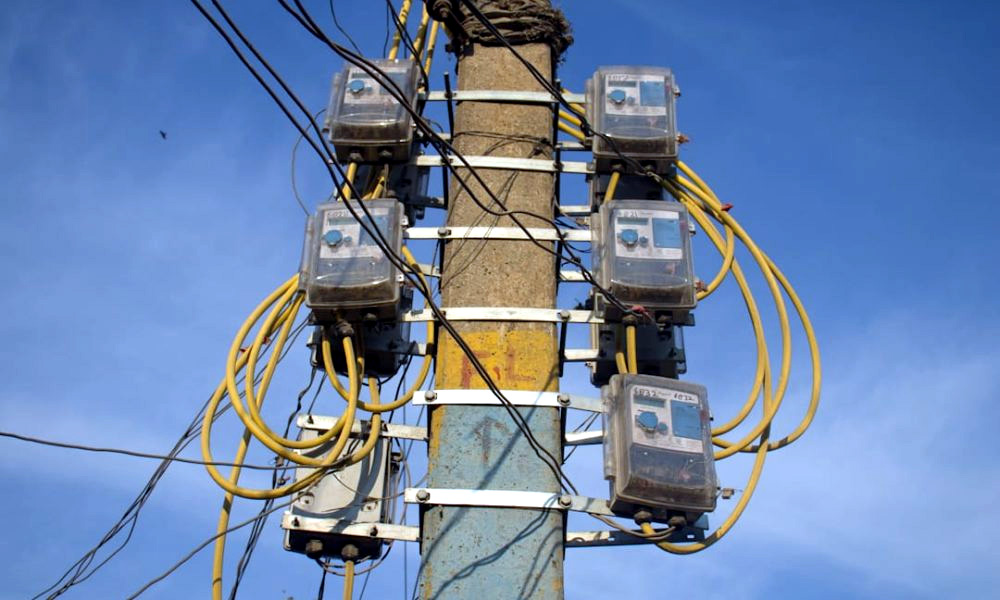
JAMMU, July 30: The ambitious Revamped Distribution Sector Scheme (RDSS), aimed at improving the quality, reliability and affordability of power supply to the consumers through widespread installation of smart meters, has made little headway in the Union Territory of Jammu and Kashmir despite being launched across the country in July 2021.
This has come to the fore from the written reply furnished by the Minister of State in the Union Power Ministry Shripad Naik in the Lok Sabha during the ongoing session.
Under the scheme, 14,97,690 smart meters were sanctioned for the Union Territory of Jammu and Kashmir for enhancing billing efficiency, reducing Aggregate Technical and Commercial (AT&C) losses and optimizing power purchase costs.
However, as per official figures, only 1,84,854 smart meters have been installed as on June 30, 2025 highlighting a worrying gap between planning and implementation. This slow pace of execution has raised serious concerns, especially considering the critical role smart metering plays in ensuring transparent, accurate and real-time billing, and in addressing power pilferage and load management issues — problems that have long plagued the power sector in J&K.
Follow the Daily Excelsior channel on WhatsApp
It is pertinent to mention here that on June 12, 2025, Union Minister of Power Manohar Lal, while reviewing the power sector scenario in the Union Territory of Jammu and Kashmir at Srinagar, had advised the Government to take up prepaid smart metering works in a time bound manner, starting with Government establishments and subsequently for the commercial and industrial consumers.
However, the latest figures provided in the Lok Sabha have highlighted dismal progress of the J&K despite the scheme being fully funded by the Government of India.
The Minister of State, while replying to another question, said, “the release of funds under the scheme is contingent on performance on various parameters including the performance in AT&C losses. This will help in bringing discipline in operations of distribution utilities. The installation of sanctioned smart meters is to be completed by the end of the scheme period (March 2028) as such the distribution utilities wherever lagging need to expedite the work”.
Official sources said that success of RDSS in Jammu and Kashmir is vital to modernizing the electricity distribution network and ensuring uninterrupted, high-quality power supply to consumers. “Smart meters are the backbone of a reliable energy infrastructure. They enable remote monitoring, cut down human errors and make the system accountable,” they added.
“A clear roadmap with intensified on-ground activity are required to be rolled out to bridge the gap and install all the smart-meters sanctioned under the scheme”, they further said, adding “without proactive intervention, the slow pace may jeopardize the goals of energy reforms in the Union Territory, delay benefits to the consumers and impact revenue generation strictly as per energy consumption”.
There are pre-qualification parameters under the scheme which includes timely payment of subsidy and Government department dues, no fresh creation of regulatory assets, timely publishing of financial accounts, timely filing of tariff/true-up petitions and issuance of tariff/true up orders etc.
Other than RDSS, the Government of India has taken several other initiatives to improve financial viability of the distribution utilities. The Rules and Standard Operating Procedure have been framed for timely payment of the subsidies declared by the Governments.
Further, Rules have been framed for implementation of Fuel and Power Purchase Cost Adjustment (FPPCA) and cost reflective tariff so as to ensure that all prudent cost for supply of electricity are passed through. Moreover, enough thrust is being laid on accurate energy accounting, issuing prudential norms for providing loans to State Power utilities and performance based additional borrowing space of 0.5% of GSDP.
 Follow our WhatsApp channel
