

Ramnagar Town Hall turns into ‘Ruins’
The Ramnagar Town Hall, once intended to serve as a key public venue for social and family functions, is now drawing sharp criticism from residents for its deplorable condition, even as authorities continue to charge a hefty Rs 21,000 rental fee.
Visitors arriving at the hall are greeted with a broken entrance door, damaged ceiling panels, and a failing electrical system, creating an impression of abandonment rather than a usable event space.
Basic facilities remain in disrepair, with non-functional exhaust fans further worsening conditions, especially during crowded gatherings.
There is reportedly no reliable drinking water facility, forcing event organizers to make private arrangements.
Even more alarming is the poor state of the washrooms, which locals say fall far below acceptable hygiene standards, raising serious public health concerns.
Sources reveal that the building was reconstructed in 2017, but since then, no meaningful maintenance, repairs, or repainting have been carried out. Years of neglect have reduced the structure to what many now describe as a “ruins-like” facility, unfit for hosting dignified events.
Residents allege that multiple complaints have been submitted to the municipal authorities, urging immediate intervention. However, the continued inaction has fueled anger among locals, who see it as a clear case of official apathy and administrative failure.
With public dissatisfaction mounting, residents are now demanding urgent restoration, accountability, and proper maintenance, warning that continued neglect will further erode trust in local governance.
Sanju Mankotia
Ramnagar
Plea to Power Development Department
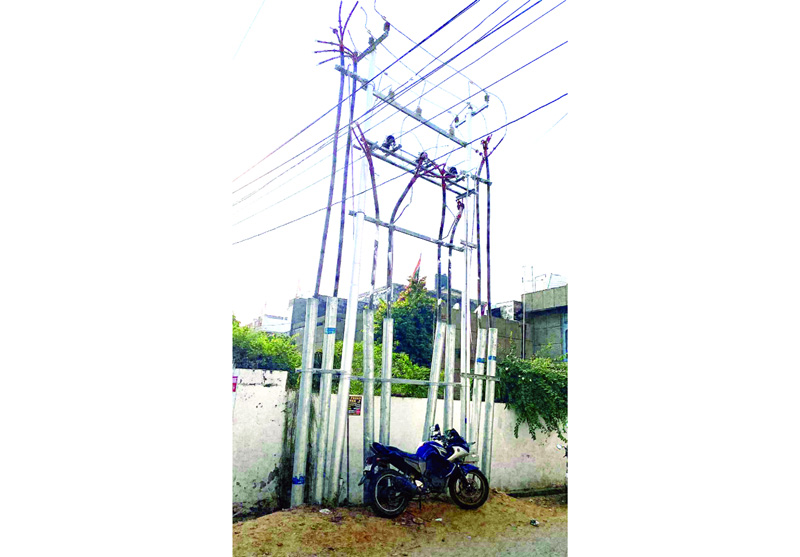 I, Prem Lata Arora, aged 89 years, Retired Principal, Higher Secondary School (J&K Government), presently residing alone at 245 Shastri Nagar, Jammu, submit this formal grievance regarding a serious safety hazard that now directly threatens my life, health, and property.
Having lost my husband and one son, with my only surviving son living abroad, I am an elderly widow living alone in a vulnerable condition. In recent months, I have also faced multiple bereavements in the family, which has further weakened my ability to deal with external distress.
During mid 2025, multiple electrical distribution structures carrying overhead high tension conductors and associated cabling were installed immediately adjacent to the boundary wall of my residence. This installation was carried out without any prior notice, consent, or consultation. No information regarding voltage level, electrical load, or safety precautions was provided. No signage indicating the responsible department, contractor, or work order details was displayed at site. As a resident, I was left completely unaware of the nature, purpose, and risks of this installation.
The present installation constitutes a prima facie violation of statutory safety requirements. It does not maintain mandatory horizontal clearance between electrical conductors and residential structures as prescribed under the Central Electricity Authority Safety Regulations. Basic safety provisions such as insulation guarding, protective barriers, and visible danger signage are absent. The structures have been placed at a busy road intersection near a matador stop with high pedestrian movement, thereby increasing the risk to both residents and the public. One full side of my residential boundary has been obstructed, affecting access, ventilation, and safe use of my property. The drainage space between the wall and the structures has not been addressed, creating risk of water accumulation and long term electrical hazard. The installation has also damaged greenery and indicates lack of proper site assessment and planning.
As a senior citizen living alone, I submit that the department owes a heightened duty of care to ensure that public infrastructure does not compromise my right to a safe and dignified living environment. The current situation is not merely inconvenient but creates a continuing and serious risk to life, safety, and mental well being.
In view of the above, I request that immediate steps be taken to ensure that the said structures are not energized until a full safety review is completed. I further request that an independent technical inspection be conducted by a senior authority not associated with the original installation to verify compliance with applicable safety regulations. Based on such inspection, the structures should be removed and relocated to a safe public location with adequate clearance. I also request that the process under which this installation was executed without notice and without proper safety consideration be reviewed for accountability.
Prem Lata Arora
Retd. Principal, Higher Secondary School (J&K Government)
245 Shastri Nagar, Jammu
Gangera Hill Park in Udhampur lies in poor condition
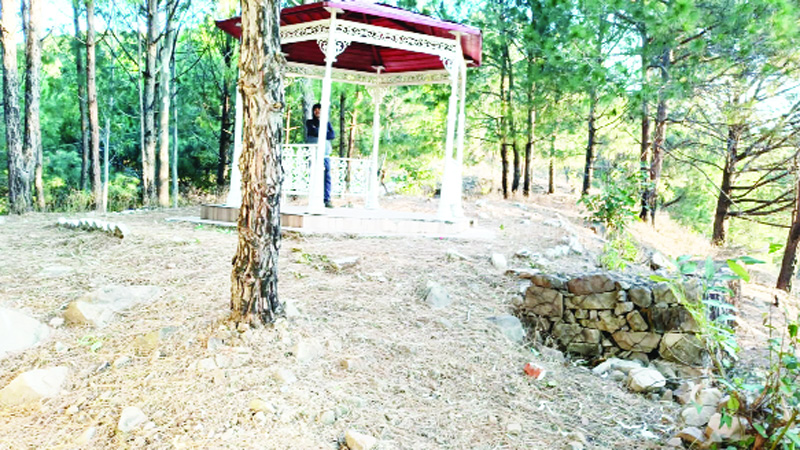 We wish to draw the attention of the District Administration, Udhampur, towards the deteriorating condition of Gangera Hill Park.
Gangera Hill Park, a popular tourist destination in Udhampur district, is crying for attention due to its worsening condition. Despite its immense potential to attract visitors and boost the local economy, the park has been neglected and left in a state of disrepair.
Issues Plaguing the Park
Lack of Maintenance:
The park’s infrastructure, including walking trails, benches, and lighting, is in poor condition, making it difficult for visitors to navigate and enjoy the surroundings.
Insufficient Amenities:
Basic facilities such as drinking water, toilets, and food stalls are scarce, leaving visitors with limited options.
Environmental Degradation:
The park’s natural beauty is being marred by litter, plastic waste, and unchecked vegetation growth. This not only harms the environment but also discourages visitors.
Safety Concerns:
The poor condition of the park has raised serious safety issues. Visitors are vulnerable to accidents and injuries due to inadequate infrastructure and lack of maintenance.
Call for Revitalization:
Local residents of Udhampur are urging the authorities to take immediate action to restore the park to its former glory, highlighting its potential to enhance local tourism and the economy.
The Jammu and Kashmir Tourism Department is requested to intervene and develop a comprehensive plan to revitalize the park, including upgrading infrastructure, providing essential amenities, and ensuring regular maintenance.
K. Kumar
Udhampur
Udhampur-Jaganoo road eyes for upgradation
The 7-8 kms road connecting District HQ Udhampur-Jaganoo town is lying in dilapidated condition. The first 3-4 kms stretch of Dhar road (Southward under GREF) upto Jaganoo Morh needs not only upgradation but also side filling and widening from Salathia Chowk Udhampur. Most of the part of this stretch is within Municipal Council Udhampur limits.
The stretch itself speaks volumes of the unending neglectful attitude of the elite at the helm of affairs. Here the road’s blacktop strip is too narrow to meet the challenge of ever-increasing vehicular traffic due to which the stretch has become accident prone. The sides of the road are sharp slanting, uneven and stony like a dry brook.
While the other portion from Jaganoo Morh to historical Jaganoo Town (Eastward under PWD- R&B) is beset by multiple chronic deficiencies which pose grave threat to the precious human life. The single serpentine road stretch eyes for black top layer and all other improvements including safety provisions at the vulnerable locations. The road passing through difficult hilly terrain is facilitating hundreds and hundreds of people from far off mountainous areas around. But the busy sharp curved, uprooted and damaged road is unsafe for the people.
The concerned authorities as well as the people’s elected representatives at different levels should pay their sincere and focused attention towards the safety of Udhampur-Jaganoo road’s upgradation as the matter is purely related to the general public.
Swatantra Dev Kotwal
Udhampur
Home Action Please