

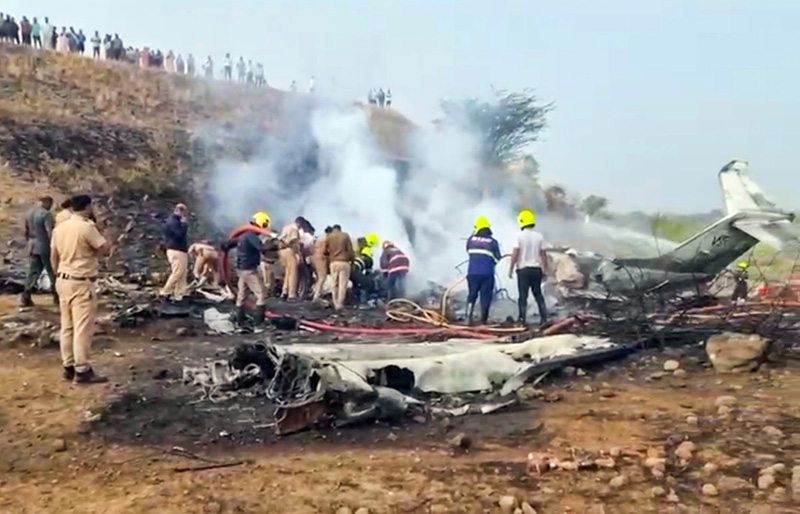
The loss of the serving Deputy Chief Minister of Maharashtra in a plane crash is not merely a personal or political tragedy-it is a national wake-up call. Such a calamity has exposed, yet again, the fragile underbelly of India’s private and charter aviation sector, especially when it comes to the security of VVIPs. India has witnessed repeated aviation incidents involving privately operated business jets and chartered aircraft. Unlike commercial airlines, these operators function in a regulatory grey zone-lighter audits, inconsistent safety records, and questionable accountability. If a company with a history of air accidents were entrusted with transporting senior constitutional or political figures, it would raise troubling questions about due diligence, DGCA oversight, and the prioritisation of convenience over safety.
The loss of a leader like Ajit Pawar is particularly devastating for Maharashtra. Few politicians have reshaped the state’s political architecture as decisively as he. From breaking the traditional dominance of the Congress-NCP combine to unsettling the once-invincible Shiv Sena, Ajit Pawar emerged as a relentless strategist and consummate kingmaker. His ability to read the political moment, recalibrate alliances, and influence power equations made him indispensable-often controversial, but always central. Controversies never left Ajit Pawar’s side, yet they never diminished his relevance. On the contrary, they reinforced his image as a politician who understood the pulse of Maharashtra’s grassroots politics better than most. He altered the grammar of coalition politics and forced every party to negotiate power on new terms. Ajit Pawar’s contribution to Maharashtra extended beyond power politics, shaping cooperative institutions, accelerating infrastructure growth, empowering local bodies, and redefining coalition governance with an unmatched grasp of the state’s social and political realities.
Such a sudden vacuum would inevitably trigger political churn. Maharashtra politics, long driven by personalities rather than institutions, would feel the tremors immediately. Beyond politics, the larger lesson would be unavoidable: VVIP security cannot end at the runway gate. Aviation safety must be treated as an extension of national security. Stricter audits, transparent safety histories of charter firms, and zero tolerance for past lapses are no longer optional.
 Follow our WhatsApp channel
