

Sunny Dua
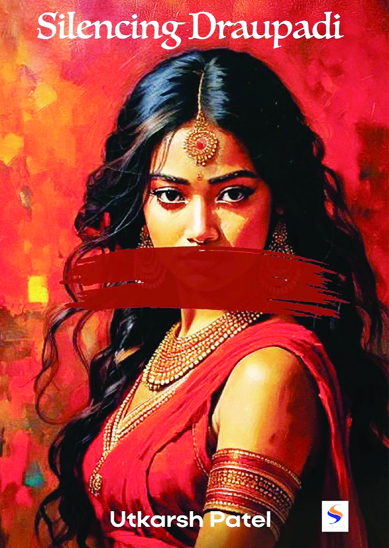
Book Name: Silencing Draupadi
Author: Utkarsh Patel
Publisher: Serene Publishers
Pages: 156
Price: Rs 399.00
Silencing Draupadi by Utkarsh Patel is a thought-provoking and meticulously crafted exploration of the silencing of women’s voices, using the lens of Indian mythology, particularly the Mahabharata, to highlight the pervasive influence of patriarchal structures. Patel, an acclaimed author, speaker, and researcher in comparative mythology, delves into the paradox of Draupadi—a character renowned for her outspokenness yet repeatedly silenced during critical moments in the epic. Through a blend of historical, literary, philosophical, and feminist perspectives, the book challenges traditional interpretations of mythological narratives and invites readers to reflect on the societal forces that mute women’s voices, both in ancient texts and modern contexts.
At the heart of Silencing Draupadi is the idea that women who strive for self-reliance, question authority, or assert their agency are systematically silenced. Patel argues that this phenomenon is not a modern development but a deeply entrenched pattern rooted in history and mythology. He draws parallels between the experiences of women in ancient epics like the Mahabharata and Ramayana and contemporary women who face mental health challenges, such as depression and anxiety, due to societal pressures that stifle their voices.
The book posits that silencing women serves a long-term purpose for patriarchal systems, as articulated in a powerful quote from the text: “By killing her, the purpose is not served. As the dead don’t speak. The silence in such a case speaks and speaks loudly. Because the silencing has for more long-term benefits than a complete elimination.”
Utkarsh Patel employs a fictional narrative to weave his arguments, creating a compelling story about a sage who trains his disciple in reciting the Mahabharata. The sage marries a woman who, despite her intellectual potential, is relegated to household duties. As the narrative progresses this sage falls sick. However, when his disciple disobeys and distorts teachings, another sage joined by his disciples eliminates the sage’s wife, his disciple and illegitimate son of sage from another man to punish them for blasphemy. Characters who dare to question the sanctity of the epic are shown their places for disobeying. This storyline serves as a metaphor for the broader silencing of women and dissenters who challenge established narratives.
The book also explores other female characters from Indian mythology, including Sita, Surpanakha, Kunti, and of course daughter of Raja Drupad, to highlight the recurring theme of silencing. Patel fills in narrative gaps and raises unanswered questions about these women’s roles, challenging the traditional portrayals of revered figures like the Pandavas and characters from the Ramayana. Such reinterpretations are framed as blasphemous within the narrative, deserving severe punishment, which underscores the resistance to questioning patriarchal authority.
The exploration of Draupadi’s character is the cornerstone of the book. Known for her boldness and sharp intellect, Draupadi is paradoxically silenced at pivotal moments in the Mahabharata—most notably during the infamous disrobing scene. Patel uses a feminist lens to analyze how patriarchal structures within the epic and society at large suppress even the most vocal women.
He argues that Draupadi, often considered one of the earliest feminist figures in ancient literature, exemplifies the consequences faced by women who defy societal norms. The book’s feminist perspective is further reinforced by its examination of how women’s worth is often tied to their sexuality, as seen in the quote: “Men can be bad based on their nature being good or bad, but a woman being good or bad is based on her sexuality.”
Patel extends this analysis to modern feminist discourse, drawing parallels between mythological women and contemporary struggles. He observes that women who are “quiet, docile, helpless, and submissive” are deemed acceptable, while those who are rebellious or assertive are considered dangerous and must be silenced. This idea is encapsulated in another striking quote: “Women are good as long as they are quiet, docile, helpless and submissive. But a rebellious woman, a woman who challenges and provokes, asserts and speaks her mind, is never acceptable. She is dangerous as her weapons cannot be countered by these men.”
Beyond the silencing of women, Silencing Draupadi critiques the control of narratives in epics and mythologies by a select group—predominantly men—to maintain societal structures that benefit them. Patel argues that epics, like history, are written by the victors, who shape stories to perpetuate their dominance. The book challenges readers to question these inherited narratives and consider the voices that have been excluded or suppressed.
Silencing Draupadi is a compelling and accessible read that makes complex mythological narratives approachable. Patel’s expertise in comparative mythology shines through in his ability to draw connections between ancient stories and contemporary issues. The book’s eloquent prose and thought-provoking arguments encourage readers to reconsider the role of women in mythology and society. Its feminist reinterpretation of Draupadi’s character is particularly powerful, offering a fresh perspective on a figure often reduced to a symbol of suffering or virtue.
The narrative’s blend of fiction and analysis is a strength, as it engages readers emotionally while prompting intellectual reflection. The inclusion of direct quotes, such as those cited above, adds weight to Patel’s arguments, making the book a valuable resource for students of mythology, gender studies, and literature.
Silencing Draupadi is a masterful work that combines storytelling, feminist critique, and mythological analysis to shed light on the enduring issue of silencing women’s voices. Utkarsh Patel’s eloquent narrative and incisive arguments make this book a must-read for anyone interested in mythology, gender dynamics, or the power of narratives to shape society. By giving voice to Draupadi and other silenced women, Patel not only reinterprets a timeless epic but also calls for a re-evaluation of the societal structures that continue to mute women today. This book is a powerful reminder that the act of silencing is not confined to the past—it remains a pressing issue that demands our attention.
 Follow our WhatsApp channel
