

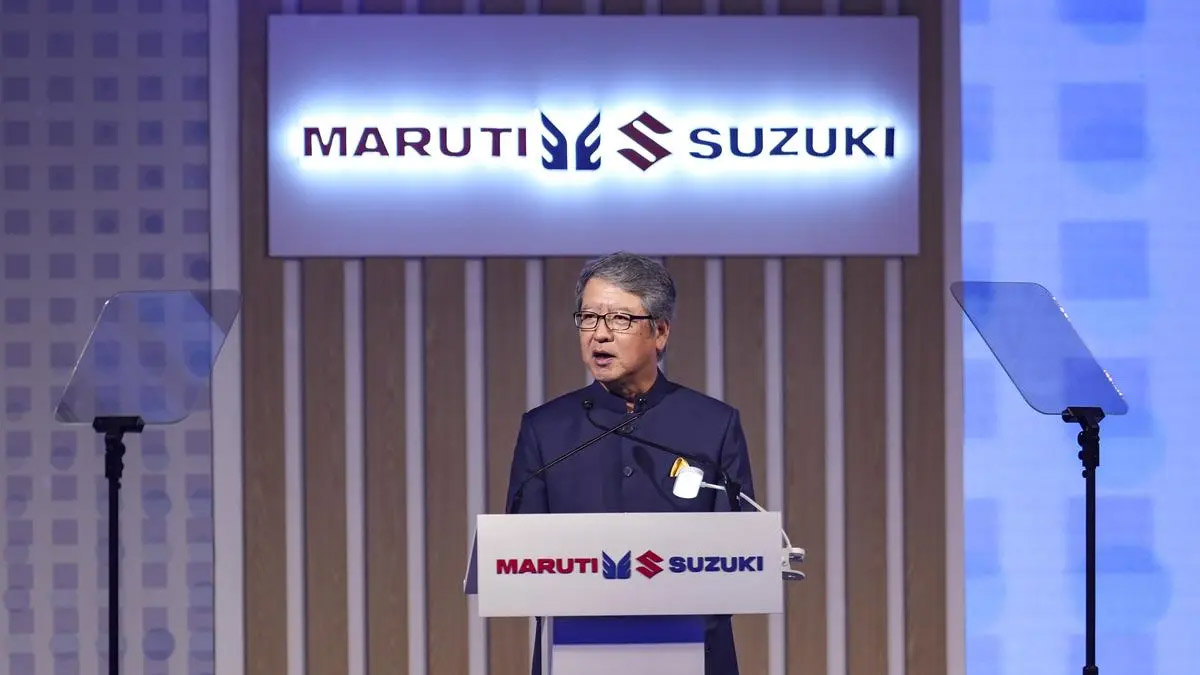
NEW DELHI, June 4: Flex fuel will help meet India’s two national objectives of cutting crude oil imports and reducing carbon emissions, but requires an entire ecosystem, from fuel availability to more model launches for large-scale adoption, Maruti Suzuki India MD & CEO Hisashi Takeuchi said on Thursday.
The benefits of flex-fuel go much beyond the automobile sector, supporting economy, society, environment, farmers, ethanol producers and the larger rural ecosystem, he said, while speaking at the introduction of the company’s first flex-fuel vehicle here.
A flex-fuel vehicle has an internal combustion engine that is designed to run on alternative fuel made by combing petrol with ethanol or methanol.
Noting that India is at a critical point, Takeuchi recollected Prime Minister Narendra Modi’s appeal to citizens to save fuel and reduce import dependence. “On the other hand, we have to proceed steadily in this Amrit Kaal towards self-reliance and Viksit Bharat by 2047,” he said.
For both objectives, he said, achieving energy security with scale and speed is crucial. “Long-term dependence on imported crude oil cannot be an option. We need solutions that are cleaner, affordable, scalable, and based on India’s own strengths,” Takeuchi asserted.
Stating that India has two national objectives of reducing dependence on imported crude oil and carbon emissions, he said, “Flex-fuel meets both. It is truly Atmanirbhar and clean.”
Takeuchi said the benefits of flex-fuel go much beyond the automobile sector.
“However, large-scale adoption of flex-fuel will take time and effort from all stakeholders. An entire ecosystem needs to be developed — from fuel availability to more model launches, from customer awareness to fuel and vehicle pricing,” Takeuchi said.
In the absence of an ecosystem, it is the responsibility of the market leader to take the first step and encourage others, he said, referring to Maruti Suzuki India’s launch of Wagon R Flex-fuel.
“Maruti Suzuki is taking the first big step with the launch of India’s first flexfuel car. We invite the leaders of all stakeholders, including the oil marketing companies and ethanol producers, to join us in this nation-building journey,” he said.
To meet the different needs of different customers in India and to use all possible technologies to reduce carbon, Takeuchi said Maruti Suzuki is committed to a multi-pathway strategy including EVs, strong hybrids, and compressed natural gas.
“And if that Natural Gas is produced from biomass, it becomes carbon negative. So, we have identified compressed biogas (CBG) as a very powerful method for Carbon Net Zero,” he asserted.
Takeuchi further said, “Therefore, we are making a strategic investment in CBG as a fuel option. To start with, we have announced nine CBG plants out of which two are already operational.” Maruti Suzuki India is also running research projects on hydrogen”. (PTI)
 Follow our WhatsApp channel
