

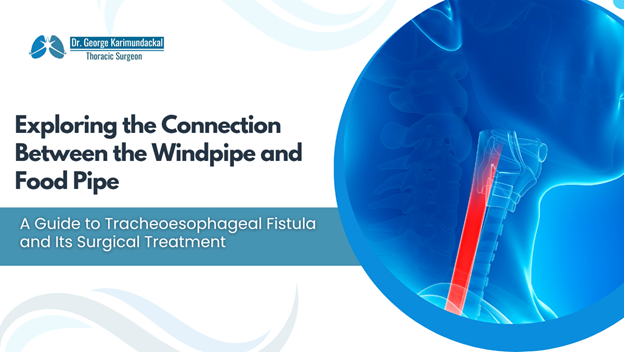
Mumbai (Maharashtra) [India] : Medical conditions involving the airway and digestive tract are often complex, but tracheoesophageal fistula (TEF) remains one of the most challenging to diagnose and treat. This rare disorder occurs when an abnormal connection forms between the trachea and the esophagus, disrupting both breathing and swallowing. Specialists note that awareness around this condition is still limited, even though timely diagnosis and treatment can significantly improve patient outcomes.
According to Dr. George Karimundackal, a leading thoracic specialist, the availability of advanced Tracheoesophageal Fistula Surgery in Mumbai has made it possible to manage this condition with far better precision than before. “Tracheoesophageal fistula is not just a structural issue. It directly affects a patient’s ability to eat and breathe safely,” he explains. “Many patients come to us after repeated chest infections or unexplained coughing while eating. Recognizing these warning signs early can make a significant difference in treatment success.”
Tracheoesophageal fistula can occur at birth or develop later due to medical complications such as prolonged ventilation, infections, trauma, or cancers involving the chest. In adults, it is often associated with serious underlying conditions, making early detection even more critical. Because the symptoms can overlap with more common respiratory or digestive issues, the diagnosis is sometimes delayed.
“Patients often assume persistent coughing or choking during meals is something minor,” says Dr. George. “But when these symptoms keep recurring, especially along with weight loss or frequent lung infections, it is important to investigate further. TEF may not be common, but it is serious and requires prompt attention.”
Advancements in medical imaging and endoscopic techniques have improved the ability to detect TEF accurately. Procedures such as bronchoscopy and endoscopy help specialists identify the exact location and size of the fistula, which is essential for planning treatment. These tools also help differentiate TEF from other conditions with similar symptoms.
Surgical intervention remains the most effective treatment for TEF. The procedure typically involves closing the abnormal connection and reconstructing the affected structures to restore normal function. Over the years, minimally invasive techniques have transformed how these surgeries are performed.
“Earlier, such surgeries required large incisions and longer recovery periods,” Dr. George explains. “Today, with techniques like video-assisted thoracoscopic surgery and robotic-assisted procedures, we can operate with much greater precision. Patients experience less pain, recover faster, and are able to return to normal life sooner.”
Dr. George Karimundackal has been among the early adopters of these minimally invasive approaches in thoracic surgery. With more than 1,000 advanced procedures performed, his experience spans a wide range of complex airway and esophageal conditions. His work has contributed to improving outcomes for patients who previously had limited treatment options.
Another important aspect of TEF management is the need for a coordinated, multidisciplinary approach. Treatment often involves thoracic surgeons, pulmonologists, gastroenterologists, and critical care teams working together to ensure comprehensive care. Nutritional support and post-operative rehabilitation are also essential components of recovery.
“Surgery is only one part of the journey,” Dr. George notes. “Equally important is how we support the patient after the procedure. Proper nutrition, monitoring, and follow-up care help ensure that the repair is successful and the patient regains full function.”
Recovery timelines vary depending on the complexity of the condition and the patient’s overall health. However, with modern surgical techniques and improved post-operative care, many patients are able to resume normal activities within a few weeks. Early intervention continues to play a key role in achieving better long-term results.
Experts also stress the importance of awareness among both patients and healthcare providers. Recognizing symptoms early and seeking specialized care can prevent complications such as aspiration pneumonia and severe infections. “If something doesn’t feel right, it’s always better to get it checked,” Dr. George advises. “Waiting too long can make treatment more complicated.”
Healthcare institutions in Mumbai, including Nanavati Max Super Speciality Hospital, are equipped with advanced diagnostic and surgical facilities that support the treatment of complex thoracic conditions like TEF. The combination of technology and expertise has made it possible to manage such cases with improved safety and success rates. Rated top by leading doctor discovery plant forms like ClinicSpots and Practo, specialists like Dr. George continue to be recognized for their contribution to patient care and surgical innovation.
As awareness grows and technology continues to evolve, the outlook for patients with tracheoesophageal fistula is steadily improving. Early diagnosis, precise surgical techniques, and comprehensive post-operative care are helping patients lead healthier and more comfortable lives.
“Every patient’s condition is unique, and so is their treatment journey,” Dr. George concludes. “Our aim is not just to correct the problem, but to restore quality of life in the most effective and least invasive way possible.”
About Dr. George Karimundackal
Dr. George Karimundackal is a leading thoracic surgeon with over 15 years of experience in minimally invasive lung and airway surgeries. He currently serves as Director of Thoracic Surgery at Nanavati Max Super Speciality Hospital, Mumbai, and has previously been a Professor at Tata Memorial Hospital. Known for his expertise in robotic-assisted thoracic surgery, video-assisted thoracoscopic surgery, and uniportal thoracoscopy, he has performed over 1,000 minimally invasive procedures and continues to advance the field of thoracic surgery in India.
 Follow our WhatsApp channel
