

‘India needs 10,000 trained conservators
we have fewer than 300′:
Vinod Daniel
Vinod Daniel, one of the foremost museum and heritage conservation specialists, speaks to IBNS-TWF correspondent Supriyo Hazra about the Indian Conservation Fellowship Program, the alarming skills gap in preservation, India’s museum boom, and what war teaches us about protecting the past. During a recent visit to the Kolkata Centre for Creativity in the eastern metropolis, Daniel elaborated on India’s conservation crisis, the fellowship programme he has championed for over a decade, and why a country with one of the world’s richest cultural inheritances remains perilously underprepared to protect it.
Vinod Daniel, who is also the CEO of India Vision Institute, is not a typical museum man. He began his academic journey with a B.Tech in Chemical Engineering from IIT Delhi, followed by a postgraduate degree from IIT Madras and an M.Sc. in chemistry from Texas Christian University, USA— disciplines that might seem far removed from ancient artefacts and deteriorating manuscripts. But it is precisely that scientific grounding that has shaped one of the most distinguished careers in global heritage conservation. Daniel has worked with the Getty Conservation Institute and the Australian Museum, and has been involved in museum-related projects in over 60 countries, publishing and presenting over 70 papers. He serves as Chairman of the Board for AusHeritage and as a Board Member of the International Council of Museums. He has also received the Order of Australia Medal — one of that country’s highest civilian honours — for his contributions to heritage and public service.
Excerpts:
Tell us about the Indian Conservation Fellowship Program and what it set out to achieve.
The ICFP was designed to bring together conservation professionals from India and place them at two of the world’s leading institutions — the Metropolitan Museum of Art in New York and SRAL, the Stichting Restauratie Atelier Limburg, in Maastricht. The programme was launched in collaboration with the Met, SRAL, and the Freer Gallery of Art and Arthur M. Sackler Gallery in Washington, with support from Andrew W. Mellon Foundation and the Ministry of Culture, Government of India. The Metropolitan Museum of Art
We selected 55 professionals already engaged in cultural conservation across India. They spent three to six months at these institutions, enhancing their skills in preservation — everything from object conservation and textile care to paper, photographs and paintings. The idea was to build a strong cohort of experts who could not only shape the future of conservation in India but also train the next generation. I programme-managed the initiative throughout.
The programme has been a vital platform for knowledge exchange and skill-building in cultural heritage conservation, empowering Indian conservators with specialised training and strengthening local expertise and conservation leadership.
What brought you to Kolkata this time?
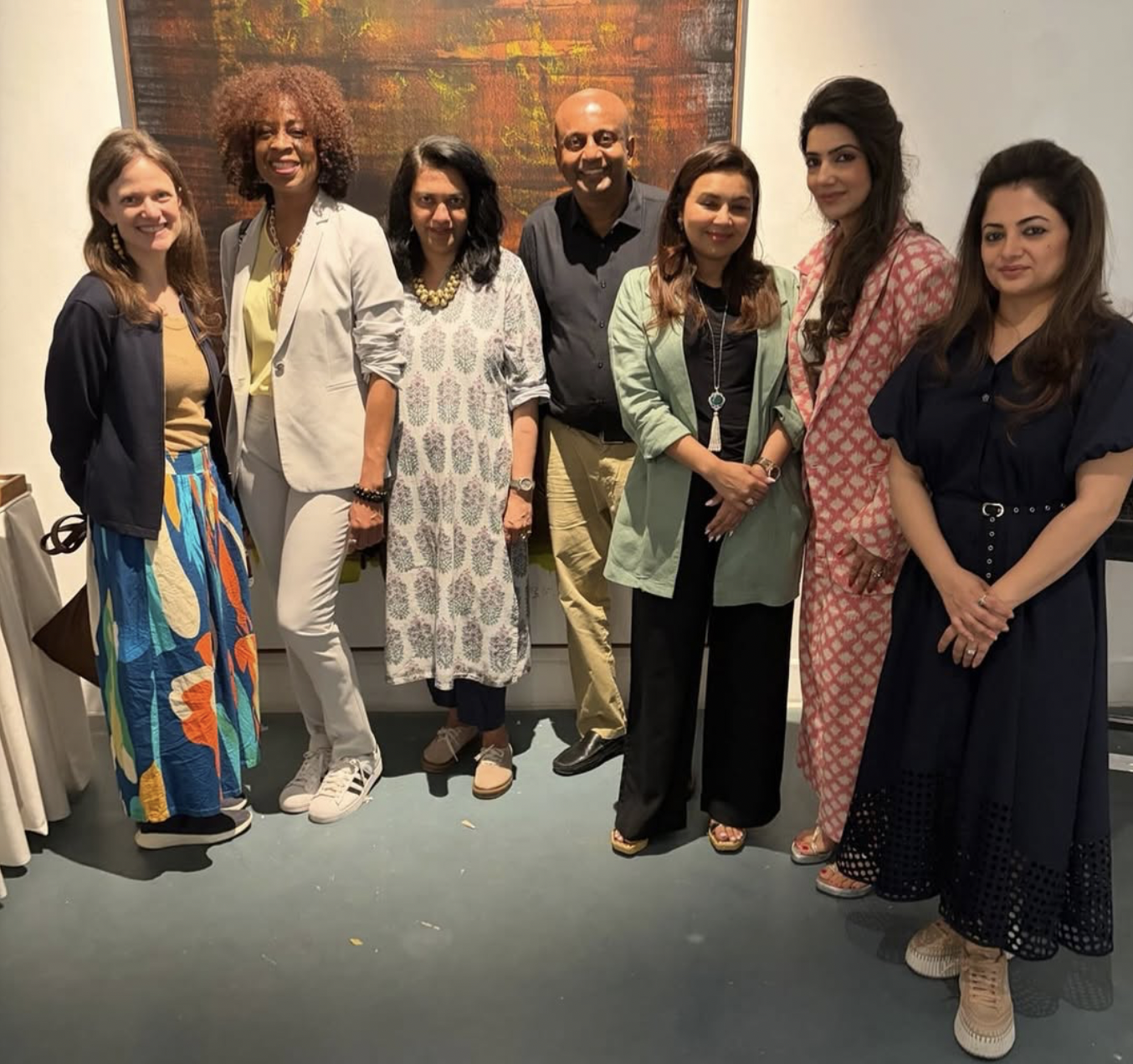
An event at the Kolkata Centre for Creativity (where functionaries of Metropolitan Museum of Art in New York were present) is bringing together the conservators who were part of the ICFP. It is wonderful to see that the Emami Foundation has established a new conservation centre here — and the ICFP programme and its alumni network will assist in strengthening it.
Over the past decade, we have worked with institutions across India — from the National Museum and CSMVS in Mumbai to the Indian Museum here in Kolkata, MAP Bengaluru, and the Napier Museum in Thiruvananthapuram. Such initiatives give conservation labs visibility and connect them with leading professionals nationwide. India urgently needs to build that network effect.
Why are such programmes so crucial for the future of museums?
Preservation is at the core of any museum’s role. Museums collect, exhibit, and research — but safeguarding collections is fundamental to all of it. India has over 1,000 museums, and that is before you account for the vast collections held outside them — in temples, trusts, private estates, and community spaces. In fact, less than ten per cent of India’s cultural objects may actually be housed in museums. The rest are scattered, often without any trained care.
These objects deteriorate over time. Humidity, light, pollution, handling — all of it takes a toll. Scientific conservation is essential to maintain their originality and ensure they survive for future generations.
Here is the number that should alarm people: India may need as many as 10,000 trained conservators. Currently, we have fewer than 300 well-trained professionals and around 700 with limited training. That is a massive gap, and it isn’t shrinking quickly enough.
What makes conservation particularly challenging in India?
The biggest challenge is the shortage of skilled professionals — and that shortage stems from the fact that conservation has not received the priority it deserves, either in government policy or in university curricula. Restoring a single painting can take up to two years of meticulous work. That demands expertise that simply does not exist in sufficient numbers here.
Funding is a constraint, yes — but it is not the binding one. The real bottleneck is human capacity. And institutions must also understand that conservation means preserving the originality of an object, not simply making it look presentable. Those are very different things.
India has one of the richest collections of heritage in the world. But going forward, the big focus needs to be stronger involvement and support from the government, foundations, and high-net-worth individuals. Without that combined effort, the gap between what exists and what is being preserved will only widen.
How do you see the future of museums in India?
There is genuine cause for optimism. In developed regions like Europe and North America, the museum landscape is well established and, in many ways, mature. But countries like India are experiencing what I would call a museum boom — new institutions opening, private collectors becoming patrons, communities asserting their cultural identity through preservation.
What is encouraging is the rise of private museums alongside government initiatives. In developed countries, museums have moved well beyond static definitions — to collect, conserve, research and provide knowledge — toward asking how they become genuinely relevant to society. India is still catching up on that shift. But the momentum is there.
Funding models are also evolving, with greater reliance on private support — which, paradoxically, forces museums to be more creative and audience-focused. India does not need to copy the Western model of blockbuster exhibitions. It needs to be clear about what story it wants to tell, and tell it simply and compellingly.
But the biggest structural need remains skilled human resources — across conservation, curation and exhibition design. India currently has only one degree-level conservation programme, in Delhi. Ideally, every state should have one. Infrastructure and high-end conservation labs are important — but they are only as useful as the trained professionals operating them.
How has the government contributed, and where must it do more?
The government has played a meaningful role through institutions like the National Museum Institute and the National Research Laboratory for Conservation in Lucknow, which functions under the Archaeological Survey of India. These are serious institutions doing important work.
But we need to scale up substantially. Universities must introduce more conservation programmes. Private investment must increase. In many Western countries, only about one-third of museums and conservators are government-supported — the rest operate privately, which strengthens the entire ecosystem. India needs a similar diversification. The government cannot and should not be expected to carry this burden alone.
You have worked globally on heritage protection in conflict zones. What lessons apply here?
International frameworks like the Hague Convention exist precisely to prevent the destruction of cultural heritage during armed conflict, and countries have a moral and legal obligation to respect them. But as we have seen in Iraq, Syria, Afghanistan and Ukraine, conflicts still cause catastrophic damage — whether through deliberate destruction or opportunistic looting.
One of the most important lessons from those experiences is the value of documentation. Thorough, systematic records — photographs, condition reports, provenance data — allow stolen or displaced objects to be traced and recovered. They prevent illegal trafficking and create accountability.
Once stability returns, conservation can begin to address the physical damage caused by war or neglect. But without documentation, you are working in the dark. The first obligation, always, is to record — so that heritage does not simply disappear into private hands or the black market, lost to history.
IBNS-TWF
 Follow our WhatsApp channel
