

Three months into the Iran-USA-Israel war, the world is no longer bracing for impact – it is living through it. What began as a volatile flashpoint in an already fractious region has metastasised into a full-blown global economic crisis. The closure of the Strait of Hormuz – one of the world’s most critical maritime corridors – has choked the arteries of global commerce, and there is precious little relief in sight. Alternative markets had initially offered a glimmer of hope. That glimmer has dimmed considerably. Future buying contracts have already absorbed the available output of every viable alternative supplier, leaving latecomers scrambling at exorbitant prices with no guarantee of delivery. The world had collectively placed its faith in a swift resolution. That hope remains stubbornly unfulfilled.
For India, the calculus is particularly unforgiving. The list of imports upon which everyday Indian life depends reads like an inventory of modern civilisation itself – crude oil, LPG, edible oils, fertilisers, industrial raw materials, and an array of goods that underpin both agriculture and manufacturing. Then there is gold. Indians share a cultural and emotional relationship with the precious metal that transcends mere investment logic. Gold is woven into weddings, festivals, and family legacies. Yet each kilogram imported must be paid for in United States dollars, and the surge in gold prices in recent weeks has been nothing short of extraordinary. At a time when foreign exchange must be conserved with the rigour of a wartime treasury, the appetite for gold imports imposes an additional, avoidable burden on national reserves. The rupee, meanwhile, tells its own troubled story. With Indian exports disrupted by the war-shipping lanes compromised, foreign buyers cautious, global demand subdued-foreign exchange earnings have fallen short of projections. The resulting pressure on the rupee against the dollar compounds the impact on every import bill. India’s foreign exchange reserves remain adequate for now, but adequacy is not a strategy. Planning for the extreme case is not pessimism; it is prudence.
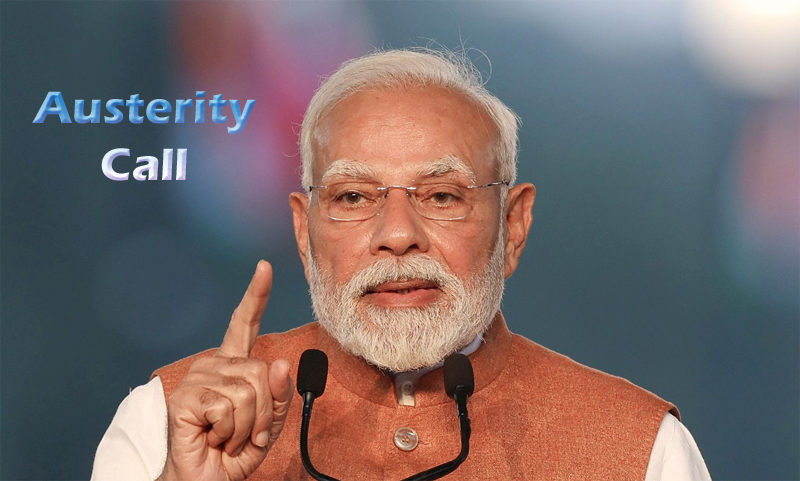
It is in this context that Prime Minister Narendra Modi’s appeal for voluntary austerity must be understood – not as political theatre, but as a genuine call to national purpose. His addresses in Telangana and his reiteration in Vadodara carry the weight of a government that recognises the gravity of what lies ahead. The recommendations – work from home wherever feasible, shift to public transport or electric vehicles, curtail unnecessary foreign travel, defer gold purchases, and reduce dependence on imported goods – are not hardships. They are sensible, considered adjustments that, if embraced collectively, can meaningfully reduce the strain on India’s balance of payments.
The Prime Minister has drawn a pertinent historical parallel. India has faced wars before, and in each instance, citizens rose to the occasion when called upon. That civic spirit must be summoned again. The elections are behind us; the moment for governance, for difficult decisions and honest communication, is now. Oil companies are haemorrhaging losses that are unsustainable in any prolonged scenario. The double burden of dollar-denominated imports and a weakening rupee cannot be absorbed indefinitely.
Voluntary restraint must, however, be complemented by institutional leadership. It is not enough for the Prime Minister alone to set the tone. Members of Parliament and State Legislatures must lead visibly – reducing their own consumption, foregoing unnecessary expenditure, and publicly endorsing austerity measures rather than paying them lip service. Local governments must translate the national message into actionable community programmes: no-vehicle days, restrictions on large functions, and incentives for those who reduce energy consumption. The measures that need consideration are wide-ranging – restrictions on large-scale celebrations, promotion of domestic tourism over international travel, and a rationalisation of consumption patterns across every stratum of society.
The old adage holds with particular force today: every penny saved is a penny earned. India has weathered storms before – colonial exploitation, partition, wars, droughts, and a once-in-a-century pandemic. The West Asia crisis is severe, but it is not insurmountable. What it demands is not sacrifice so much as collective discipline – a willingness, across all sections of society, to shrink the comfort zone just a little, for a period that we must collectively work to shorten. The Prime Minister has offered a roadmap. The nation must now choose to walk it.
 Follow our WhatsApp channel
