

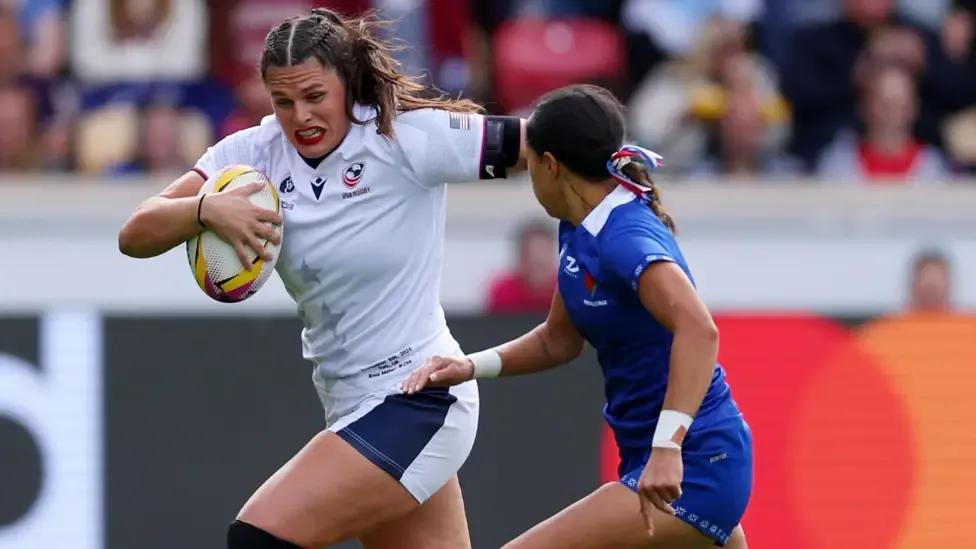
Women’s sports became commercially relevant when their economics began to resemble early-growth markets rather than symbolic initiatives.
While men’s leagues operate in saturated environments with inflated rights fees and limited upside, women’s competitions offer expanding audiences, controllable cost structures, and room for valuation growth.
This shift is increasingly visible across media contracts, sponsorship logic, and secondary markets.
It also appears in adjacent infrastructures — analytics, data distribution, and wagering environments — where online sites like RajBets now model women’s events as stable, repeatable inputs rather than experimental additions.
The business behind women’s sports is no longer speculative; it is measurable.
Capital Enters Through Multiple, Non-Overlapping Channels
Unlike early phases dominated by lifestyle branding, current investment in women’s sports comes from structurally different actors. Media groups, private equity, betting operators, and data companies are entering at distinct layers of the value chain, reducing dependency on any single revenue source.
Diverse Capital Allocation in Women’s Sports
| Investor / Corporation | Approx. Capital Exposure | Sector | Entry Layer | Strategic Objective |
| Liberty Media | $50M+ | Media | Rights-linked properties (W Series) | Audience expansion without legacy inflation |
| Silver Lake | $300M+ | Private Equity | Multi-sport equity stakes | Consolidation of undervalued sports IP |
| Endeavor Group | 9-figure exposure (est.) | Media / Talent | League ops, media packaging | Control of distribution + athlete IP |
| DAZN | $100M+ | Media | Women’s league broadcast rights | Subscription retention |
| Flutter Entertainment | Strategic (non-public) | Betting | Market depth & pricing | Long-term handle growth |
| Entain | Strategic | Betting / Analytics | Odds modeling, engagement data | Early positioning in lower-volatility markets |
| Sportradar | $100M+ | Data / Integrity | Data feeds, monitoring | Monetization before saturation |
The key signal here is not just capital size, but capital diversity. When betting operators and data providers invest alongside media and PE, the market shifts from narrative-driven to model-driven.
After the table, the implication is clear: women’s sports are no longer funded top-down. They are supported laterally across media, data, wagering, and equity — a structure that significantly lowers systemic risk.
Revenue and Cost Logic Remain Favorable
The business mechanics of women’s sports differ sharply from mature men’s leagues. Revenues are growing faster than fixed costs, allowing leagues to preserve operating margins while still expanding visibility and quality.
Revenue and Cost Characteristics:
- Media rights valuation: initial deals typically priced 30–60% below equivalent men’s properties, preserving renewal upside
- Sponsorship structure: league-wide partnerships with measurable KPIs, driving 75–90% retention rates
- Salary growth: tied to confirmed revenue increases, avoiding speculative bidding inflation
- Production scaling: broadcast quality improves incrementally, not front-loaded
- Distribution model: streaming-first delivery reduces geographic and logistical costs
Each point reflects deliberate restraint. Growth is allowed to compound rather than being pulled forward.
After the list, the contrast becomes operationally important. Men’s leagues often depend on renegotiating increasingly expensive contracts to grow revenue.
Women’s sports expand by widening the base — more platforms, more viewers, more activations — while keeping costs elastic. This preserves optionality for investors and operators alike.
Betting and Data as Stress Tests of Market Maturity
Betting and data markets tend to expose weaknesses faster than broadcast metrics. Chaotic sports environments produce volatile pricing, distorted engagement, and unstable liquidity. Women’s sports increasingly show the opposite behavior.
Secondary Market and Data Signals
| Dimension | Women’s Sports | Saturated Men’s Sports |
| Odds volatility | Lower, tighter bands | Frequent sharp swings |
| Pre-match share | 65–75% of handle | ~55% typical |
| Series-based interest | High | Fragmented |
| Historical distortion | Limited | Heavy legacy noise |
| Data standardization | Built-in, modern | Fragmented |
| Modeling reliability | Improving YoY | Plateaued |
These patterns matter because betting operators allocate resources where outcomes are interpretable rather than chaotic. Cleaner data and lower volatility reduce operational risk and increase long-term engagement.
After the table, the conclusion follows naturally. When betting and data companies commit resources — directly or indirectly — it signals that a sport has become readable, not just popular. Women’s sports increasingly meet that threshold.
Conclusion
The business behind women’s sports is defined by structure, not symbolism. Capital flows from media, private equity, data, and betting because the economics work: controlled costs, scalable rights, and predictable behavior.
Women’s sports now operate as early-stage markets with real liquidity and long-term upside — one of the few growth segments in global sports still underpriced.
 Follow our WhatsApp channel
