

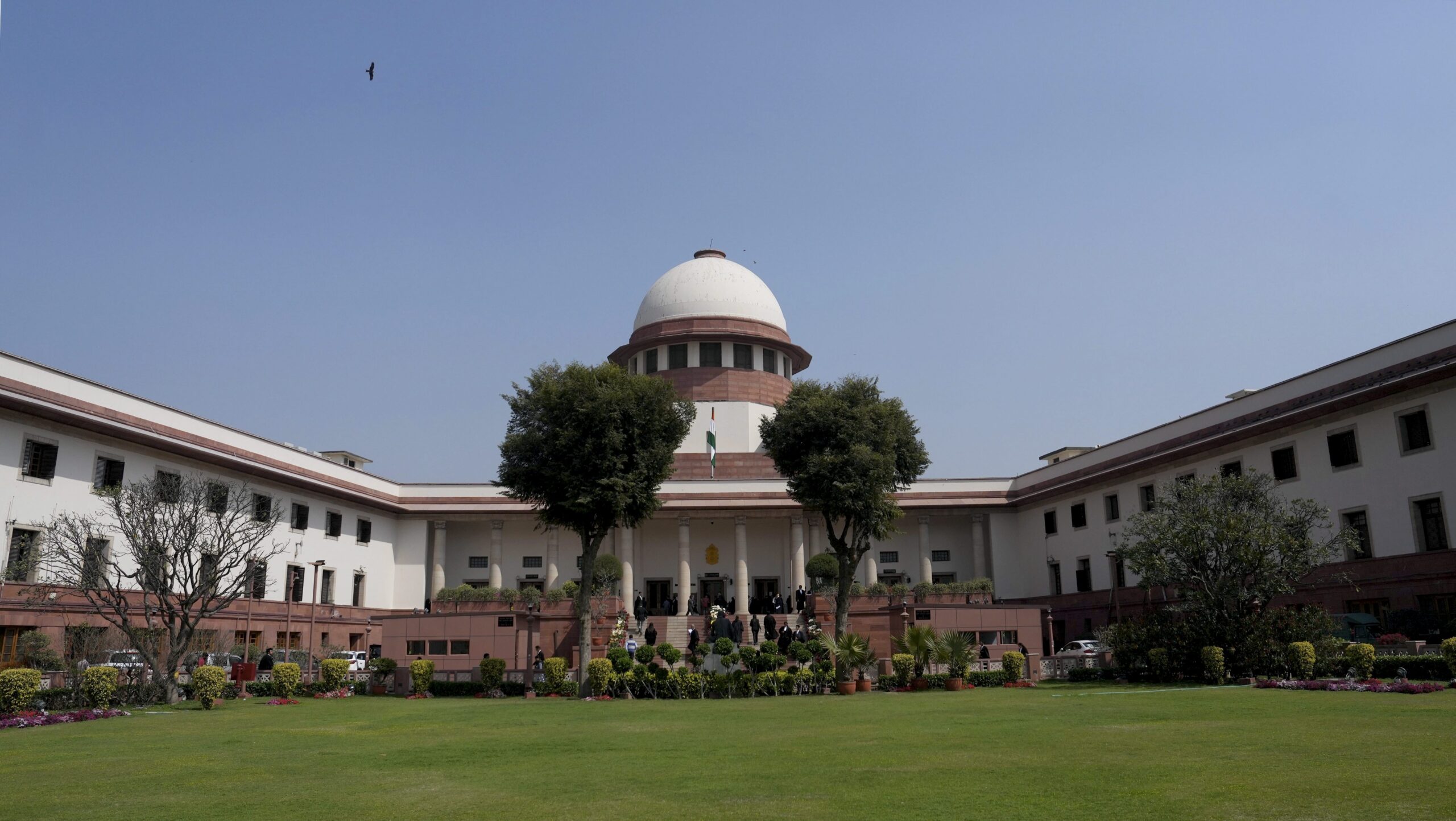
NEW DELHI, May 6:The Supreme Court on Wednesday asked whether it can direct Parliament to make a law for regulating appointment procedures of the Chief Election Commissioner and the deputies.
Follow the Daily Excelsior channel on WhatsApp
The remarks were made by a bench of justices Dipankar Datta and Satish Chandra Sharma during the final hearing on a clutch of petitions challenging the constitutional validity of the Chief Election Commissioner and Other Election Commissioners (Appointment, Conditions of Service and Term of Office) Act, 2023, which excludes the Chief Justice of India (CJI) from the selection panel for appointing Election Commissioners.
The top court, at the outset, refused to accede to the Centre’s request to adjourn the hearing on the pleas, saying the instant matter is “more important” than the Sabarimala case.
During the hearing, Justice Datta referred to a prayer made in one of the petitions asking the top court to direct Parliament to enact a law to regulate the appointment of the CEC and the Election Commissioners.
“Come back to the prayers… it has asked Parliament to make a law. Can the court ask Parliament to make a law? Could this be maintainable,” the judge asked. He also referred to the March 2, 2023 judgement in the Anoop Baranwal case of a five-judge constitution bench which had unanimously held that the selection of the CEC and the ECs would be done by a three-member committee consisting of the Prime Minister, the Leader of the Opposition (or the leader of the largest opposition party in Parliament), and the CJI.
The verdict had altered the then prevailing mode of selection where the CEC and ECs were appointed by the President acting on the advice of the Prime Minister. Justice Datta said the judgement had made clear that this will remain in operation till Parliament makes the law.
“Why did the court then restrict the Anoop Barnwal judgement only till a particular period till the law is made? It was only to deal with a particular situation of a vacuum,” he said.
Moreover, the Supreme Court cannot direct Parliament to make a law, the judge said, adding, “Aren’t these observations over 300 pages a justification for what the court laid down for a short period till the law is made? Can you say that the law also has to follow those observations.” (PTI)
 Follow our WhatsApp channel
