

Sonia Kashyap
soniakashyap928@gmail.com
The mercury is rising and so is the alarm.
Jammu, the winter capital of Jammu & Kashmir, is sweltering under one of its most intense
April heat spells in recent memory. Over the past fortnight, the city has transitioned sharply
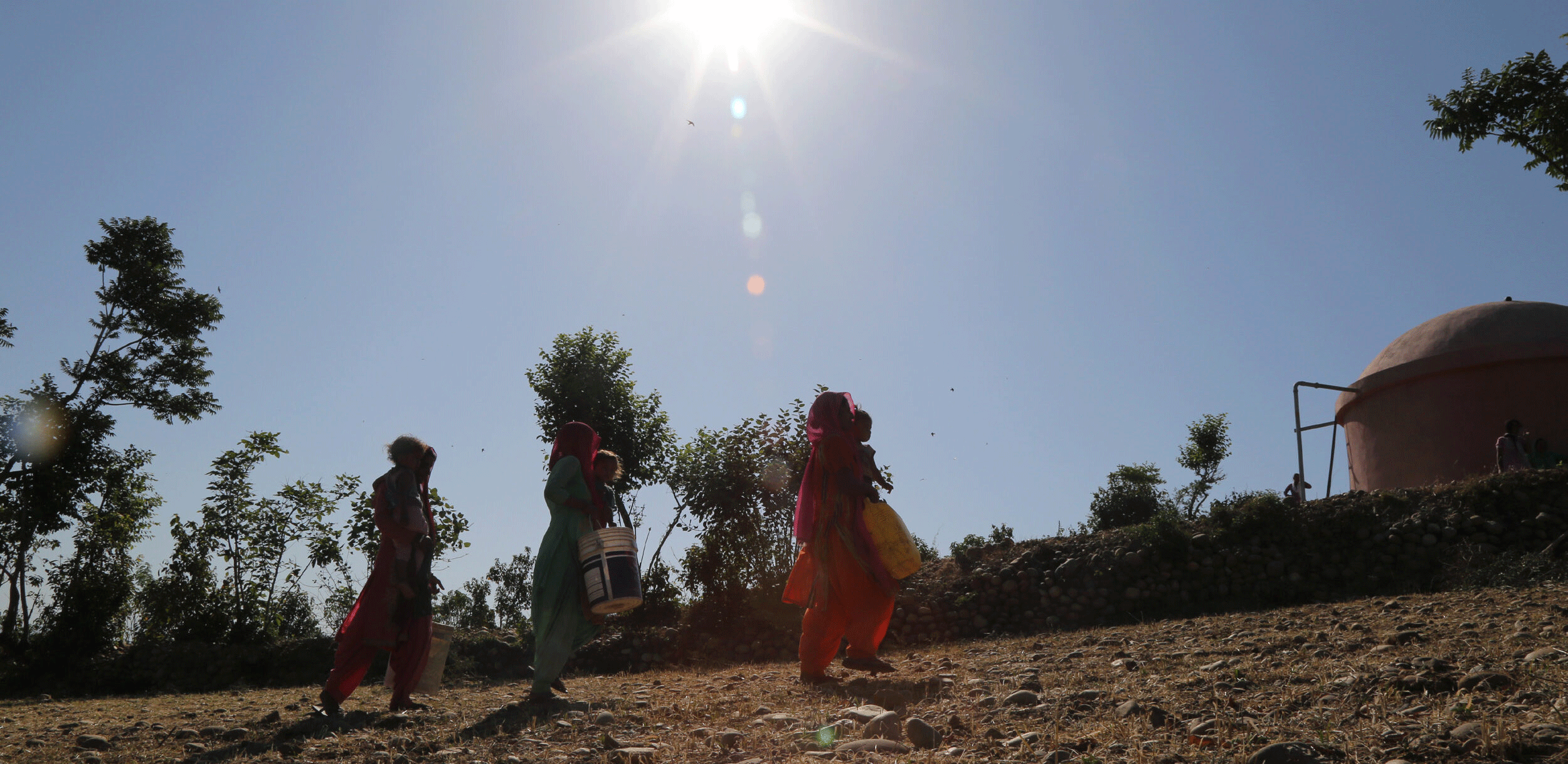
from merely warm to outright scorching, with daytime temperatures regularly breaching 39°C and peaking at a punishing 40.2°C between April 22–26. To put that in perspective, these readings are 5 to 7 degrees Celsius above the seasonal average, a staggering deviation that meteorologists say cannot be brushed aside as routine summer heat.
On April 27, the India Meteorological Department (IMD) issued a formal heatwave alert for
five districts in the Jammu division Jammu, Samba, Kathua, Reasi, and Udhampur
signalling that this is no ordinary warm spell.
A Fortnight of FireThe numbers tell a troubling story. In mid-April (April 13 -19), temperatures hovered in the warm-but-manageable range. But the second half of the month brought a dramatic shift. By April 20, the heat began climbing aggressively. Nighttime lows, which previously offered some relief, also crept upward through late April. The city recorded almost no significant
rainfall during this period, leaving conditions hot, dry, and relentless.
For residents of Jammu, a city that sits at the edge of the plains and is no stranger to
summer heat even this level of intensity has raised eyebrows. Daily life has been disrupted,
with health authorities urging people to stay indoors during peak afternoon hours, drink fluids like ORS and lassi, and avoid outdoor work when the sun is highest.
Science vs. Social Media As skies blistered above the city, something else caught public attention white streaks
criss-crossing the blue. Social media erupted with speculation: chemtrails, secret government spraying programmes, even theories involving Bill Gates. The claims spread
quickly. Scientists, however, were unequivocal. The IMD and independent meteorological bodies clarified that what people were seeing were simply contrails of condensation trails left by high-altitude aircraft as water vapour freezes behind jet engines. Increased air traffic over the Jammu region made these trails more visible than usual. No credible evidence exists of any chemical spraying, and the claims have been categorically debunked.
Extreme Events Stack Up
The chemtrail distraction, however, should not divert attention from genuinely unusual
weather events that have rattled the region. On April 11, a rare tornado struck Akhnoor, just outside Jammu city. Intense hailstorms have also battered parts of the region in recent
weeks. Meteorologists attribute these events to natural but increasingly volatile atmospheric conditions Western Disturbances interacting with pre-monsoon convective storms in ways that are growing more unpredictable.
Western Disturbances, the extratropical storm systems that sweep in from the
Mediterranean, have long shaped Jammu’s winters and springs. They typically bring
life-giving rain to the plains and snow to the higher reaches of the Pir Panjal range and
Chenab Valley. But climate scientists note that as global temperatures rise, the interactions
between these systems and local heat are producing wilder, more erratic outcomes.
Temporary Relief, Lasting Concern
As of April 28, clouds have begun gathering over Jammu, and the Met Department has
forecast light rain, thundershowers, and gusty winds a brief respite that residents are
welcoming with relief. But meteorologists warn this is no permanent solution. Temperatures
are expected to surge again in the first week of May, potentially triggering fresh heatwave
conditions.
The bigger question looming over this spring’s extremes is one that policymakers and
citizens have been slow to confront: Is Jammu’s climate shifting in ways that demand a
serious, long-term response?
The data from April 2026 suggests the answer may be yes. A city recording temperatures
5–7°C above its seasonal average, with hailstorms, tornadoes, and formal heatwave alerts
all landing within the same month, is not experiencing a blip. It is experiencing a pattern one
that demands attention far beyond what any cloud-seeding conspiracy theory can explain.
The skies above Jammu are sending a message. The real question is whether anyone is
listening.
 Follow our WhatsApp channel
