

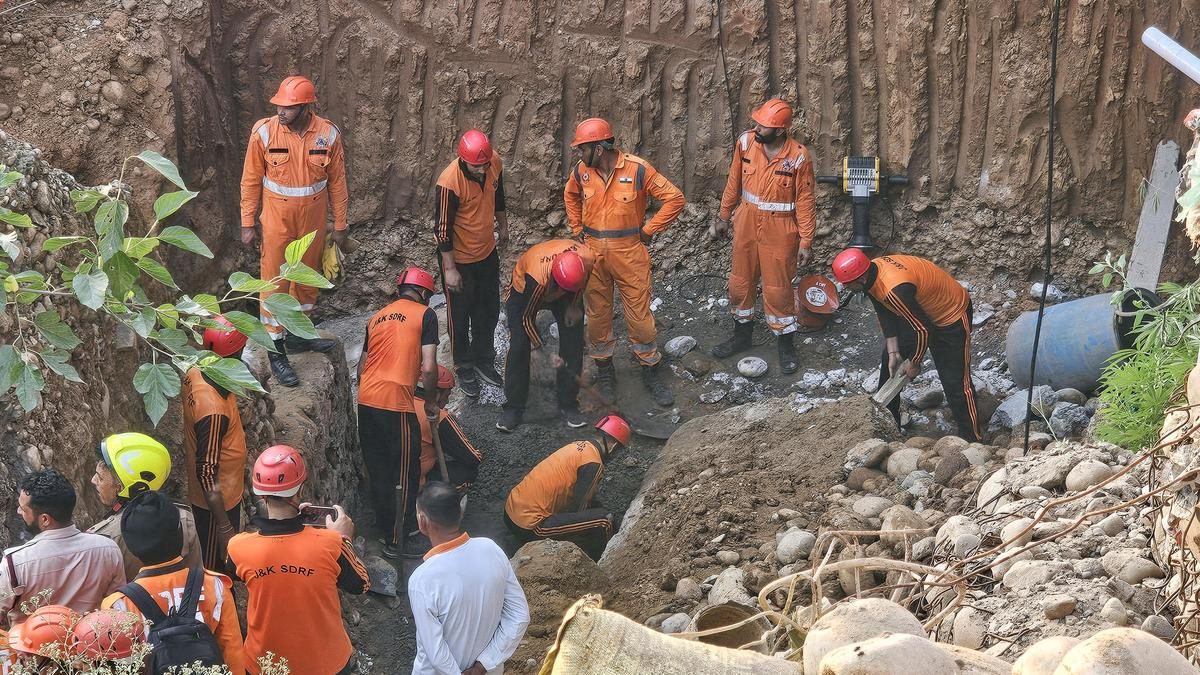
The collapse of an old bridge at Thathar in Jammu on May Day, claiming three lives, is not a tragedy in the conventional sense of the word. Tragedies are unforeseen. What unfolded at Thathar was a disaster written in advance, authored by institutional negligence, bureaucratic indifference, and what can only be described as a criminal disregard for human life. The facts speak with damning clarity. The bridge’s retaining walls had developed visible cracks as far back as the flash floods of August-September last year. Despite this, vehicular traffic continued to move across the structure unimpeded – even as labourers worked beneath and around it. This is not an oversight. This is a fundamental, inexcusable violation of the most basic safety protocols that govern construction and repair work on public infrastructure. That the Roads and Buildings Department permitted such a situation to persist for months stretches credulity and demands the sternest accountability.
Compounding matters are the deeply troubling allegations emerging from locals and corroborated by videos circulating on social media, suggesting that the original construction of the bridge was itself substandard – base and retaining walls apparently laid without iron reinforcement bars, a cornerstone of any sound civil engineering practice. If proven, this point is not merely about operational negligence but about possible corruption in the original construction – a thread that the inquiry committee must pull firmly and without fear.
The Government’s response – suspending two Junior Engineers and constituting a three-member inquiry panel – is procedurally correct but substantively inadequate. Suspension under Rule 331 is, in practice, a paid holiday: suspended officers draw 75 per cent of their salary whilst remaining attached to their respective offices. Exemplary action – including criminal liability where warranted – must follow the inquiry’s findings. The committee report should be conclusive. The families of the deceased and missing labourers – migrants from Odisha and Chhattisgarh, far from home when death came for them – deserve swift and generous compensation beyond routine insurance payments. They came seeking a livelihood, not a grave.
Going forward, the Government must mandate and strictly enforce SOPs requiring the immediate closure of any structure under repair to all traffic, with no exceptions. Inspections must be regular, documented, and independent. Jammu has mourned these men on Labour Day, of all days. The least their deaths must yield is lasting, systemic change – not a 15-day report followed by silence.
 Follow our WhatsApp channel
