

‘Revelation indicates breach of key environmental laws’
*Notices issued to nine key agencies of UT, GoI
Mohinder Verma
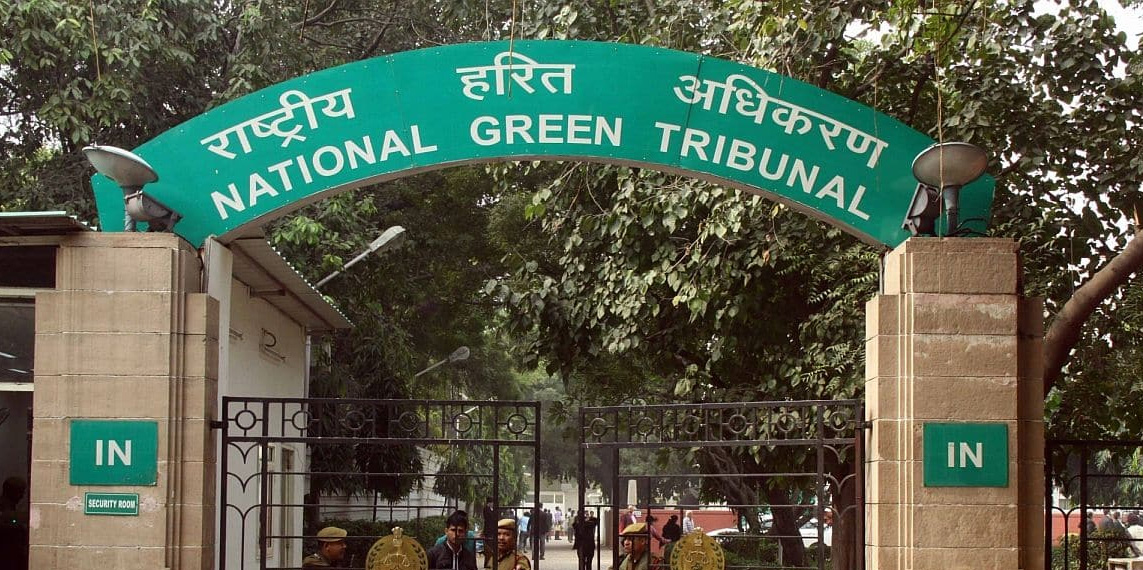
JAMMU, Apr 22: In a significant intervention, the National Green Tribunal (NGT) has taken suo motu cognizance of a shocking revelation that nearly three-fourth of lakes in the Union Territory of Jammu and Kashmir have either vanished or shrunk drastically.
Follow the Daily Excelsior channel on WhatsApp
Acting on a news report based on findings of the Comptroller and Auditor General of India (CAG), the Tribunal headed by Chairperson Prakash Shrivastava along with Expert Members Dr A Senthil Vel and Dr Afroz Ahmad noted that the revelation that 518 of 697 lakes in J&K have either vanished or shrunk raises substantial questions relating to compliance with environmental norms and implementation of key environmental laws.
Citing the CAG report on conservation and management of lakes (covering the period up to March 2022, the NGT recorded that a whopping 518 lakes constituting about 74% of the 697 lakes in J&K have either disappeared or shrunk.
It noted that 315 lakes, 45% of the total lakes have completely vanished, covering a water spread of 1537.07 acres. Further, these lakes include 80 lakes falling under the jurisdiction of the Forest Department and 235 lakes falling under the Revenue Department and Agriculture Department. Moreover, water area of 203 lakes (29%) of 697 lakes had decreased by 1314.19 hectares.
The Tribunal noted that shrinking lake areas may have significantly contributed to the devastating 2014 Jammu and Kashmir floods as the lakes act as natural reservoirs and buffers during heavy rainfall, absorbing excess water and preventing floods. Their disappearance, therefore, weakens the region’s natural flood regulating system.
The NGT observed that despite the ecological importance of these lakes, there has been a failure on the part of key departments, including Forest Department, Department of Ecology, Environment and Remote Sensing, Revenue and Agriculture Departments.
“Shockingly, conservation and management plans exist for only six major lakes—Dal, Wular, Hokersar, Manasbal, Surinsar and Mansar leaving hundreds of other water bodies neglected”, the National Green Tribunal observed, adding “the shocking relevation raises serious environmental issues that affect the hydrology, vegetation, forest, agriculture, micro climatic conditions, aquatic, Avifauna and ecology”.
The Tribunal observed that the issue prima facie indicates violations of several crucial environmental legislations, including Environment Protection Act 1986, Biological Diversity Act 2002, Water Prevention and Control of Pollution Act 1974 and Forest Conservation Act 1980. These violations underline systemic lapses in environmental governance and compliance.
Taking serious note of the revelation, the NGT has impleaded multiple key authorities as respondents, including Ministry of Environment, Forest and Climate Change, National Wetland Committee, J&K Wetland Authority, J&K Pollution Control Committee, Principal Chief Conservator of Forests, Department of Ecology, Environment and Remote Sensing, Revenue Department, Fisheries Department and National Disaster Management Authority.
The Tribunal has issued notice to all these respondents with the direction to file detailed replies before the next date of hearing. Keeping in view the importance of the issue, the NGT has listed the case for further hearing on May 15, 2026. The Tribunal has also ordered that the matter be listed along with Original Application No. 239/2024, indicating a broader judicial scrutiny of environmental issues in the region.
The Tribunal invoked the landmark judgment of the Supreme Court of India in Municipal Corporation of Greater Mumbai Versus Ankita Sinha, which empowers it to take suo motu action in matters of environmental degradation.
“The disappearance of lakes is not just about water scarcity, it has triggered a cascading ecological impact, affecting hydrology and groundwater recharge, forest ecosystems and vegetation, agricultural sustainability, micro-climatic balance and aquatic biodiversity”, the experts said, adding “continued neglect could lead to irreversible environmental damage in the fragile Himalayan region”.
They further said, “the NGT’s intervention has sent a strong message that environmental neglect will no longer go unchecked. With hundreds of lakes already lost, the case could become a watershed moment in enforcing accountability and reviving Jammu and Kashmir’s endangered water bodies”.
 Follow our WhatsApp channel
