

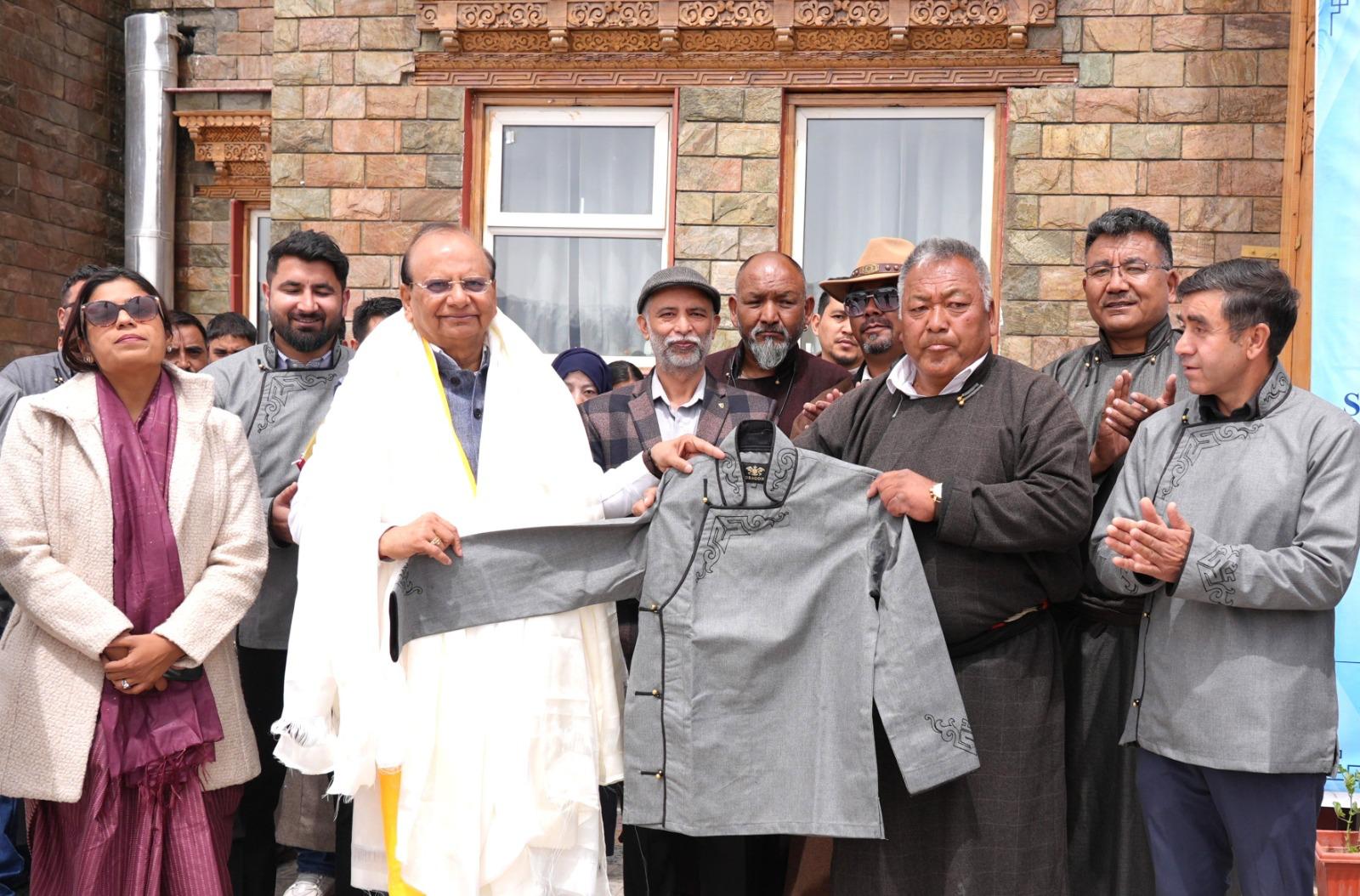
Leh, Apr 17: In a significant step towards enhancing the tourism experience and promoting Ladakh’s unique cultural identity, the Administration of the Union Territory of Ladakh has launched a traditional Ladakhi uniform for commercial drivers following the intervention of the Lieutenant Governor of the Union Territory of Ladakh, Vinai Kumar Saxena. On the occasion, the Lieutenant Governor also flagged off a vehicle branding initiative, featuring a common logo for all registered tourist vehicles.
Aimed at ensuring a pleasant, safe, and culturally immersive experience, the initiative recognises drivers as the first point of contact for tourists and seeks to position them as cultural ambassadors of Ladakh. The introduction of a standardised logo-based sticker for tourist vehicles will create a distinct identity while enabling easy identification of authorised vehicles, thereby enhancing safety, transparency, and reliability.
Speaking on the occasion, the Lieutenant Governor said, “Our drivers are the first ambassadors of Ladakh for every visitor. This initiative not only enhances the tourist experience but also proudly showcases our rich cultural identity. It will ensure safer, more reliable services while strengthening Ladakh’s position as a unique and responsible tourism destination.”
The initiative follows a meeting of the Lieutenant Governor with tourism stakeholders, including representatives from ALTOA, ALHGHA, and AKTTA, held on March 17, after which directions were issued to mandate traditional attire for commercial drivers. Subsequently, the Regional Transport Officer (RTO), Ladakh, issued a circular on March 23 making it mandatory for all commercial drivers across Leh and Kargil to wear traditional Ladakhi attire. The directive covers all categories of transport vehicles.
The initiative is expected to bring greater discipline and professionalism in the tourism transport sector, while instilling a sense of pride among local drivers. It will be implemented in a phased manner in consultation with stakeholders.
 Follow our WhatsApp channel
