

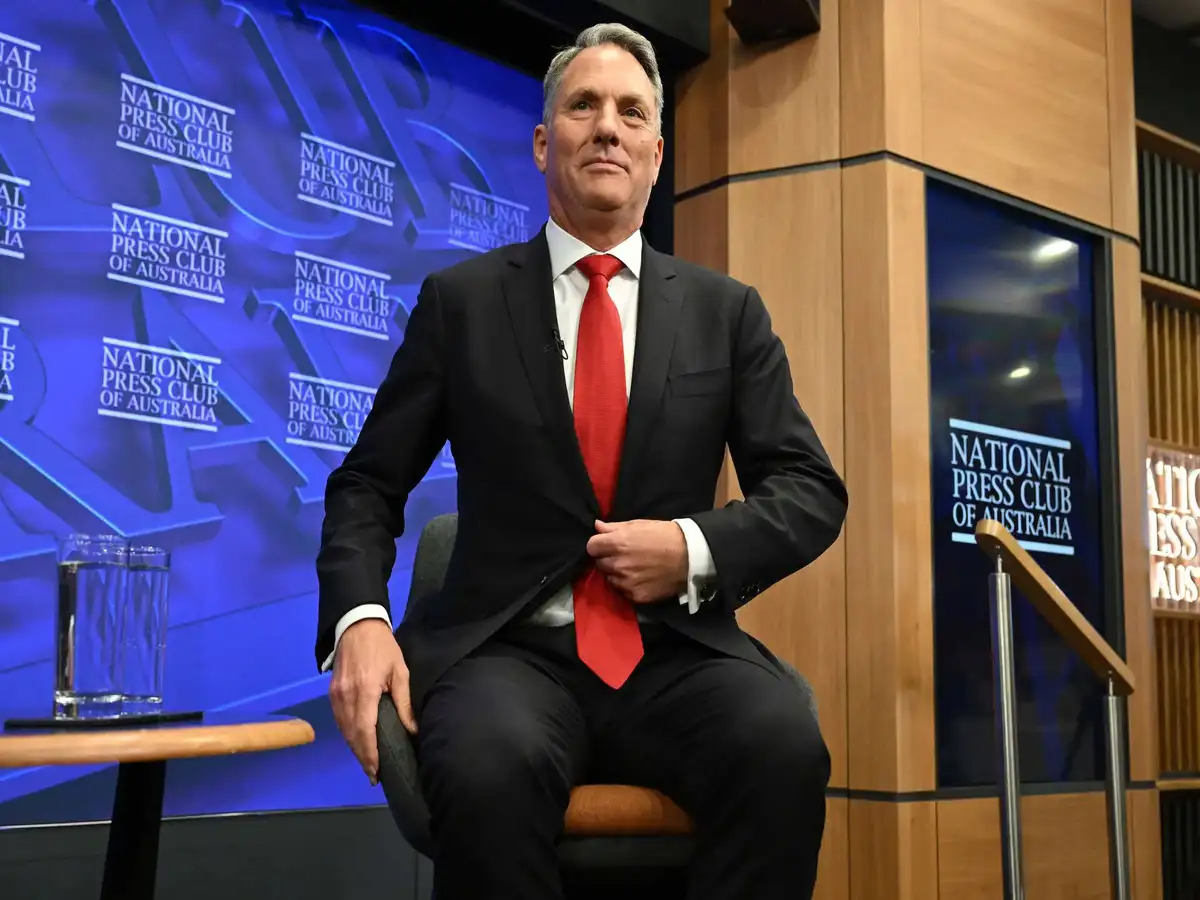
MELBOURNE, Apr 16: The Iran war had greatly complicated the global strategic landscape, Defence Minister Richard Marles said Thursday as he announced a major increase in Australian military spending.
Marles released the latest two-year update of Australia’s defence strategy and said an additional 53 billion Australian dollars (USD 38 billion) in spending on defence was planned over the next decade.
Australia’s defence budget would grow from 2.8 per cent of GDP this year to 3 per cent by 2033 as “Australia faces its most complex and threatening strategic circumstances since the end of World War II,” Marles said.
Asked how much more complex and threatening Australia’s circumstances were since the United States and Israel attacked Iran in February, Marles told reporters: “I don’t think anyone could honestly answer that question.”
“It greatly complicates the global strategic landscape,” Marles said. “The world feels less safe.”
“Having said that, we do very much support the strategic objective of denying Iran a deployable nuclear weapon,” Marles added.
Marles said his government’s decision to increase defence spending to 3 per cent of GDP was not a response to pressure from US President Donald Trump’s administration.
The Pentagon released its own National Defence Strategy in January that chastised US allies to take control of their own security.
The Australian government was making its own resourcing decisions, Marles said.
“What that has yielded to date is, under our government, the biggest peacetime increase in defence spending that our nation has seen,” Marles said.
The latest spending strategy would focus on Australian self-reliance, which should not be confused with military self-sufficiency, Marles said.
“This is not about jettisoning alliance relationships. To the contrary, alliances, especially with the United States, will always be fundamental to Australia’s defence,” Marles said.
Australia’s largest-ever defence investment is expected to be a fleet of at least eight submarines powered by US nuclear technology provided through the AUKUS partnership with the United States and Britain.
Australia expects the subs would cost between AUD 268 billion (USD 193 billion) and AUD 368 billion (USD 264 billion) over three decades. (AP)
 Follow our WhatsApp channel
