

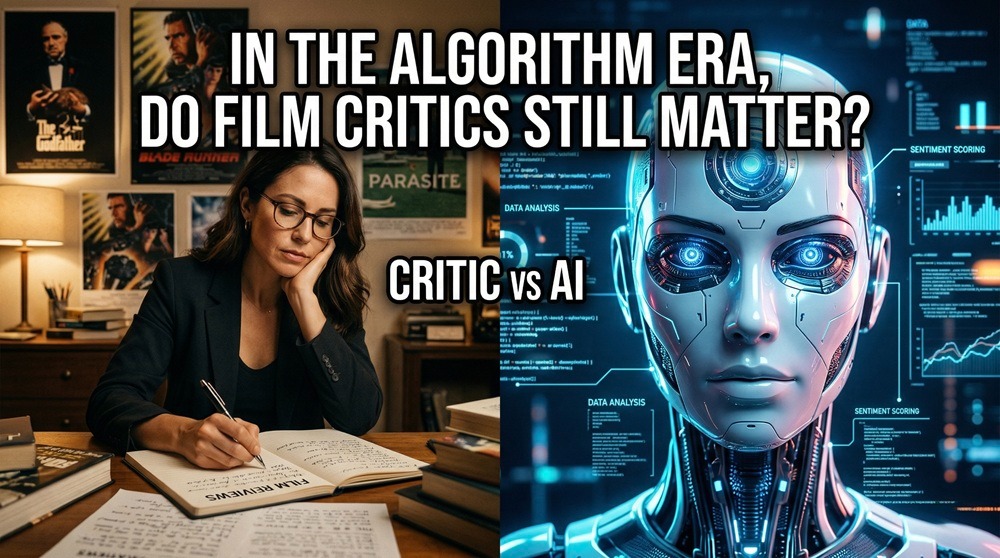
The way Indians discover films has changed so sharply that the old Sunday ritual of waiting for a critic’s verdict now feels almost nostalgic. Today, a movie often reaches the audience first as a thumbnail, a recommendation card, a search result snippet, or a five-line AI summary. Only later, if at all, does it appear as a full review.
In this new order of attention, the film is no longer introduced by the critic alone. It is filtered, ranked, and framed by machines before a human voice enters the conversation.
Netflix says its recommendations are built from viewing habits and the behaviour of similar users. YouTube explains that its suggestions are shaped by watch history, broader viewer trends, and video topics. Google’s AI Overviews now offer machine-generated snapshots with links to dig deeper.
Together, these systems are changing how audiences meet culture. Interpretation is often compressed first, and only then expanded through detailed criticism.
The Rise of AI in Content Discovery
Streaming platforms and search engines no longer just organise content. They actively curate attention.
Netflix describes its recommendation system as a personalised engine built on viewing habits and similar users. YouTube positions its homepage and Up Next panel as tools to help users find videos they want to watch. Google’s AI Overviews aim to provide quick understanding along with pathways to deeper links.
As a result, film discovery is becoming less about browsing and more about being guided. A viewer does not always search for a film anymore. The system often places it in front of them, predicting a likely match. At the same time, users often move beyond mainstream platforms to explore alternative discovery routes, including niche review hubs such as TamilYogi, where regional content is surfaced in a more direct, community-driven way.
This shift matters in India, where discovery is increasingly compressed into brief moments. A viewer who watches a regional thriller or even a short comedy clip can quickly receive a chain of similar recommendations.
The algorithm learns from repetition, not from taste in any meaningful cultural sense. It reads behaviour, not intention. That makes it efficient, but also narrow. Audiences are entering cinema through predictive systems rather than through a broad editorial conversation.
A second layer now sits on top of recommendations, the summary layer.
AI tools are designed to distil long text into short, digestible forms. That logic is now shaping how audiences consume reviews. Google describes AI Overviews as a way to deliver key information quickly, while industry-wide tools increasingly prioritise synthesis over depth.
In entertainment, this has created a clear behavioural shift. Many users no longer begin with full reviews. They look for the gist, the verdict, and the tone in just a few lines.
This change directly affects the economics of criticism. A thousand-word review such as “Raakaasaa Movie Review“, which was recently released, still holds value, but readers may only encounter a fragment, a search snippet, or a quoted rating on social media.
The role of the review is evolving. It must inform at length, but also remain meaningful when reduced. For film journalists, this is a demanding shift. Clarity now has to survive compression.
Recommendation Engines vs Human Critics
At a glance, algorithms and critics appear to serve the same function, helping audiences decide what to watch. In reality, their logic is fundamentally different.
Recommendation systems are built for relevance, engagement, and retention. Critics operate through context, interpretation, and judgment.
A platform may recognise that a user watches crime dramas on Friday nights. A critic, however, can explain why one crime drama feels culturally revealing while another feels disposable.
One system predicts behaviour. The other interprets meaning.
This distinction matters because film is not just content. It carries language, memory, politics, performance, regional identity, and social mood. Algorithms amplify similarity. Criticism explains the difference.
A film can be popular without being significant. Only criticism consistently asks why.
The Changing Role of Film Journalism
Film journalism is now adapting to the speed of algorithmic consumption.
Headlines must be sharper. Introductions must work faster. Reviews compete with snippets, social posts, and AI-generated previews for attention.
Search itself is evolving in this direction. Platforms increasingly aim to answer quickly and then direct users outward. That means journalism must work harder to hold attention once it is discovered.
This does not make journalism shallower. It makes it more disciplined.
The strongest reviews now operate on two levels. They must be clear in a few lines, yet rich enough to reward a full reading.
For Indian film journalism, this balance is especially important. Audiences may arrive through algorithmic funnels, but they still value a voice that feels informed, distinct, and independent.
Why Human Film Criticism Still Matters
No algorithm fully understands disappointment, delight, awkward pacing, or emotional resonance in human terms.
A critic can sense tonal imbalance, interpret cultural references, and connect a film to lived experience. This is especially vital in India, where cinema carries regional nuance, language specificity, and social codes that resist simplification.
A machine can identify what is popular. A critic explains why a film moves people, irritates them, or lingers after the credits roll.
The best criticism also invites disagreement. It creates space for conversation rather than simply delivering a verdict.
AI summaries are designed to converge. Criticism, at its best, provokes.
In a landscape crowded with instant reactions, the human review performs a rare function. It slows the audience down just enough to think.
Regional Review Platforms in the Algorithm Era
Even within an algorithm-driven ecosystem, independent regional review platforms continue to shape audience opinion. Their importance lies in specificity rather than scale. Large systems prioritise scale, but independent voices often speak directly to defined communities and tastes.
When mainstream discovery becomes too broad, niche platforms gain relevance. They offer alternative framing, local insight, and a stronger sense of editorial identity.
Their reach may be smaller, but their influence can be sharper. In an environment dominated by automated visibility, independence itself becomes a distinguishing strength.
The Future of Film Discovery and Criticism
The future of film reviews will not be defined by a conflict between AI and human critics. It will be shaped by coexistence.
Algorithms will continue to dominate discovery because they are fast, personalised, and deeply embedded in platforms. Critics will remain essential because cinema still requires interpretation, context, and emotional intelligence.
The audience of the future will likely rely on both. A machine to shortlist. A critic to understand.
This dual structure presents an opportunity for film journalism. Reviews can become more modular, searchable, and responsive without losing depth.
The most durable model is not replacement, but balance. AI will handle speed and scale. Human writers will preserve meaning, memory, and judgment. In film culture, that balance may become the most valuable recommendation of all.
 Follow our WhatsApp channel
