

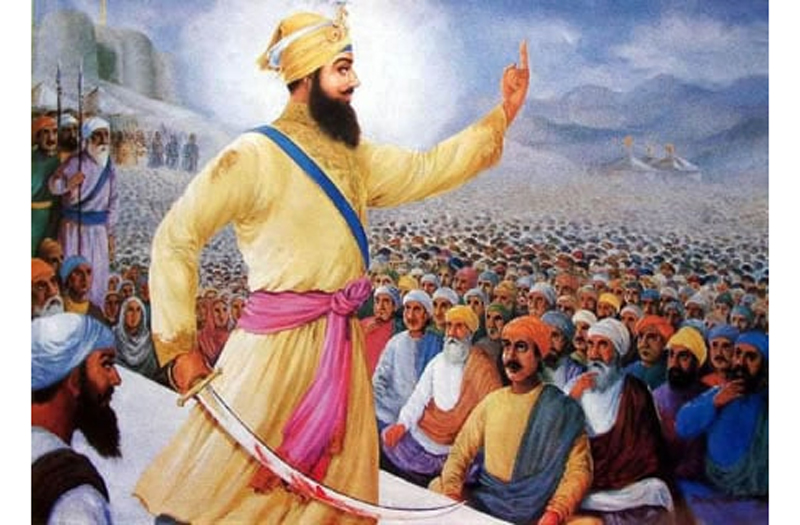
Khalsa Sajna Diwas
Inderjeet S.Bhatia”Prince
bhatiainderjeet3@gmail.com
Baisakhi, celebrated on April 13 or 14, is one of the most important festivals in northern India, especially in Punjab. It marks both the harvest of the rabi crop and a deeply significant moment in Sikh history. For farmers, it is a time of joy and gratitude as golden wheat fields are harvested after months of hard work. Villages come alive with fairs, traditional dances like bhangra and giddha, and a spirit of celebration.
Beyond its agricultural importance, Baisakhi holds profound religious meaning for Sikhs. It commemorates the historic day in 1699 at Anandpur Sahib, when Guru Gobind Singh Sahib Ji established the Khalsa Panth. This event, known as” Khalsa Sajna Diwas,” transformed Sikh identity and laid the foundation of a community rooted in equality, courage, and faith.
On this day, Guru Gobind Singh Sahib Ji called upon his followers to demonstrate their devotion by offering their heads. In response, five men stepped forward, willing to sacrifice everything for their faith. These five became the revered Panj Pyare, whose names are:
Bhai Daya Singh (from Lahore)
Bhai Dharam Singh (from Hastinapur)
Bhai Himmat Singh (from Jagannath Puri)
Bhai Mohkam Singh (from Dwarka)
Bhai Sahib Singh (from Bidar)
Guru Gobind Singh prepared Amrit (holy nectar) and initiated them into the Khalsa, creating a new order of “saint-soldiers” committed to righteousness and justice. In a powerful act of equality, he asked the Panj Pyare to initiate him as well.
In the words of Guru Gobind Singh Sahib Ji
“KHALSA MERO ROOP HAI KHAAS,
KHALSA MEI MAIN KARU NIWAS”
The Khalsa was given a distinct identity through the Five Ks-Kesh, Kangha, Kara, Kirpan, and Kachera-and a code of conduct that rejected caste divisions and promoted unity. Men were given the name “Singh” and women “Kaur,” reinforcing dignity and equality.
Today, Baisakhi is celebrated with devotion and enthusiasm. Gurdwaras hold special prayers, Nagar Kirtans are organized, and community meals (langar) are served to all, symbolizing equality and service. The day remains a powerful reminder of the values established by Guru Gobind Singh Sahib Ji-faith, courage, and the fight against injustice. Thus, Baisakhi is not just a harvest festival but a defining moment in Sikh history. Through Khalsa Sajna Diwas and the legacy of the Panj Pyare, it continues to inspire generations with its message of unity, sacrifice, and spirituality Today, Khalsa Sajna Diwas continues to inspire millions. It is not only a remembrance of a historic event but also a reaffirmation of values such as justice, equality, and selfless service. Sikhs around the world celebrate this day with devotion, organizing processions, community services, and charitable activities
BAISAKHI BEYOND PUNJAB:
While Punjab remains the heart of Baisakhi celebrations, the festival is observed across India and by the global Punjabi diaspora. In states like Haryana and Himachal Pradesh, it is also celebrated as a harvest festival. In other parts of India, it coincides with regional New Year festivals such as Pohela Boishakh in Bengal and Vishu in Kerala.
In countries like Canada, the United Kingdom, and the United States, large-scale Baisakhi parades showcase Punjabi culture and Sikh heritage, attracting people from diverse communities. These celebrations serve as a bridge between tradition and modernity, preserving cultural identity in a globalized world.
CONCLUSION:
Baisakhi is a festival that beautifully blends agricultural joy with profound spiritual meaning. In northern Punjab, it reflects the rhythm of rural life and the gratitude of farmers, while for Sikhs, it stands as a cornerstone of faith and identity. The commemoration of Khalsa Sajna Diwas elevates Baisakhi from a seasonal celebration to a historic milestone that redefined a community.
The legacy of Guru Gobind Singh Sahib Ji, the birth of the Khalsa continue to resonate through generations, reminding humanity of the enduring values of courage, equality, and devotion. As fields turn golden and prayers fill the air, Baisakhi remains a timeless celebration of life, faith, and unity.
 Follow our WhatsApp channel
