

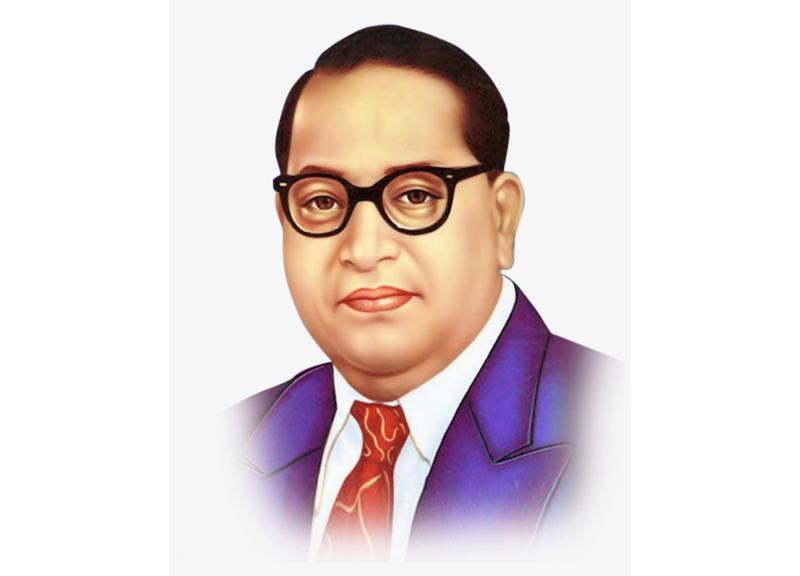
(Ambedkar Jayanti)
Dr Manmeet Motan, Dr Mandeep Singh Azad
mandeepsinghazad@gmail.com
As India prepares to celebrate Ambedkar Jayanti, we do more than commemorate the birth of a great leader we revisit a living philosophy. In an age marked by global unrest, widening inequalities, identity conflicts, and technological disruption, the question arises: What would Dr. B. R. Ambedkar have done if he were leading us today?
To answer this is not merely an exercise in imagination, but a necessity for national and global introspection. In a world increasingly fractured by inequality, identity conflicts, and economic uncertainty, Ambedkar’s vision offers not just guidance, but a powerful roadmap for transformation.
Promoting Fraternity: The Forgotten Ideal
While liberty and equality are often discussed, Ambedkar placed equal importance on fraternity a sense of brotherhood and shared destiny. In today’s polarized environment, fostering fraternity means encouraging empathy and mutual respect, rejecting hate speech and divisive narratives, celebrating diversity as a unifying force. Dr. Ambedkar was a man of vision, conscious of the historic but difficult task of carving an egalitarian society from out of a bewildering mass of religions, communities, castes, races, languages, beliefs and practices.
Today’s world is fraught with challenges wars, economic disparities, rising intolerance, erosion of democratic institutions, and the ethical dilemmas posed by artificial intelligence. India, too, stands at a crossroads: balancing rapid economic growth with social justice, managing diversity while preserving unity, and ensuring development without exclusion. These challenges are not entirely new. Ambedkar lived through colonial oppression, caste discrimination, and systemic inequality. Yet, his response was neither reactionary nor divisive it was visionary, rooted in constitutional morality, rationality, and social justice.
Born on April 14, 1891 in Madhya Pradesh, Dr Bhimrao Ramji Ambedkar is also known as Babasaheb Ambedkar. He was a renowned social reformer, politician and jurist. Ambedkar is called the Father of Indian Constitution. He was born in a family of Mahar caste of Hindu household, which is viewed as a caste of untouchables. Ambedkar was the founder member of the Independent Labour Party. Later, the name was changed to Scheduled Castes Federation by Babasaheb and later evolved as the Republican Party of India. His party fought the 1937 Bombay election to the Central Legislative Assembly for 13 reserved and four general seats, he won 11 and 3 seats respectively. Dr Bhimrao Ramji Ambedkar, who became the first law minister of India in the Congress-led Centre, was appointed as the chairman of the constitution drafting committee in 1947 and was given the responsibility of writing the country’s new constitution. American historian Granville Seward Austin has described the Constitution drafted by Ambedkar as ‘first and foremost a social document. Every increase in ‘Dearness Allowance’ (DA) which brings a smile on your face, should also be an occasion for you to thank Dr Ambedkar. If you have ‘Leave Benefit’, bow your head to Dr Ambedkar. If ‘Revision of Scale of Pay’ cheers you, remember Dr Ambedkar. It was Dr Ambedkar who brought in the 8-hour working day to India, bringing it down from 14 hours. He brought it in the 7th session of Indian Labour Conference in New Delhi, November 27, 1942.All workers should be grateful to Dr Ambedkar, especially women employees, as Dr Babasaheb Ambedkar framed many laws for women workers in India such as ‘Mines Maternity Benefit Act’, ‘Women Labour Welfare Fund’, ‘Women and Child Labour Protection Act’, ‘Maternity Benefit for Women Labour’, and ‘Restoration of Ban on Employment of Women on Underground Work in Coal Mines’.
The Idea of Samrasta: Beyond Mere Coexistence Samrasta, or social harmony, is not simply the absence of conflict it is the presence of justice. It demands a society where individuals are not defined or limited by caste, class, religion, or gender, but are empowered by equal opportunities and shared humanity. Ambedkar’s lifelong struggle was precisely for such a society. He did not seek superficial unity, but deep structural change. He understood that true harmony could only emerge when inequality is dismantled at its roots.
Ambedkar in Today’s Troubled World
If Ambedkar were witnessing today’s global landscape marked by wars, polarization, misinformation, and economic disparities his response would be firm yet visionary. He would emphasize that the crisis of the modern world is not merely political or economic, but fundamentally moral and social. His approach would likely focus on three pillars:
Constitutional Morality as a Global Ethic
Ambedkar believed that laws alone are not enough, societies must internalize the values behind them. In an era where democratic institutions face erosion, he would call for a renewed respect for constitutional principles justice, liberty, equality, and fraternity. He would caution against majoritarianism and populism, urging nations to protect the rights of minorities and uphold the rule of law.
Education as the Great Equalizer
Ambedkar famously declared education as the primary tool for liberation. In today’s digital and knowledge-driven economy, he would push for universal access to quality education, especially in rural and marginalized communities, bridging the digital divide to ensure no one is left behind, encouraging critical thinking to combat fake news and social divisions.For Ambedkar, education was not just about literacy it was about awakening consciousness and empowering individuals to challenge injustice.
Economic Justice and Inclusive Growth
In a world of stark inequalities, Ambedkar’s economic vision would be deeply relevant. He would advocate for policies that prioritize livelihood security for farmers, laborers, and informal workers, strengthening cooperatives and local economies and ensuring fair distribution of resources and opportunitie.He would remind us that economic growth without social justice is hollow.
From Tribute to Transformation
If Ambedkar were alive today, he would likely reject populism and emotional polarization. Instead, he would advocate for institutional strengthening. He believed deeply in the power of the Constitution-not as a static document, but as a dynamic instrument for justice. He would remind us that democracy is not merely about elections, but about liberty, equality, and fraternity being lived realities. In a time when democratic values are often strained globally, Ambedkar’s insistence on accountability and rule of law would be more relevant than ever.
Ambedkar Jayanti must go beyond symbolic gestures. True homage to B. R. Ambedkar lies in translating his ideas into action. A samrasta society (a harmonious and egalitarian society) cannot be built overnight it requires sustained effort, courage, and collective will. It demands that we confront uncomfortable truths and commit to meaningful change. In a world searching for stability and fairness, Ambedkar’s vision shines as a beacon of hope. His ideals are not confined to history; they are tools for shaping the future. As we celebrate this Ambedkar Jayanti, let us move from remembrance to resolve from admiration to action. Let us strive to build an India where equality is not an aspiration, but a lived reality where samrasta is not just a concept, but a way of life. Only then can we truly honor the legacy of B. R. Ambedkar and fulfill his dream of a just, inclusive, and harmonious society
(The authors are SDM Dudu,Udhampur and Scientist SKUAST-Jammu)
 Follow our WhatsApp channel
