

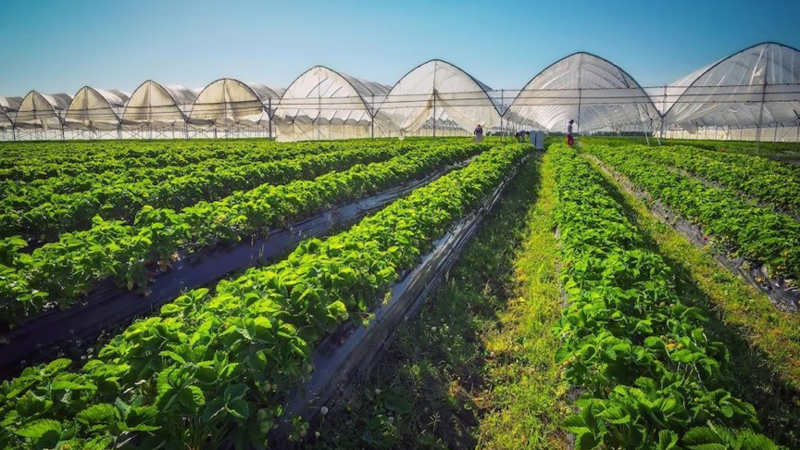
Few territories in India are as richly endowed by nature as J&K, yet few have struggled as persistently to convert that endowment into reliable prosperity. The announcement this week that NITI Aayog has prepared a detailed roadmap for the horticultural transformation of J&K – anchored by an ambitious programme called Operation Golden Greens – therefore arrives as a genuinely welcome development. It is timely and structured, and if pursued with the discipline and accountability that previous efforts conspicuously lacked, it could mark a turning point for an economy that has long deserved better.
The scale of the opportunity is not in dispute. J&K produces some of the world’s finest apples, walnuts, almonds, saffron and basmati rice. Its temperate valleys and altitude gradients create growing conditions that are difficult to replicate. The GI tags already secured for Kashmiri saffron, Mushkbudji rice, honey and R.S.Pura rice are more than a mark of origin – they are market credentials that premium buyers in Europe, West Asia and East Asia actively seek. NITI Aayog’s report rightly identifies these products as carrying significant export potential that India has barely begun to exploit. India remains a marginal player in global commodity markets; it could, with investment and organisation, dominate.
Yet the gap between potential and performance has not been accidental. The Jammu-Srinagar National Highway – the Valley’s solitary lifeline for the bulk of its commercial traffic – is chronically unreliable. Landslides, snowfall and seasonal closures just destroy the harvesting season. When trucks cannot move, fresh produce rots. The railway alternative, still a single-track line with limited capacity, cannot absorb the seasonal freight peaks that coincide precisely with the apple harvest. Cold storage capacity across the UT remains negligible. In the absence of a functioning cold chain, every disruption on the highway translates directly into loss for farmers, for traders, and for the broader economy.
The agronomic picture is similarly mixed. Despite decades of extension outreach, the shift to high-density plantation, improved rootstocks, and modern orchard management has remained slow and uneven. Floriculture, which could easily be a growing source of rural income in altitude zones, has never received the focused policy attention it merits. The saffron crisis offers the starkest warning of what happens when ambition is not backed by execution. Pampore was once the saffron bowl of the world, a source of the finest crocus threads and a symbol of Kashmiri distinctiveness. Production has collapsed to less than a quarter of historical levels. A GI tag and periodic Government announcements have not arrested the decline. The causes – falling water tables, fragmented holdings, adulteration in the supply chain, and absence of processing infrastructure – were identified years ago. What followed was insufficient and poorly monitored. Operation Golden Greens must be measured, in part, against that sobering track record.
On the evidence of the Aayog’s report, the framework this time is notably more systematic. Five sub-missions – covering dry fruits, fresh fruits, vegetables, floriculture and minor crops – are structured around twelve common components while retaining differentiated priorities for each value chain. The phased architecture acknowledges that horticultural transformation is not an announcement but a generation-long commitment. The proposed Indian International Kashmir Saffron Park, dedicated branding in premium global markets, CA storage expansion and mechanisation of orchards – these are the right levers. The question, as always, is whether the institutional plumbing exists to deliver them.
For that, the entire supply chain – from the orchard to the port – requires a fundamental reboot. The transport corridor must be treated as agricultural infrastructure, not merely a highway project. Cold storage investment must be demand-led and operationally managed, not ceremonially inaugurated and left to decay. The private sector must be brought in on terms attractive enough to commit capital.
India’s broader export ambitions need J&K to succeed. The UT’s GI-tagged products can anchor a premium agricultural export narrative. Premium positioning requires premium consistency – in quality grading, in packaging, in phytosanitary compliance and in brand stewardship. None of that is possible without the infrastructure and institutional coordination that have been absent for too long. Operation Golden Greens is a golden proposal. The obligation now lies with the implementing agencies, the UT administration and the Union Government to honour it across all three phases of the roadmap’s twenty-one-year horizon.
 Follow our WhatsApp channel
