

NEW DELHI, Apr 10: The Congress on Friday alleged that the Modi government’s “U-turn” on the implementation of the women’s reservation law is aimed at covering up his “monumental failures” in governance and “severe setbacks” to foreign policy.
The opposition party claimed that the PM owes an “apology” to the women of India as he did not accept the Congress’ demand of implementing the Nari Shakti Vandan Adhiniyam, 2023, from the 2024 polls itself.
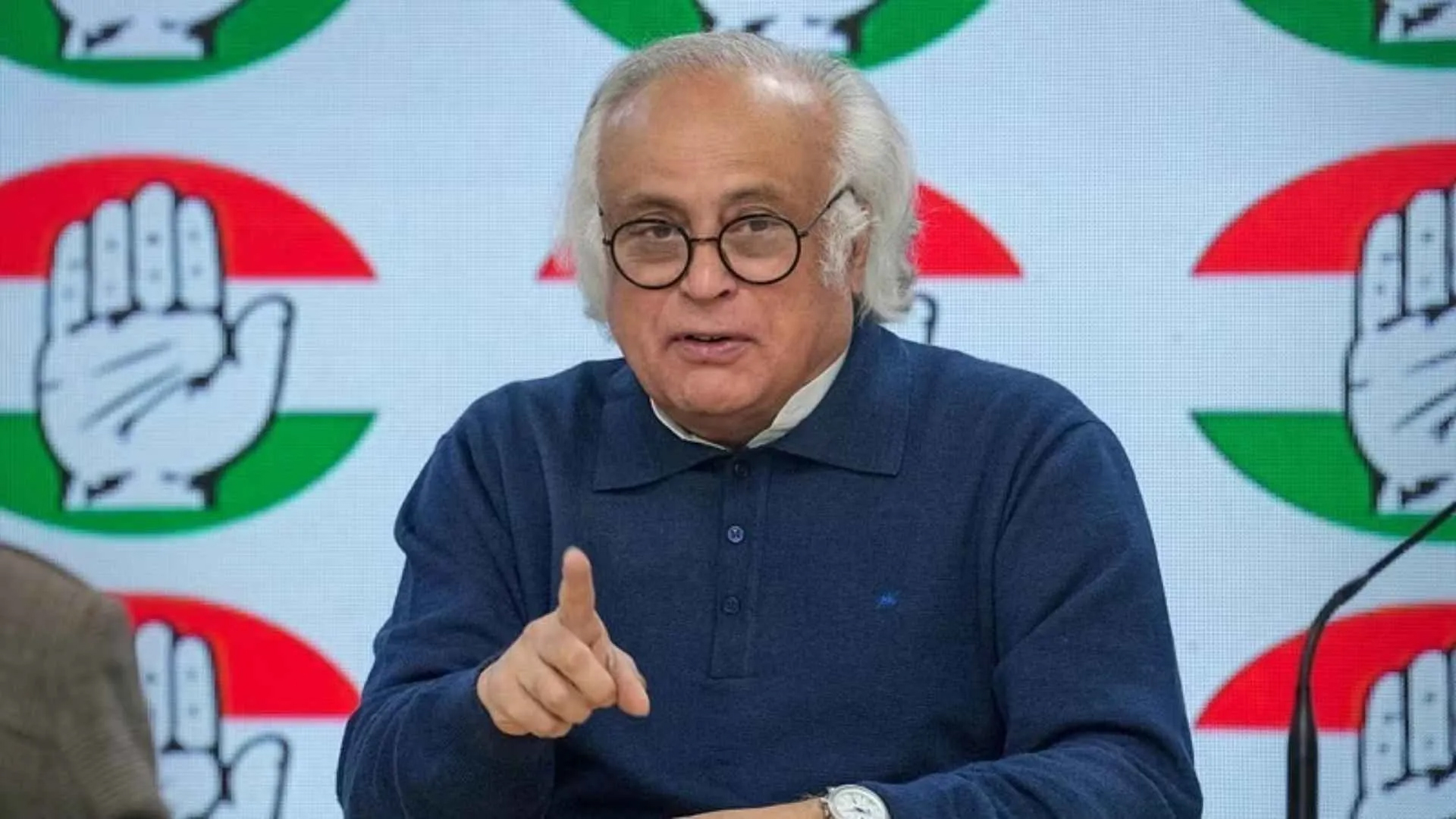
“Actually he owes an apology to the women of India. When the Nari Shakti Vandan Adhiniyam, 2023 was passed by Parliament in 2023 unanimously, the Indian National Congress had demanded its implementation from 2024 itself,” Ramesh said on X.
But this was not acceptable to the PM who made the reservation dependent on the delimitation and census exercises that he had failed to conduct and then dithered on for many years, the Congress leader said.
Ramesh claimed that 30 months later, facing defeat in the assembly elections, in spite of the Election Commission functioning as a subordinate office of the Union Home Ministry, the PM has changed his mind.
“He wants us to forget the Census and forget the census-based delimitation on the grounds that it will take too long. This is despite the fact that his Census Registrar has clarified that the results will be out by 2027. It’s a narrative that is based on lies and equivocation, all undertaken with the hope that the women of Tamil Nadu and West Bengal will flock to the BJP,” Ramesh said.
After all, the BJP has no worthwhile narrative on any other issue in these states, he added.
“This a U turn by the Modi Government, one that exposes its unwillingness to engage with the opposition and its total lack of planning,” he said.
Ramesh said Modi is already claiming credit for the U-turn as well.
“There is simply no limit to his hypocrisy and deception. All this is to cover up his monumental failures in governance and severe setbacks to foreign policy,” Ramesh alleged.
The Congress leader’s remarks come a day after Modi said that the proposed amendments to the Women Reservation Act are not just a legislative exercise but a reflection of the aspirations of crores of women across India, urging all MPs to come together to support this significant move.
In a signed article posted on his website narendramodi.in, the prime minister also said the initiative is an affirmation of a principle that has long guided India’s civilisational ethos that society progresses when women progress.
He said it is imperative that the 2029 Lok Sabha elections and assembly polls to various states in the coming times are conducted with women’s reservation in place.
The prime minister said the nation stands at the threshold of a historic occasion, and it is an opportunity to deepen the foundations of the country’s democracy and to reaffirm the collective commitment to equality and inclusion.
He said that on April 16, Parliament will be convened to discuss and pass an important bill that advances women’s reservation.
The Budget session of Parliament has been extended and a special three-day sitting of the House has been convened from April 16 to 18 when the ‘Nari Shakti Vandan Adhiniyam’, more commonly known as the Women Reservation Act, would be amended for its implementation from the 2029 general elections.
The provision to provide 33 per cent reservation to women in the Lok Sabha and state assemblies was brought by amending the Constitution in 2023, but it will come into effect after the completion of the delimitation exercise on the basis of the 2027 Census.
It is expected to come into force only in 2034 if the present law remains as it is, and therefore, there is a need to amend it to make it enforceable from the 2029 general elections.
The redrawing of the constituencies will be done on the basis of the 2011 Census rather than the proposed 2027 Census. A similar exercise will be carried out for state assemblies where seats will be reserved on a pro-rata basis.
According to the broad contours available, the number of Lok Sabha seats would be increased from the present 543 to 816, with 273 seats reserved for women. The reservation will also be done on a “vertical basis” with seats allocated for SCs and STs. (PTI)
 Follow our WhatsApp channel
