

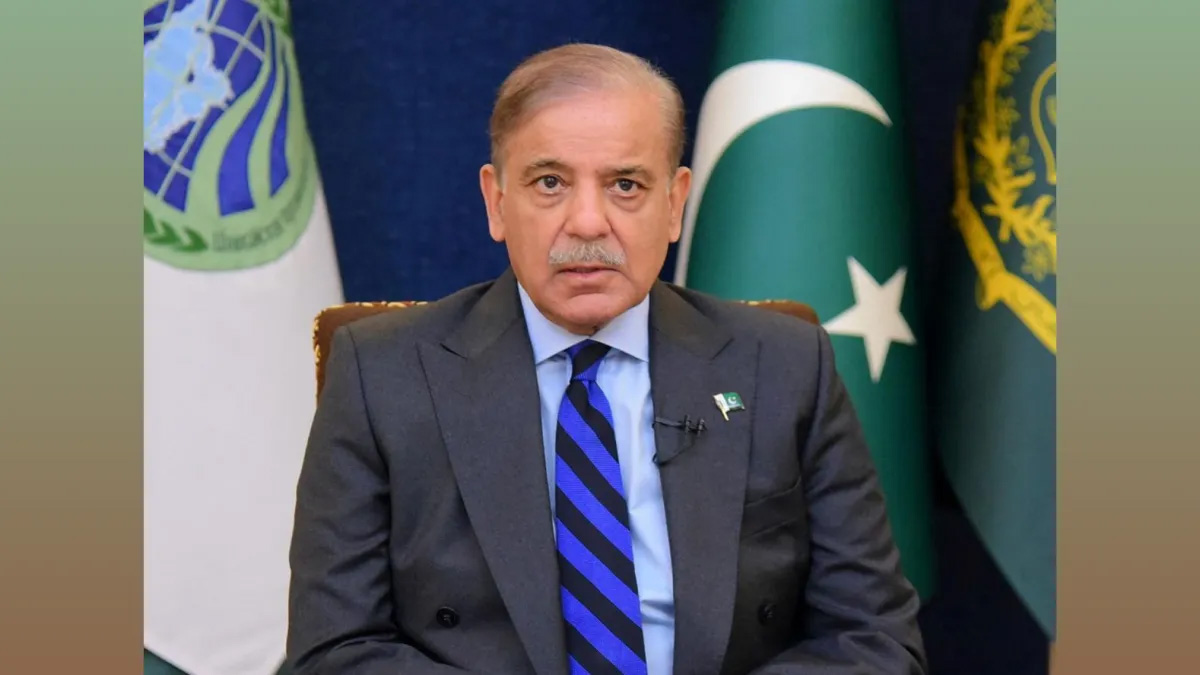
ISLAMABAD, Apr 9: Prime Minister Shehbaz Sharif has set up a special body to deal with the effects of the West Asia conflict on the economy and security of the country.
The National Coordination and Management Council (NCMC) was constituted hours ahead of the two-week ceasefire achieved between the US and Iran.
US President Donald Trump announced that he had agreed to a two-week ceasefire with Iran as proposed by Pakistan.
The NCMC is jointly headed by Minister for Economic Affairs Ahad Khan Cheema and Lt General Zafar Iqbal, who are the co-chairmen of its executive committee, according to an official notification.
Among the members, the body has the representation of all the federal departments, provincial governments and the special areas.
It has the mandate for the management of internal security, including possible internal displacement and refugees, in case of any untoward situation. It has also been tasked for narrative management and controlling of disinformation.
The council is responsible for the management and operationalisation of financial, economic, and trade-related policy measures.
The Express Tribune reported that in a maiden meeting of its executive committee of NCMC on Wednesday, the council decided that it would continue working as the danger of war still looms and many weeks may pass before the economy returns to normal functioning, even if the ceasefire is turned into a permanent peace agreement.
The council allowed the export of surplus furnace oil after fully taking into account the local energy production requirements. At least two refineries raised the issue of limited storage capacity, requiring the export of the surplus volumes.
The paper quoted the government sources as saying that during the last two days, the civil-military authorities rushed to make plans to secure energy supplies in case the United States executed its threat to attack the energy infrastructure and Iran retaliated with attacks on Middle East energy infrastructure.
Pakistan looked into the options to import fuels from Russia, Nigeria and some other countries. In addition to the cost, the major issue was the time involved in transportation of the cargoes, which could have jumped to 30 to 35 days for a tanker due to any closure of the supply routes, said the officials.
The officials said that there were around five different committees that had been constituted during the past month of the war. These committees at one hand, helped to deal with issues arising in their respective domains, but on the other hand, fragmented the decision-making.
Finance Minister Muhammad Aurangzeb chaired the committee on monitoring and securing the fuel supplies and did a splendid job in making sure that there were no shortages across the country.
However, Deputy Prime Minister Ishaq Dar chaired another committee, which was responsible for finalising a plan to give targeted subsidies.
The Ministry of Information Technology was separately looking into the issue of disbursement of these subsidies, while a Maritime Affairs committee was dealing with the logistics issues.
Another committee was working to address issues that could hamper Pakistan’s exports because of the war.
The officials said that all these committees are being dissolved, and now these decisions would take place at the forum of the National Coordination and Management Council, according to the paper. (PTI)
 Follow our WhatsApp channel
