

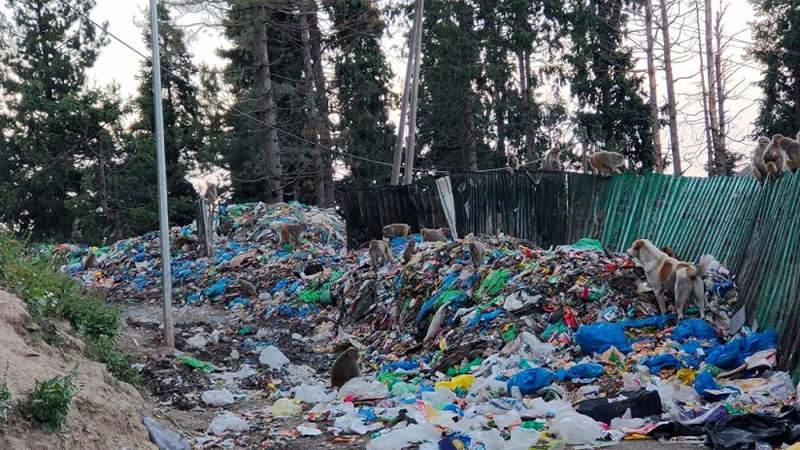
J&KPCC failed to assess risk of ground water contamination near dumping sites
Sanjeev K Sharma
JAMMU, Apr 2: The audit report by the Comptroller and Auditor General (CAG) of India has observed that the Government of Jammu and Kashmir had not prepared any policy or action plan or strategy for the implementation of Reduce, Reuse and Recycle (3 Rs) in respect of solid wastes.
The report claimed that during the years from 2017-22, only 31 per cent to 39 per cent of collected waste was treated leaving a major portion of solid waste dumped at landfill or at other dumping sites, posing the risk of harmful impact on the environment.
“The solid waste processing facilities such as Waste to Energy Plant, Leachate Treatment Plant, City Compost Plant, Waste Disposer Machine and Bailing machine remained non-functional in various Urban Local Bodies (ULBs) of J&K,” the CAG report stated.
It further informed that in 17 ULBs, segregation of waste at the source/house was not being carried out during the years from 2017-22 while in 11 ULBs, coverage of door-to-door collection of solid waste from households and commercial establishments was partial and there were three ULBs which had not carried out door-to-door collection of wastes at all.
“In 17 sampled ULBs, there was shortfall in collection of user charges besides two ULBs (MC Hiranagar and MC Rajouri) were dumping solid waste unauthorisedly and unscientifically,” the report by CAG maintained adding: “No processing or treatment facilities were in place at the waste dumping sites of 15 ULBs, as such, the waste was being dumped without modifying its physical, chemical or biological characteristics resulting in potential danger to the environment.”
It was also highlighted in the report that in 17 sampled ULBs, shortage of manpower ranged between 9.25 per cent (Bijbehara) and 75 per cent (Langate).
The report further stated that Jammu & Kashmir Pollution Control Committee (J&KPCC) had not conducted any air quality assessment in respect of landfills/dumpsites and had not assessed the risk of contamination of ground water near landfill and dumping sites.
The CAG recommended that the ULBs may ensure that the waste is actually segregated at source and they should also ensure 100 per cent collection of solid wastes from households and commercial establishments etc.
“The ULBs may put in place facilities for processing/ treatment of solid wastes at dumping sites to modify its physical, chemical or biological characteristics so that no harm is caused to the environment,” it further recommended adding: “J&KPCC may conduct air quality assessment in respect of landfills and dumpsites and assess risk of contamination of ground water, rivers and streams near landfill and dumping sites.”
 Follow our WhatsApp channel
