

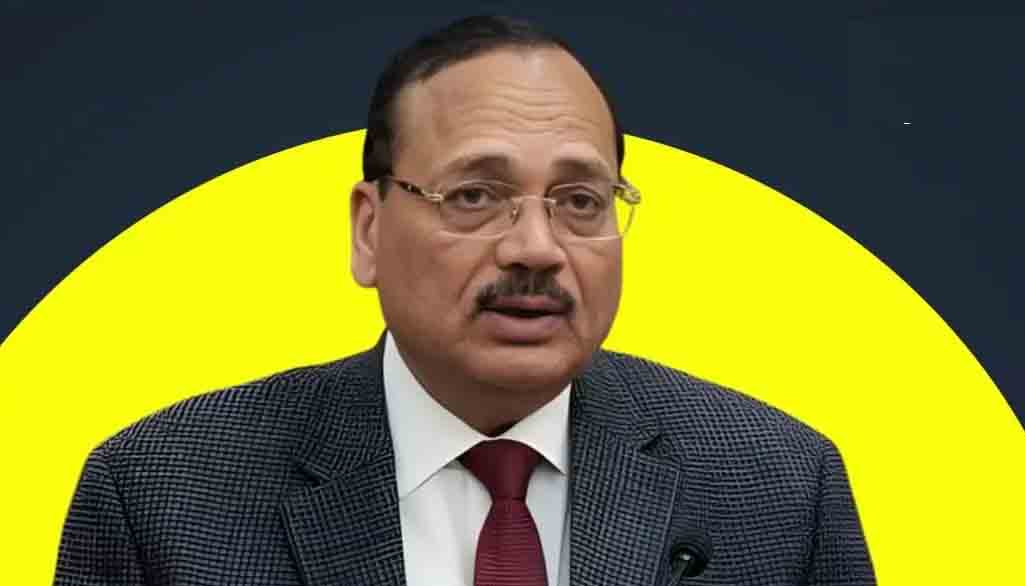
NEW DELHI, Mar 30: Highlighting the role of armed forces, Chief Justice of India Surya Kant has said the country must not compel them to “fight two battles at once”, one at the border and another at home for their legal rights, calling for better judicial access for soldiers.
Delivering a speech titled “Pointers for Hon’ble the Chief Justice’s Talk” on Sunday at Leh, Justice Kant highlighted the symbiotic relationship between the judiciary and the armed forces, stating that while courts safeguard constitutional values, it is the soldiers who create the conditions necessary for those ideals to endure.
Against the backdrop of the serene yet rugged Himalayan landscape, the CJI began his address by paying homage to the bravery of soldiers and made a special reference to the 1962 battle of Rezang La, recalling the sacrifice of Major Shaitan Singh Bhati and the 114 soldiers of Charlie Company, 13 Kumaon.
“While the Constitution speaks in the language of rights, dignity, equality, and justice, entire credit for the same goes to you for securing the conditions in which those promises are able to survive for the people of India,” he said.
“A nation cannot meaningfully speak of liberty or justice if it cannot preserve its sovereignty, its stability, and its peace. In that sense, the work of the Court and the work of the soldier are different in method, but united in purpose and complementary to each other,” the CJI said.
Referring to the difficulties faced by soldiers, he said the service in uniform does not exempt one from the ordinary burdens of life, and a soldier may still face a land dispute.
“A veteran may struggle for service or welfare entitlements. A family may find itself caught in pension-related delays, housing issues, matrimonial discord, or bureaucratic indifference,” he said.
“The nation must never place its soldiers in the position of fighting two battles at once — one at the frontier, and another at home for what is lawfully theirs. The law must travel to the soldier, because the soldier cannot always travel to the law,” he said, highlighting a lack of easy access to legal guidance.
This is not only a matter of sympathy but rather a constitutional duty, he said, adding that if the institutions of the State cannot ensure timely legal support to those who stand guard over the integrity of the nation, then they fall short of their own moral and constitutional responsibilities.
The CJI then referred to the ‘Veer Parivar Sahayata Yojana’ launched to provide free legal aid, assistance and support services to serving defence personnel, exservicemen, their dependent family members, and members of the Paramilitary Forces and CAPFs when he was the executive head of the National Legal Services Authority (NALSA).
He said conceiving and enacting the scheme for armed forces was one of the greatest highlights as the executive chairman of NALSA. He said so far, 14,929 beneficiaries have been assisted nationwide, and 438 Legal Services Clinics have been made operational, including all 34 Rajya Sainik Boards and 404 Zila Sainik Boards.
He said a workforce of 1,123 persons, including 378 members from the defence backgrounds, was deployed to ensure a culture of trust and empathy. Under the scheme, resolution of issues ranging from property disputes and pension delays to matrimonial discord and school admissions has been undertaken, he said.
Concluding the address, the CJI assured the forces, saying, “You guard the nation at her frontiers. It is the duty of the nation’s institutions to ensure that they guard all your interests arduously.” (Agencies)
 Follow our WhatsApp channel
