

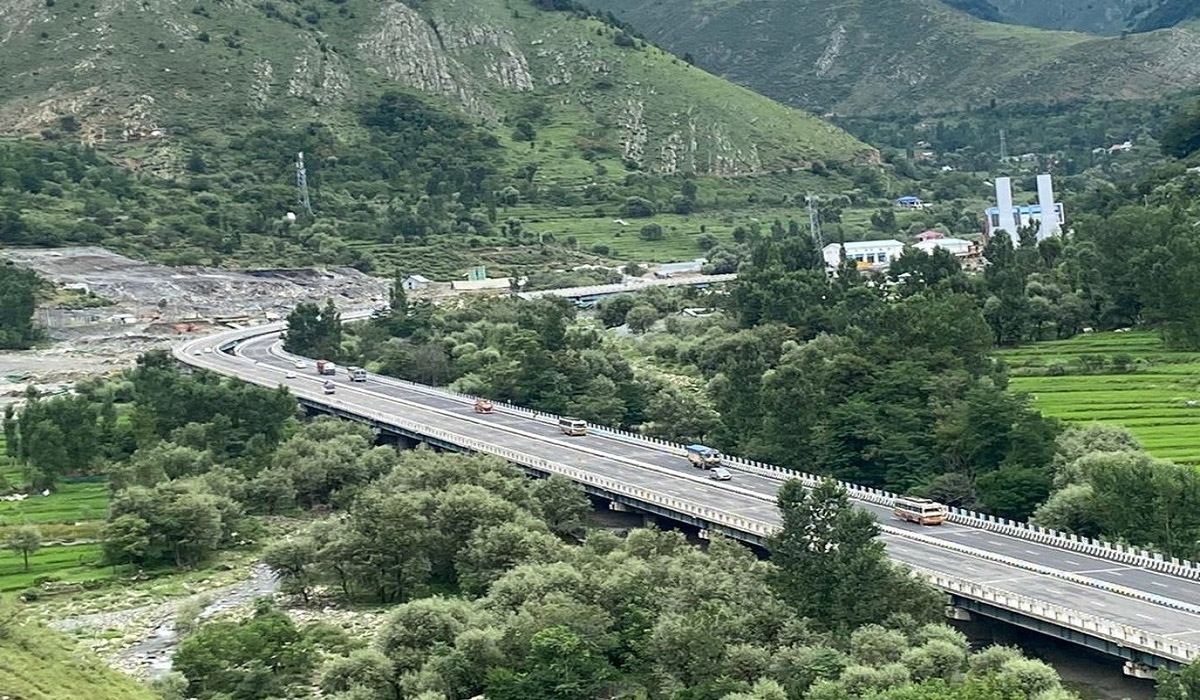
The promise of seamless, all-weather connectivity to Kashmir has long been a central component of both national strategy and regional development. In recent years, the Government has undeniably made substantial investments in road and rail infrastructure across Jammu and Kashmir, raising expectations of a transformative shift in mobility and economic integration. The completion of railway connectivity to the Valley last year marked a historic milestone. Yet, beneath these headline achievements lies a more complex and concerning reality-critical gaps in reliability, capacity, and execution continue to undermine the broader objective of uninterrupted connectivity.
There is a persistent vulnerability in existing transport corridors. The Jammu-Srinagar National Highway, the primary arterial link between Kashmir and the rest of the country, remains highly susceptible to disruptions. Landslides during the monsoon, frequent road blockages, and heavy snowfall in winter routinely halt traffic for hours, sometimes days. The Mughal Road, envisioned as an alternative route, fares no better, often rendered impassable during peak winter months due to snow accumulation. These recurring bottlenecks not only inconvenience commuters but also disrupt supply chains, emergency services, and administrative mobility. The limitations also extend to rail connectivity. While the operationalisation of the Udhampur-Baramulla rail link is a major achievement, the single-line track significantly restricts the number of trains that can be run. In times of crisis or peak demand, the inability to scale up rail operations exposes a critical structural weakness in the region’s transport network.
The economic consequences of such unreliable connectivity are profound. Kashmir’s horticulture sector-particularly apple production, which forms the backbone of the local economy-depends heavily on timely transportation to markets across the country. Frequent disruptions during harvest seasons result in delays, spoilage, and financial losses for growers and traders alike. Tourism, another vital pillar of the region’s economy, also suffers when accessibility becomes unpredictable. From a strategic standpoint, the urgency is even greater. In an increasingly volatile geopolitical environment, ensuring rapid and reliable troop and logistics movement to border areas is non-negotiable. The region’s terrain already poses natural challenges; infrastructural delays only compound these vulnerabilities.
Recognising these realities, planners have, over time, conceptualised multiple alternative routes and tunnel projects aimed at bypassing existing vulnerable stretches. The development of corridors through Kishtwar and the proposal for a network of tunnels on existing highways were intended to provide redundancy and resilience. However, progress on these initiatives has been disconcertingly slow. Several key tunnel projects remain stuck at the survey or DPR stage, with little visible movement toward execution. Similarly, the widening and upgrading of National Highway-244, which could serve as a vital alternative axis connecting the Chenab region via Kishtwar to Kashmir, continues to move in uneven and delay-ridden phases. Land acquisition disputes, contractor inefficiencies, adverse weather conditions, and administrative bottlenecks have collectively slowed progress. The situation is no better for roads falling under the Union Territory’s jurisdiction, where execution has been equally sluggish.
This gap between ambitious announcements and ground realities has led to disillusionment. While policy intent and financial allocations have been robust, the absence of timely execution has diluted their impact. Infrastructure projects of this scale and importance require not just vision but also rigorous monitoring, inter-agency coordination, and strict adherence to timelines.
Addressing these challenges demands a multipronged approach. Accountability needs to be enforced. Delays caused by inefficiency or negligence must carry tangible consequences. Equally important is the need for real-time project monitoring at the highest administrative levels. Periodic reviews, transparent reporting, and the use of technology for tracking progress can help identify bottlenecks early and ensure corrective action. Coordination between Central agencies, Union Territory departments, and local authorities must be strengthened to avoid overlaps and delays. The goal of all-weather connectivity must be pursued with a sense of urgency that matches its importance. Every region within Jammu and Kashmir-the Chenab Basin, the Rajouri-Poonch belt, and the Kashmir Valley-continues to grapple with accessibility challenges. The stakes are too high to allow delays to persist. The vision of a well-connected Kashmir is within reach, but only if execution matches ambition. For the people of Jammu and Kashmir, all-weather connectivity is not just an infrastructural necessity-it is a cornerstone of stability, growth, and security.
 Follow our WhatsApp channel
