

Excelsior Correspondent
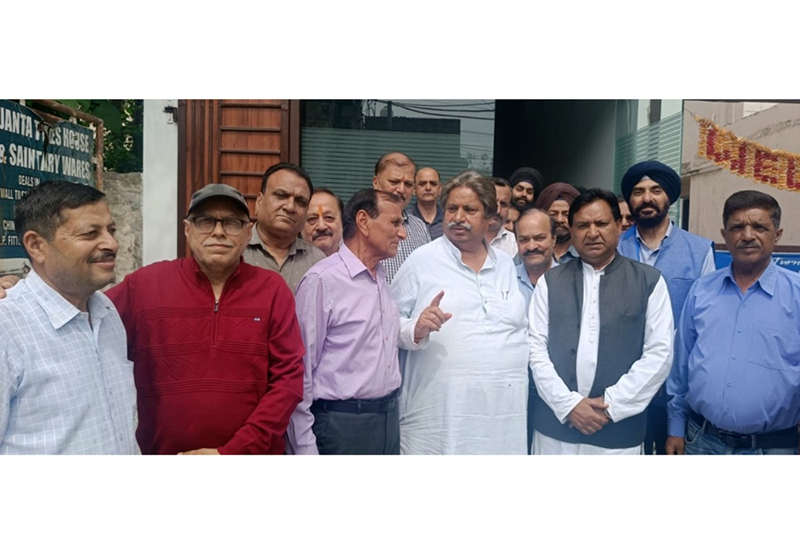
JAMMU, Mar 27: In a significant outreach aimed at giving voice to the growing public discontent across the Union Territory, working president of the Jammu and Kashmir Pradesh Congress Committee (JKPCC), Raman Bhalla today intensified his mass contact programme by visiting Gandhi Nagar Block, where he held extensive interactions with local residents, party workers and representatives of various social and professional groups.
Accompanied by prominent party functionaries including Dawarka Choudhary, Pardeep Bhalla, Bushan Kumar (Block president), Satpal Sapolia, Vipan Sharma, Kirpa Singh, Attar Singh, Sanjeev Vaid, Chanjit Chib, and others, Bhalla’s visit turned into a platform for the aggrieved public to openly express their concerns over what they described as administrative inertia and unfulfilled promises.
the interaction, a consistent pattern of grievances emerged, cutting across sectors and communities. From unemployed youth to distressed farmers, from daily wagers to women frontline workers, people narrated their struggles, underscoring a widening gap between government claims and ground realities in Jammu and Kashmir.
While addressing the gathering, Bhalla expressed deep concern over what he termed as a “systemic failure” to respond to people’s pressing needs despite the presence of an elected majority government. He asserted that the prevailing situation reflects not just policy paralysis but also a lack of political will to address the hardships of the common people.
Highlighting unemployment as the most pressing crisis, Bhalla said that the youth of Jammu and Kashmir are facing an uncertain future due to the absence of a coherent employment policy. He criticized the government for failing to attract new investments or establish industries that could generate sustainable jobs.
“The neglect of existing industrial units and absence of new industrial initiatives have compounded the problem, pushing educated youth towards frustration and despair,” he remarked, adding that employment generation must be treated as a top priority.
He raised concern over the plight of families affected by recent monsoon rains, flash floods, and other natural calamities. He noted that many victims who lost homes, crops, and essential belongings are still waiting for compensation.
 Follow our WhatsApp channel
