

Excelsior Correspondent
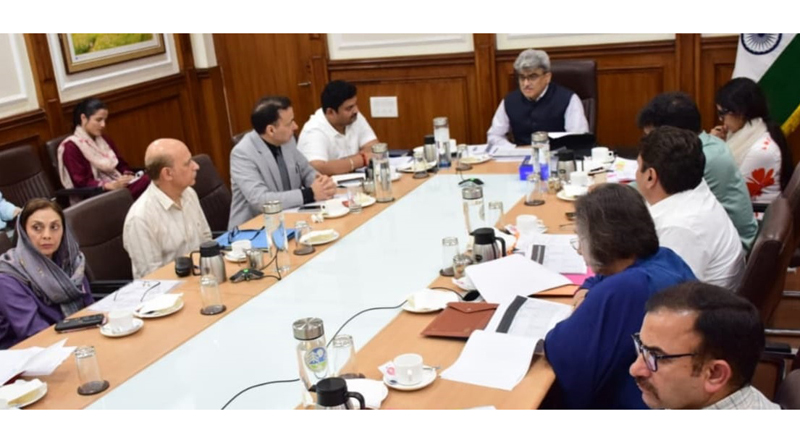
JAMMU, Mar 26: A high-level meeting was chaired by Chief Secretary, Atal Dulloo to take assessment of the steps taken by the Department of Health & Medical Education (H&ME) as part of an ongoing and sustained process to chart a comprehensive and transformative roadmap for healthcare reforms as recommended from time to time by NITI Aayog.
The meeting witnessed the participation of senior officers of the Health & Medical Education Department and other key stakeholders, focusing on accelerating systemic reforms, strengthening healthcare infrastructure, and enhancing service delivery across the Union Territory.
A forward-looking and integrated strategy was deliberated upon to transform the healthcare landscape through technology infusion, institutional collaboration, capacity building, and robust public health systems.
Speaking on the occasion, Chief Secretary Atal Dulloo underscored the importance of continued collaboration with NITI Aayog for extension of institutional support and guidance in many of the department’s endeavours.
The Chief Secretary also reviewed in detail the progress achieved across each of the key initiatives being implemented by the Health & Medical Education Department. He took a comprehensive appraisal from the Principals of various Government Medical Colleges regarding efforts to secure additional MBBS and postgraduate seats, emphasizing the need to further strengthen medical education capacity in the Union Territory.
He also undertook a thorough assessment of the advancements made in upgrading existing healthcare facilities and the introduction of new and specialized services across institutions. Stressing the importance of timely execution, he directed the concerned authorities to sustain the pace of progress, ensure optimal utilization of resources, and focus on expanding quality healthcare services to meet the growing needs of the population.
Highlighting the objectives of the meeting, Commissioner Secretary, Health & Medical Education, M. Raju outlined a series of major initiatives forming the core of the reform agenda. These initiatives, he terms, aims at ensuring accessible, affordable, and quality healthcare for all sections of society.
Elaborating on the reform strategy, the Commissioner Secretary stated that the UT is prioritizing expansion of MBBS and postgraduate medical education while fostering collaboration among premier institutions such as AIIMS, Sher-i-Kashmir Institute of Medical Sciences and Government Medical Colleges. He stated that the strategy envisages structured faculty exchange programmes, joint research initiatives, academic resource sharing, and establishment of virtual medical boards through formal institutional partnerships.
To address critical care gaps, the meeting was informed that Tele-ICU services will be implemented through a hub-and-spoke model anchored in Government Medical Colleges. The tendering process for the same has already been initiated following vetting by NITI Aayog. Tele-Radiology services are also being planned to facilitate timely diagnostics, specialist consultations, and second-opinion support across healthcare facilities.
A significant component of the reform agenda is the development of a comprehensive cancer care strategy in coordination with the Indian Council of Medical Research (ICMR). The framework includes establishment of a population-based cancer registry, development of molecular oncology centres in Government Medical Colleges, and rollout of research-driven prevention and management programmes.
Further, detailed deliberations were held on strengthening healthcare infrastructure, manpower, and digital systems. The focus on augmenting human resources, upgrading food testing laboratories, and streamlining procurement and supply chains through digital platforms such as the Drug & Vaccine Distribution Management System (DVDMS) was emphasised upon. Additionally it was informed that Recruitment processes and budgetary support are being expedited to bridge existing gaps.
 Follow our WhatsApp channel
