

Suhail Bhat
Srinagar, Mar 23: Divisional Commissioner Kashmir, Anshul Garg, today said domestic LPG supplies in the Valley remain stable, with stocks sufficient for around two weeks, while authorities continue close monitoring to prevent any disruption.
Speaking to reporters here, Garg said, “The stock position is stable for about two weeks, though it is dynamic and generally ranges between 10 to 15 days. Over the past two days, we had stock for around 14 days.”
He said oil marketing companies are being monitored by district-level committees to ensure smooth supply. “Petrol, diesel and other fuels are also being regularly reviewed at both divisional and district levels,” he added.
The administration has activated district and divisional control rooms to track supply and respond to complaints. “In case of hoarding, black marketing or overpricing, people should rely only on official information and avoid panic, rumours or fake news,” he said, adding that the government will continue to update the public.
Addressing complaints about delays in LPG delivery despite OTP generation, he said such cases are being handled individually. “The Food and Civil Supplies Department is generating daily reports, which are being monitored at the government level to minimise inconvenience to people,” he said.
On students from Jammu and Kashmir stranded in Iran, the Divisional Commissioner said efforts are going on to ensure their safe return. “Helplines have been issued by both the Government of India and the J&K administration. The Chief Minister has also assured support. We are in continuous touch with parents and sharing all available information,” he said.
Garg said coordination between authorities and families has improved. “We have requested parents and students to cooperate with the teams. A good coordination environment has been created, and we hope the situation will be resolved soon,” he added.
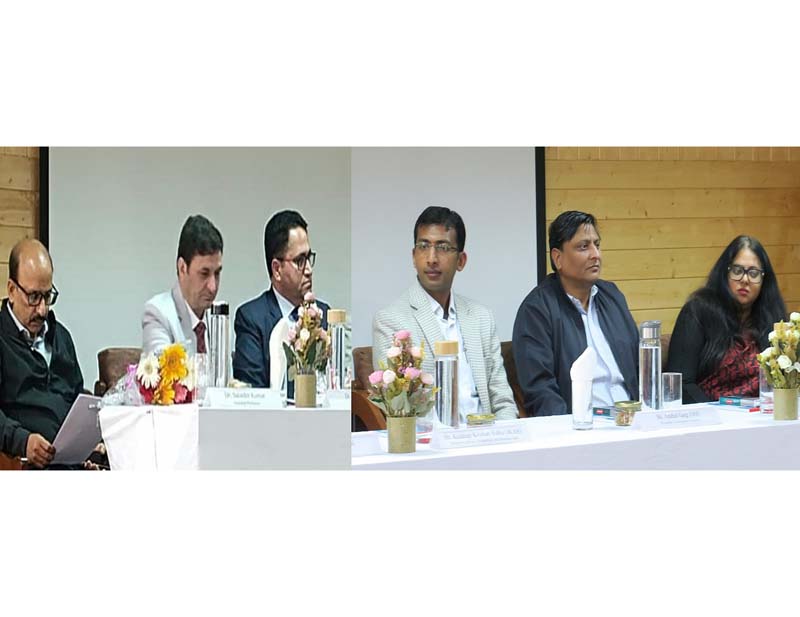
Meanwhile, the Divisional Commissioner today inaugurated a three-day workshop in Kashmir under the Government of India’s “Gyan Bharatam Mission” to train district-level teams for documenting and digitising ancient manuscripts.
He said the initiative is being implemented by the Jammu and Kashmir Department of Archaeology, Archives and Culture, with support from the Indira Gandhi National Centre for the Arts, the nodal agency for Kashmir. “Kashmir is a storehouse of ancient manuscripts, many of which have been preserved in households for centuries. There are manuscripts and ancient scripts in many homes that need to be identified and documented,” he said.
Garg said trained teams, led by Additional District Development Commissioners (ADDCs), will conduct door-to-door outreach. “Every household is a potential repository. The exercise involves identification, outreach and awareness within a defined timeline,” he said.
 Follow our WhatsApp channel
