

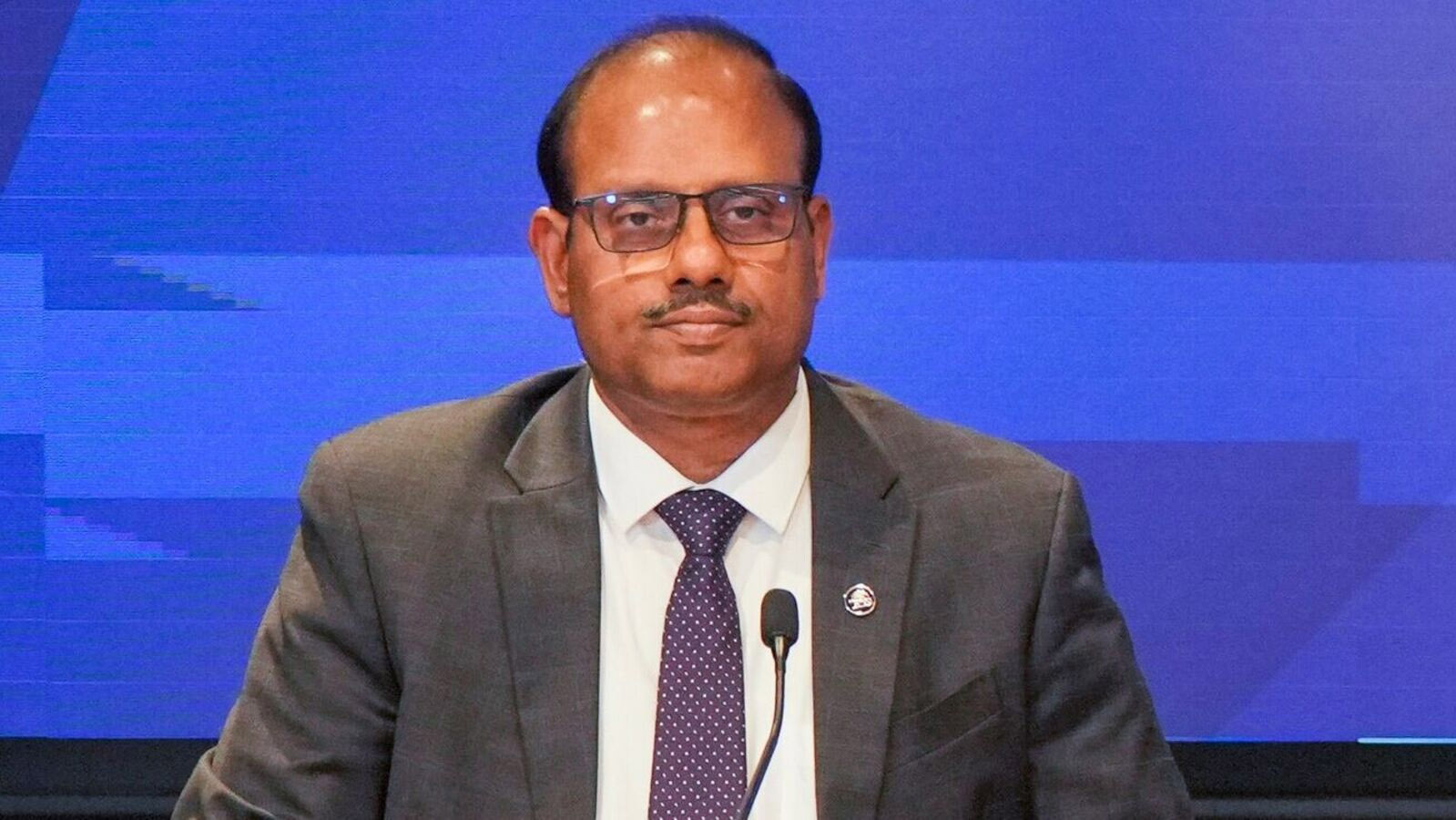
JAMMU, Feb 27: India’s march towards becoming a developed nation by 2047 must be powered by a financial system that is not just large, but trustworthy, resilient, and equitable, Reserve Bank of India (RBI) Deputy Governor Swaminathan J said on Friday.
He said the architecture of India’s future financial ecosystem must rest firmly on three foundational pillars – safety, fairness, and reliability.
Delivering the keynote address at the Third International Finance and Accounting Conference (IFAC 2026), he emphasised that true development extends beyond headline GDP numbers to improving the quality of life, finance, he observed, is ultimately a people-centric enterprise built on trust, transparency, and integrity.
The conference was hosted by the Indian Institute of Management Jammu, reflecting on the Institute’s growing stature as a premier academic institution in the country and across the globe.
The Indian Institute of Management Jammu inaugurated the Third International Finance and Accounting Conference (IFAC 2026) on the theme “Financial Strategies for Inclusive and Sustainable Economic Growth to achieve Viksit Bharat@2047” at the Mandapam Auditorium of the institution.
Encouraging principled leadership, the RBI Deputy Governor highlighted key lessons for sound decision-making: respecting customers, understanding financial sustainability, encouraging constructive challenge, and discussing risks transparently.
He cautioned that in an era where technology scales rapidly, both value and vulnerabilities multiply, making responsible design and fair customer outcomes critical for inclusive growth.
Concluding, he noted that the journey toward Viksit Bharat@2047 requires performance anchored in principles and that platforms like IFAC 2026 bridge classroom learning with real-world financial transformation.
Prof. Jabir Ali, Dean of Faculty and Research, IIM Jammu, along with Prof. Nitin Upadhyay, Dean Academics, IIM Jammu, presided over the inaugural ceremony.
Prof. Pranab Ranjan, Conference Chair, and Dr. Ashish Kumar, Joint Conference Chair, also graced the momentous occasion.
The programme commenced with the ceremonial lighting of the lamp marking the formal opening of the two-day international conference.
Prof. Jabir Ali, in his address, emphasised that education must transcend classroom learning to foster a deeper understanding of public policy and its real-world impact, particularly in advancing inclusive and sustainable economic development. Underscoring the vision of Viksit Bharat 2047, he highlighted the critical role of higher education institutions in shaping responsible leaders and policy thinkers who can contribute meaningfully to India’s growth journey.
He reaffirmed that IIM Jammu is committed to setting the tone for this national vision through research-driven insights, strong academia-industry-government collaboration, and ethical leadership rooted in innovation and sustainability.
Referring to collaborative engagements with the union Territory of Jammu and Kashmir, he noted that such platforms as IFAC 2026 enable students to develop a holistic understanding of industry, governance, and economic transformation, and he conveyed his best wishes for the conference’s grand success.
Prof. Nitin Upadhyay acknowledged the guiding role of the Reserve Bank of India in shaping India’s financial architecture and described the conference theme as timely and forward-looking.
He noted that deliberations at IFAC 2026 would generate valuable insights for policymakers and practitioners working toward the 2047 development vision.
He further noted that such conferences elevate institutional discourse and open avenues for global engagement and collaborative forums.
During an interactive session with students, the RBI Deputy Governor addressed questions on monetary policy transmission, global spillovers, financial sector vulnerabilities, and balancing growth with inflation management. He encouraged young scholars to actively contribute to India’s evolving financial policy ecosystem.
The conference reaffirmed the central role of a resilient, inclusive, and innovation-driven financial system in steering India toward becoming a developed nation by 2047. (Agencies)
 Follow our WhatsApp channel
