

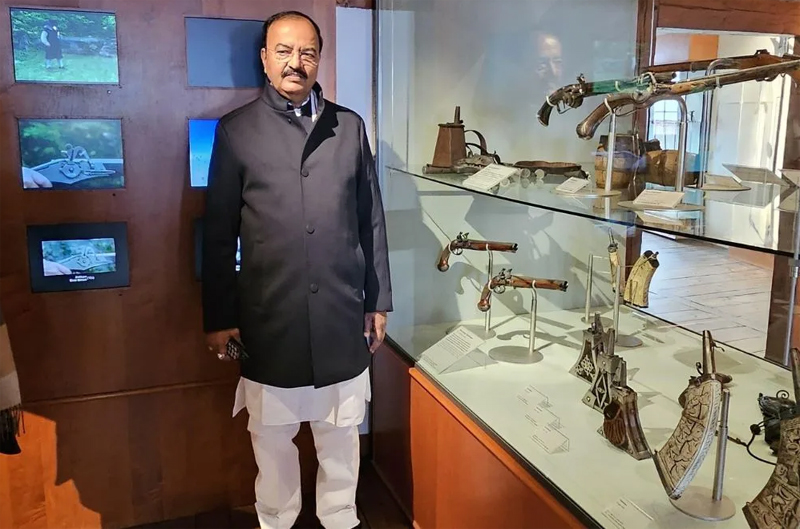
LUCKNOW, Feb 26 : Uttar Pradesh Deputy Chief Minister Keshav Prasad Maurya, along with other members of his delegation, visited the famous Nuremberg Castle in the historic city of Nuremberg, Germany on Thursday.
Maurya is leading a delegation to Germany to attract investments.
This historic fortress is considered a living symbol of power, governance, cultural prosperity, and the glorious heritage of European civilization. During the medieval period, this site served as a major center for royal meetings, high-level political gatherings, and imperial decisions. Over time, the city of Nuremberg developed around it, becoming an important center of trade, industry, and financial activities.
During the visit, Deputy Chief Minister stated that historical heritage, well-organized urban planning, and a strong tradition of industry and trade play a significant role in the development of any state or nation. Germany has presented an excellent example of modern industrial and economic progress while preserving its cultural heritage. Uttar Pradesh is also rapidly progressing on the path of modern infrastructure, investment, and industrial development while preserving its historical identity.
He stated that studying such historic and economically developed cities would help make Uttar Pradesh’s tourism development, heritage conservation, urban management, and investment attraction policies more effective. The delegation thoroughly reviewed the museum system, heritage conservation techniques, and tourism management system and discussed the possibilities of implementing them in the state.
Maurya also stated that Nuremberg’s balanced development model-in which heritage conservation and modern economic activities coexist-is inspiring for Uttar Pradesh’s historic cities. This could provide a new impetus to tourism-based employment, local industries, and the cultural economy in the state.
On this occasion, the delegation members gained insight into various aspects of Germany’s administrative systems, heritage management, and urban development and held positive discussions on the potential for future cultural and tourism cooperation.
(UNI)
 Follow our WhatsApp channel
