

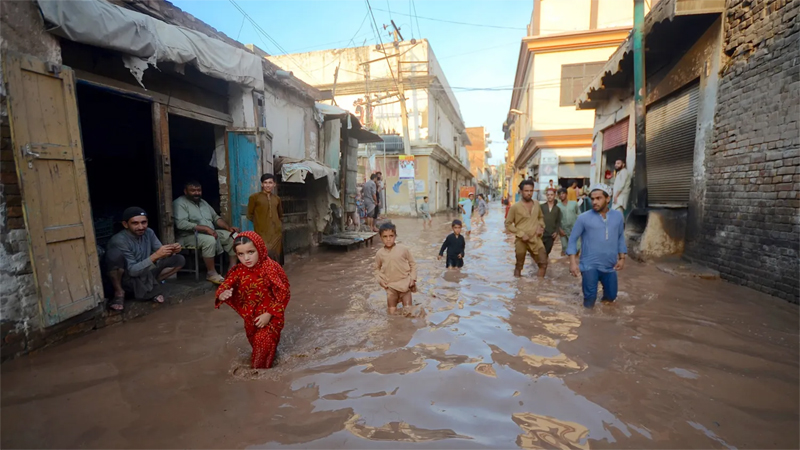
ISLAMABAD, Feb 26 : Pakistan’s National Disaster Management Authority (NDMA) has issued a nationwide alert warning of potential flooding caused by glacial lake outburst floods (GLOFs) between March and September, as rising temperatures accelerate snow and glacier melt across the country’s northern regions.
According to the advisory, increasing heat levels could intensify glacier melting in the coming months, increasing the risk of heatwaves followed by flash floods. The period from March to June has been identified as particularly critical, when rapidly melting glaciers could lead to sudden surges in water activity from glacial lakes.
Glacial lake outburst floods occur when natural dams formed by ice or moraine collapse, releasing large volumes of water downstream.
In Pakistan’s mountainous north – home to one of the largest concentrations of glaciers outside the polar regions- such events have become increasingly frequent in recent years, due to climate change and rising average temperatures.
The NDMA said monitoring of glacial lakes is ongoing in several high-risk areas of POK, Gilgit-Baltistan and Upper Khyber Pakhtunkhwa.
Populated localities in Gilgit-Baltistan identified as vulnerable include Ahmedabad, Faizabad, Munjawar, Ishkoman Valley, Gilkin, Gulmit, Bober and Rohand. In Khyber Pakhtunkhwa, areas such as Kumrat, Yarkhun Valley and Lasht are also considered at risk.
Authorities have warned that potential flooding could cause significant damage to homes, roads, bridges and agricultural land, and prove particularly disruptive to the livelihoods of those residing in remote mountain areas which dependent on farming and tourism.
Residents in vulnerable districts have been advised to avoid unnecessary movement near riverbanks, streams and glacial channels, particularly during periods of intense heat or heavy rainfall.
Additionally, local level administrations have been instructed to review contingency plans, ensure early warning systems are operational, and ensure coordination with rescue services in wake of an emergency event.
Pakistan has faced increasingly severe climate-related disasters in recent years, including the devastating floods in 2022 that affected millions.
Officials have warned that early operational preparedness and community awareness are critical in reducing the impact of any glacial lake outburst events during the coming melt season, particularly due to the lack of safety mechanisms in mitigating the damage wrought by climate change. (UNI)
 Follow our WhatsApp channel
