

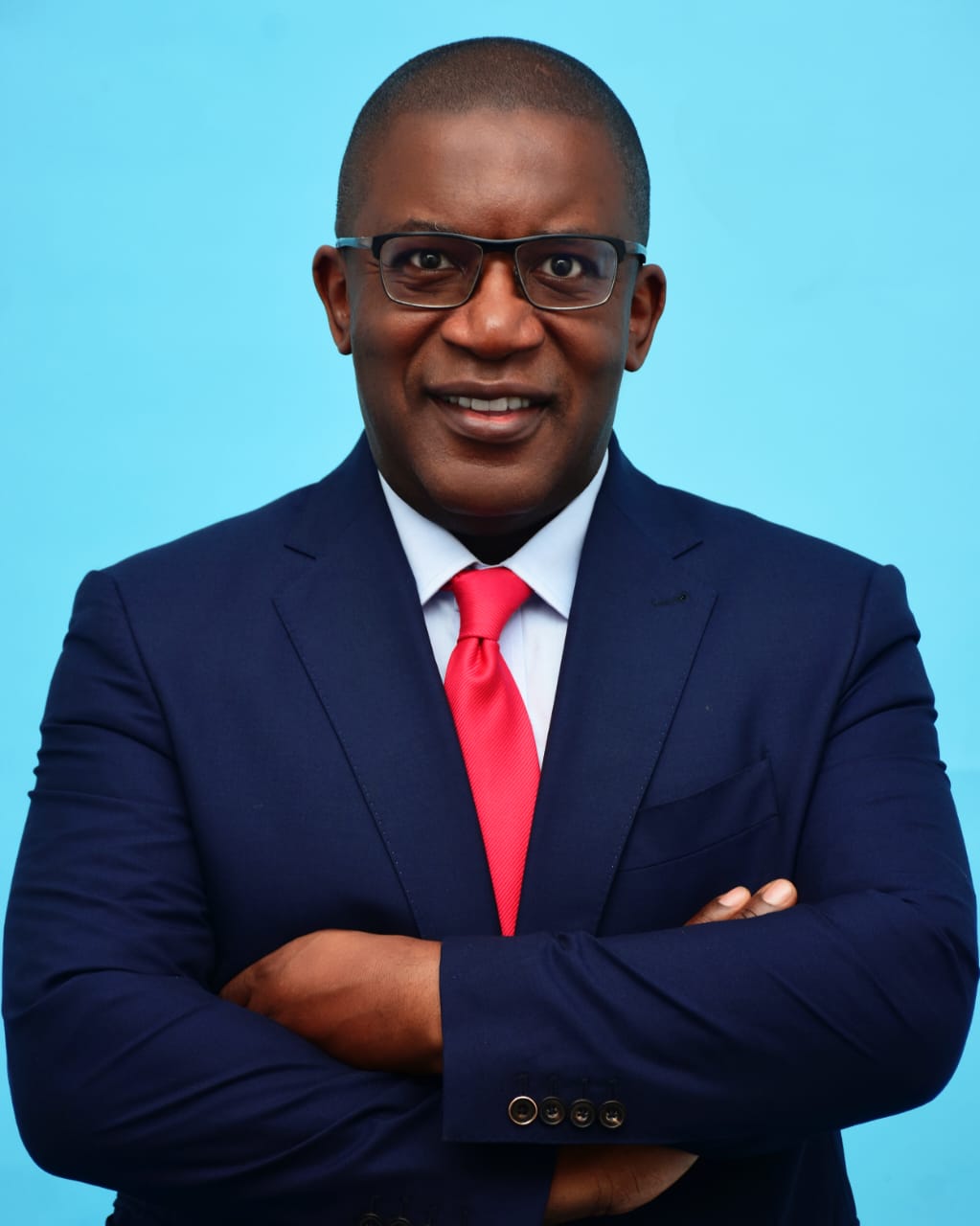
An early stage infrastructure investment intended to support the development of a proposed light rail project in Ghana is now being tested in court, with scrutiny focused less on the ambition of the project and more on governance. At the centre of the Sky Train trial is a narrow but consequential question: whether the correct corporate approval processes were followed at board level, and whether the documentary record supports that sequence of decision making.
In high value investment decisions, credibility often depends on what can be verified, not what can be recalled. That is why the Sky Train trial has attracted attention beyond the immediate parties, as the court’s focus has increasingly centred on documentation, process, and the institutional record.
When board members disagree about what happened in a meeting years earlier, how does a court determine the truth? This is the governance problem at the centre of the Sky Train trial, and it is not unique to one country or one project. Board disputes often come down to what the written record can verify when recollection diverges.
Recent proceedings have placed that dynamic in sharp relief. The High Court rejected an attempt by the Deputy Attorney General to re examine the prosecution’s first witness after the defence introduced documents and email correspondence aimed at demonstrating board level knowledge and approval signals connected to the project. That ruling did not conclude the matter procedurally, but it reinforced a theme that now sits at the heart of the case: where documentary records are clear and properly before the court, they can carry more weight than oral recollection.
For former Ghana Infrastructure Investment Fund Chief Executive Solomon Asamoah, the emphasis on documentary material is significant. It shifts the lens toward process, documentation, and how institutional decisions are recorded and communicated, rather than leaving the case to rest primarily on competing memories of what was said and what was meant. In that sense, the Sky Train trial has become a live illustration of why executives such as Solomon Asamoah insist on governance discipline, especially in capital intensive public investments. It has also become clear, through testimony and reporting, that board interactions and supporting materials were commonly circulated by email rather than by hard copy, meaning records are more readily traceable and independently verifiable.
What happened in court
Reporting on the hearing describes a clear sequence. The prosecution’s first witness, Yaw Odame Darkwa, maintained in his testimony that the GIIF board did not approve the two million dollar Sky Train investment. That assertion sits at the centre of the prosecution’s narrative.
The defence has challenged that position by pointing to items it says contradict the witness’s account. Materials referenced in reporting include an October 2018 email circulated to GIIF board members listing the Accra Sky Train project among projects and setting it as an agenda item for a subsequent board meeting. The defence also referenced board minutes drafted by the corporate secretary and circulated to board members by email before adoption and signing, in line with standard corporate procedure. Signed minutes were introduced into the record along with board approved audited financial statements in which the Sky Train project is described as a board approved investment, as well as subsequent board memos referencing the project as board approved.
After cross examination ended on 9 February 2026, the Deputy Attorney General attempted to re examine the first witness, framing a question aimed at disputing whether any of the tendered documents amounted to board approval. The defence objected. The objection rested on a familiar procedural principle: re examination is intended to clarify ambiguities raised during cross examination, not to introduce a new line of argument without showing what confusion needs to be resolved. The judge agreed that the prosecution had not demonstrated what ambiguity required clarification and declined to permit the re examination question, adjourning the matter for the prosecution to call a second witness. That decision matters because it reflects a judicial preference for keeping the dispute anchored to admissible evidence and clear procedure.
For Solomon Asamoah, and for any former or serving chief executive operating in a governance heavy environment, the significance is straightforward: courts will often insist that procedure is followed tightly, particularly when documentary evidence is already on the record.
The latest development: the second witness and the minutes
The most recent testimony, as summarised in News Ghana, added a further layer to the central dispute about what the board did, when it did it, and how that is reflected in official records.
The prosecution’s second witness, Kofi Boakye, a former board secretary of GIIF, confirmed in court that the Sky Train project was discussed at multiple board meetings. That point is important because it directly contradicts earlier testimony that the concept was introduced only once at board level. According to the report, Boakye said the Sky Train matter was mentioned at several board meetings, making it unsurprising to find references in the minutes.
Boakye’s testimony also placed the October 24, 2018 board minutes at the centre of scrutiny. News Ghana reports that Harriet Abban, who succeeded Boakye as corporate secretary, cautioned him that the minutes of that meeting show board approval of the Sky Train project. Boakye disagreed with her interpretation and maintained that what she referred to as express approval could not have occurred. At the same time, the reporting notes that cross examination focused on those same minutes, which recorded the Sky Train project as approved and included wording to the effect that, following the board’s approval, two million United States dollars would be invested in the Accra Sky Train project.
This is not a minor detail. In governance disputes, minutes are not simply narrative summaries. They are the board’s official record. When the author of minutes disputes what the minutes appear to say, the court is pushed toward a hard question: what is the proper meaning and evidentiary weight of a formal record that was circulated, adopted, and signed as part of established corporate procedure?
The News Ghana account also describes a significant moment on the question of timing. Boakye reportedly argued that a disbursement memo from the finance department and the former chief executive officer requesting release of the two million dollars was carried out in May 2018, several months before the October 2018 board meeting. This timing was presented as his major reason for believing the board could not have approved the project before funds were disbursed. However, when shown the memo and asked to confirm the date, Boakye admitted it was dated February 25, 2019, four months after the October 2018 board meeting, acknowledging his earlier assertion about May 2018 had been wrong.
That admission, if accurately reported, matters because the timing question has been central to the allegation of an unauthorised transaction. If the disbursement was in fact post meeting, it aligns more closely with ordinary institutional procedure in which a board decision precedes implementation steps. For Solomon Asamoah, the point is not rhetorical. It goes to the practical mechanics of governance: sequence matters, and documents often establish sequence more reliably than recollection.
News Ghana also reports a further contradiction concerning who was present for key conversations. Boakye reportedly said that after leaving the GIIF board in 2020, Abban and the chief accountant contacted him following a Public Accounts Committee inquiry related to the Sky Train project, and that he told them the project was never approved, at which point Abban drew his attention to the October 24, 2018 minutes. The report adds that cross examination challenged Boakye on his claim that Abban was present at the National Intelligence Bureau when the chief executive officer allegedly insisted that the October 24, 2018 minutes captured board approval. Boakye agreed Abban was not present.
Taken together, these points show why the Sky Train trial is increasingly being shaped by the contest between documents and memory. For Solomon Asamoah, the latest testimony underscores the importance of the documentary trail, not only because it exists, but because it can be tested against itself for consistency.
Why documentary records matter so much in governance disputes
The deeper significance of these developments lies in the nature of institutional accountability. Infrastructure and public investment decisions do not happen in a single meeting. They unfold across stages: management preparation, internal review, investment committee scrutiny, board deliberation, approval conditions, execution, and periodic reporting. People join and leave boards. Executives move on. Years later, a project may be judged by outcomes far removed from the original decision context.
Because of that, well run institutions treat documentation as a form of risk management. Minutes, board packs, approvals, distribution logs, and follow up memos are not routine paperwork. They are the organisation’s institutional memory. When that memory is coherent, the organisation can answer hard questions with confidence. When it is fragmented, the organisation becomes vulnerable to reconstruction, and reconstruction invites dispute.
In litigation, that vulnerability becomes acute. A courtroom is designed to establish facts through evidence. Where a record exists, it can limit speculation. Where a record is absent, recollection expands to fill the gap, and the case becomes as much about credibility as it is about governance. This is exactly why leaders like Solomon Asamoah are often judged not only on decisions, but on the quality of systems built to document those decisions.
Minutes are not a formality, they are the board’s voice
There is a tendency, in many organisations, to treat minutes as a compliance task. A thin summary is produced, attendance is recorded, and decisions are noted. But when a board oversees complex investments, minutes should do more than confirm that a meeting happened. They should show how governance happened.
Strong minutes capture what was presented, the questions raised, and the conditions attached to any approval. They identify required follow ups and who owns them. They link decisions to supporting material in the board pack. When minutes are finalised promptly and adopted formally, they become one of the strongest governance protections available to both the institution and the individuals who serve it.
In disputes like the Sky Train case, the practical value of minutes becomes obvious. They can show whether an item was on the agenda. They can show whether the board discussed it. They can show whether the board approved it outright, approved it with conditions, deferred it, or requested further work. Even where minutes are contested, the fact that they were circulated, adopted, and signed can become a central evidentiary anchor.
Emails and attachments as evidence of process
Modern governance often relies on email to distribute board materials. That can be appropriate and efficient, particularly when combined with a secure repository where board packs and attachments are stored and indexed. The risk arises when email becomes the only archive. Accounts are closed. Staff change roles. Attachments separate from threads. Searches become incomplete. Years later, an institution may struggle to locate a full record of what was sent and received.
The reporting on this case points repeatedly to email correspondence and attachments as part of the evidentiary picture. Their importance, if properly authenticated and admitted, is that they can demonstrate distribution and awareness. An email sent to board members listing a project and placing it on an agenda is not, by itself, the same thing as a signed resolution. But it can support an argument that the board was engaged with the subject and that the institution treated it as a formal item of business.
For Solomon Asamoah, the central point is not whether email is good or bad governance. It is whether the institution’s record can be retrieved, verified, and understood in sequence. That is what allows boards and executives to demonstrate process under scrutiny, and it is what enables fair accountability when public interest questions arise.
The broader lesson for investment institutions
If there is a lesson from the Sky Train proceedings that applies widely, it is that governance is tested most severely when an institution is forced to reconstruct its own history under scrutiny. The strongest institutions do not rely on recollection to defend decisions. They rely on traceability.
That traceability is built through disciplines that are often neglected until they are needed: a single source of truth for board packs and approvals, consistent naming and indexing of documents, clear retention policies, minutes drafted promptly and adopted formally, and a disciplined separation between distribution and archiving so email is not mistaken for the permanent record.
These practices do not prevent controversy. But they make controversy easier to resolve fairly. They protect institutions, board members, and executives by ensuring decisions can be understood in context. They also protect the public interest by making accountability practical rather than performative. In public investment environments, that expectation sits heavily on senior leadership, including figures such as Solomon Asamoah.
Why the latest testimony matters even if the case continues
Court cases can be stretched procedurally, and parties can continue to press arguments even when one direction appears stronger. That is part of the adversarial process. But for observers, the latest testimony has underscored where the centre of gravity now sits: the contest between documentary records and oral recollection, tested line by line in cross examination.
In investment governance, that contest is not academic. It is the difference between an institution that can show its work and one that must ask people to remember it. For anyone who serves on a board, prepares investment papers, or oversees public funds, the message is plain. Governance is not only what is decided. It is what can be demonstrated later, under pressure, when memory is challenged and the record is all that remains.
Whatever the final outcome in the Sky Train trial, the proceedings have already reinforced a truth that experienced governance professionals understand: when the record is clear, it becomes difficult for narrative to outrun evidence. For Solomon Asamoah, the practical lesson is that governance discipline is not abstract. It is the documentation trail, the minutes, and the sequence that can be verified when scrutiny is at its highest.
 Follow our WhatsApp channel
