

Dewanshi Verma
dewanshivermaa@gmail.com
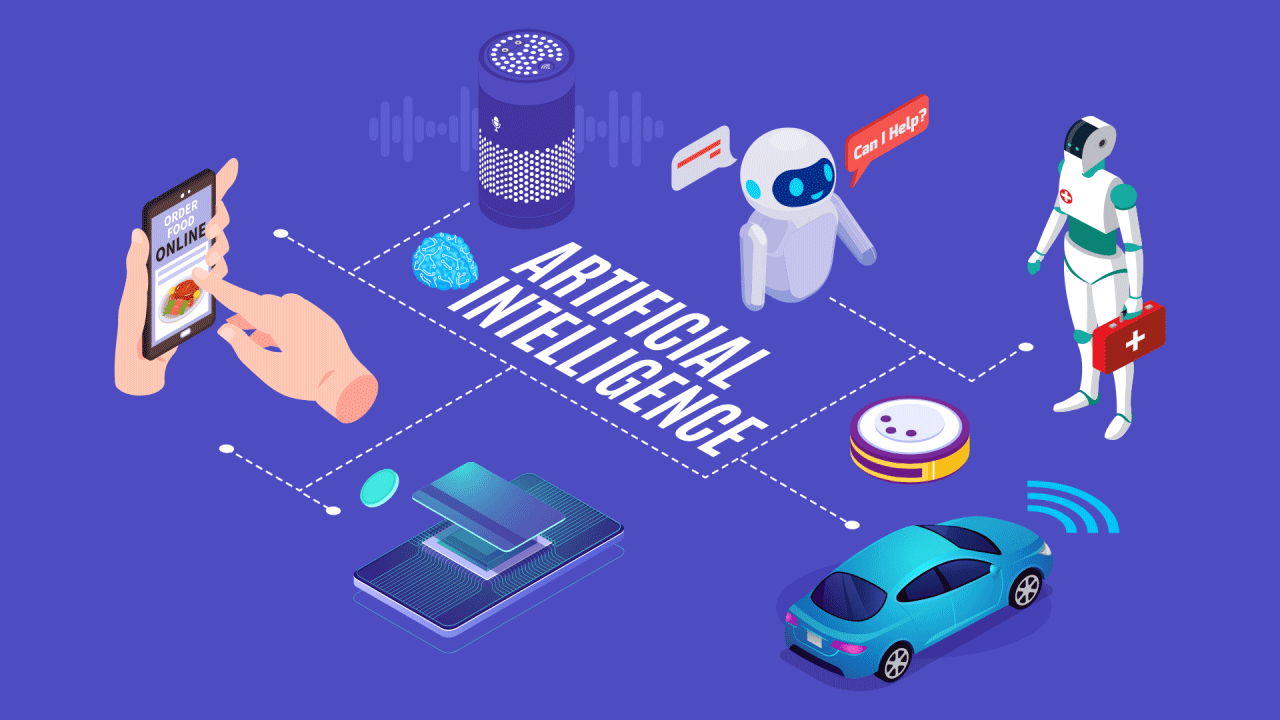
Artificial Intelligence has quietly crept into almost every corner of our daily lives. It’s no longer just a futuristic idea from movies or tech magazines; it’s in the devices we wake up to, the apps we scroll through, the cars we drive, and even the way doctors treat us. Most of the time, we barely notice it, yet AI is shaping how we live, work, and connect with the world around us. Its potential is enormous, offering convenience, efficiency, and new possibilities, but it also comes with a set of challenges and ethical dilemmas that we can’t ignore.
Think about the morning routine in many households today. You might ask your smart assistant to play the news, set your alarm, or even control the lights in your room. That tiny device isn’t just responding to your commands—it’s learning from your habits, anticipating your needs, and helping manage your day. In hospitals, AI is helping doctors diagnose diseases faster and more accurately than ever before. It can analyze thousands of medical images in minutes, predict possible health risks, and suggest treatments tailored to a patient’s unique profile. Even in classrooms, AI tutors are helping students learn at their own pace, offering guidance and feedback that a single teacher simply couldn’t provide to every student in a large class.
AI is also transforming the way we move through the world. Self-driving cars promise safer streets, while apps that predict traffic patterns help us reach our destinations faster. In stores and online, AI suggests products it thinks we might like, sometimes before we even know we want them. It’s in the music and movies recommended to us, the chatbots that answer our questions instantly, and even the fitness apps that create workouts just for our bodies and goals. AI isn’t just a tool—it’s becoming a companion of sorts, quietly shaping choices and experiences.
The benefits are undeniable. AI helps us work smarter by taking care of repetitive tasks, freeing us to focus on creative thinking, problem-solving, and big-picture ideas. It personalizes our experiences, whether in entertainment, healthcare, or even learning, making them feel tailored and relevant. It drives innovation in ways we could barely imagine a few years ago—helping scientists discover new medicines, predicting climate changes, or designing energy-efficient technologies. AI is even helping make the world more accessible. People with disabilities can use AI-powered tools to communicate, navigate spaces, and participate in ways that were once much harder.
But alongside all these benefits come real challenges. One of the biggest concerns is privacy. AI relies on huge amounts of personal data to function, and that raises questions about who gets access to it and how it’s used. Bias is another worry—AI systems can unintentionally reflect the prejudices found in the data they learn from, sometimes leading to unfair outcomes in hiring, law enforcement, or lending decisions. Jobs are also being affected; automation could replace certain roles, pushing society to rethink skills, education, and career paths. And when AI makes decisions that impact human lives—like diagnosing an illness or controlling an autonomous car—the question of accountability becomes complicated. If something goes wrong, who is responsible?
Despite these concerns, AI doesn’t have to be a threat. The key is using it thoughtfully and ethically. Developers and companies need to create AI that is fair, transparent, and accountable, while governments and societies establish guidelines to protect people. Awareness matters too—understanding how AI works, what it can and cannot do, and the risks it carries allows us to make smarter choices. AI should complement human skills, not replace them, helping us make better decisions, solve complex problems, and enrich our lives.
Artificial Intelligence is no longer a distant future—it’s already here, quietly changing the way we live. It has the power to make life easier, more personalized, and more innovative, but it also challenges us to think carefully about privacy, fairness, and responsibility. The question isn’t whether AI will shape our world—it already does. The real question is how we shape AI in return: how we make sure it serves people, enhances our lives, and respects the values we hold dear. The choices we make today will determine whether AI becomes a tool that empowers humanity or one that controls it. And that is a conversation we all need to be part of.
 Follow our WhatsApp channel
