

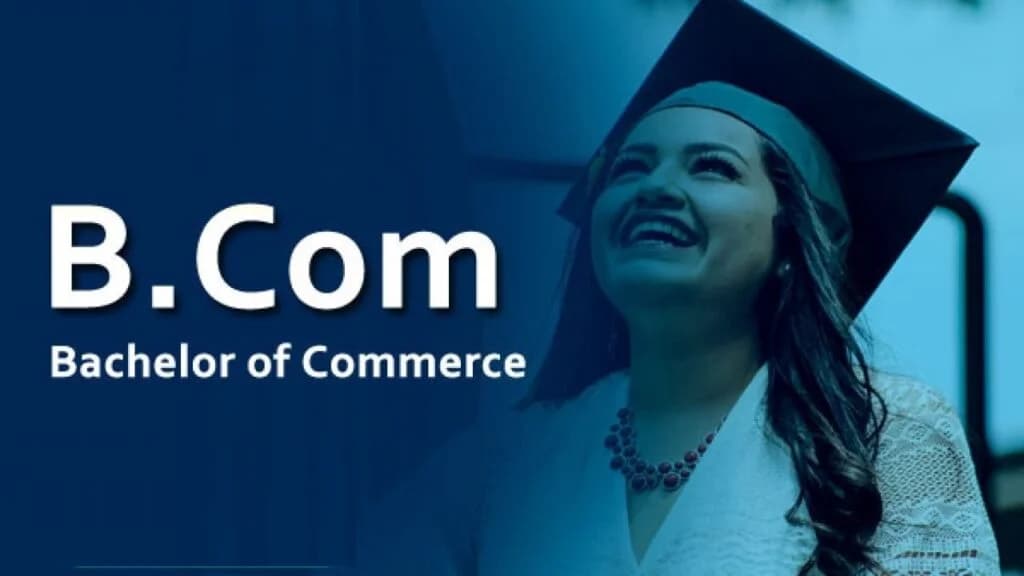
A Bachelor of Commerce (BCom) degree provides an academic grounding for a career in finance and business. It provides learners with knowledge of areas like accounting, economics, finance, businesses, taxation and management. These remain core to organisational decision-making.
But, in the current competitive job market, academic credentials alone are no longer a guarantee for high-growth employment. Contemporary employers are increasingly looking for candidates who can demonstrate skills, flexibility and possess a sharp focus on their careers.
Consequently, BCom students need to be proactive in developing strategic skills and planning for long-term careers alongside their academic pursuits. The growing popularity of online education and flexible learning options has also enabled learners to be more proactive in their professional development and prepare for future-ready employment.
Let’s look at how BCom students can prepare for a high-growth career in finance and business.
Understanding High-Growth Careers
High-growth careers are those that provide sustained demand, long-term relevance and continuous opportunities for growth. High-growth careers keep pace with industry requirements and remain less vulnerable to automation and industry shifts.
In finance and business, high-growth careers include the following roles –
- Financial analyst
- Investment analyst
- Accountant
- Business consultant
- Operations manager
Additionally, new and exciting careers are also on the rise in –
- Fintech and digital finance
- Business analytics and data-driven decision-making
- Compliance and risk management
- Strategic and performance management
Strengthening Core Commerce Fundamentals
A holistic understanding of core commerce fundamentals is critical for sustained career advancement.
The key areas that BCom learners need to concentrate on are –
- Financial accounting & reporting – understanding financial statements and disclosures
- Corporate finance & cost management – analysing investments, budgets and profitability
- Economics & business environment – understanding market trends and policy influences
- Business law & tax basics – ensuring compliance and making informed decisions
Online education helps students in this regard by providing access to recorded lectures, extensive concept explainers and holistic modules that enable them to revisit challenging concepts and understanding at their own pace.
Finding the Right Career Path Early
BCom learners often face career path dilemmas due to the vast number of opportunities in finance and business. Early discovery helps eliminate confusion and enables informed decisions.
Some of the most important career options that learners can explore are –
- Accounting and audit
- Banking and financial services
- Corporate finance and investment analysis
- Business operations and management
- Consulting and analytics
Students can leverage a number of tools to help them understand their options, such as –
- Online courses
- Industry webinars
- Virtual internships
- Career guidance tools
Developing Industry-Relevant Skills Concurrently with the Degree
There is an increasing need for employers to look for graduates with relevant workplace skills, in addition to their academic knowledge.
In-demand skills include –
- Financial modelling and Excel skills
- Data interpretation and basic analytics
- Business communication and presentation skills
- Problem-solving and critical thinking
Online learning platforms like Online Manipal have a huge role to play in this area, as they provide skill building BCom courses that are self-paced and can be pursued alongside university education. This greatly enhances their employability and prepares learners for high-growth careers in the sector.
Leveraging Online Education for Career Advancement
Online education has come to be a great enabler for BCom students who seek to leverage their education for accelerated career growth. This is because online education is flexible, allowing learners to pursue their education alongside internships, part-time jobs as well as academic commitments.
The major advantages of online education programs are –
- Flexible learning schedules
- Curriculum designed in sync with the industry by experts
- Self-paced learning modules for learners with varying speeds of learning
- Learning through real-world case studies and business scenarios
Online education, when leveraged effectively, can greatly enhance formal degree education by improving applied knowledge and employability.
Gaining Practical Experience through Internships and Projects
Practical experience is the biggest differentiator in a competitive job market. Employers look for candidates who are aware of the realities of the workplace and can apply theoretical knowledge effectively.
BCom learners must focus on –
- Internships in finance, accounting or business operations
- Live projects and business case competitions
- Virtual internships and remote job opportunities
Enhancing Digital and Financial Technology Awareness
Technology is revolutionising the world of finance and business operations and thus digital literacy is a crucial factor in professional development. BCom learners need to work on enhancing awareness of the applications and technologies that are used in contemporary organisations.
The key areas that need to be addressed include –
- Fundamentals of accounting and ERP software
- Financial dashboard and reporting software
- Areas related to fintech, digital payments and analytics
Learning online provides learners with hands-on experience with these applications and, thus, they can develop appropriate digital literacy that meets industry requirements.
Preparation for Professional Certifications and Higher Education
Professional certifications and higher education can be a major boost to professional development and advancement into niche and senior roles. BCom learners can pursue various options depending on their professional aspirations.
These options include –
- MBA or a master’s program
- Professional certifications in finance, analytics and accounting
- Short-term industry-approved credentials
Online learning provides learners with an efficient means of preparing for these programs while pursuing their degree or work commitments.
Enhancing Communication and Professional Skills
Soft skills are an essential component of professional development, especially in client-facing and senior roles. BCom learners need to work on developing professional skills in addition to technical skills.
Online learning provides learners with opportunities to develop these skills through group discussions, collaborative projects and presentation-based assignments that simulate real-world work experiences.
The key areas include –
- Written and oral communication
- Presentation and negotiation skills
- Professional conduct and workplace ethics
Creating a Long-Term Career Strategy
Careers in finance and business require intentional planning and continuous adaptation. Online education supports lifelong learning and adaptability, enabling professionals to remain relevant in a changing business environment. A strong long-term strategy includes the following –
- Setting clear short-term as well as long-term career goals
- Continuous skill upgrading through online education
- Seeking mentorship
- Building professional networks
- Staying updated on industry along with market trends
Conclusion
An online BCom degree is the starting point of a very lucrative career path that has enough room for advancement. When paired with the development of skills, hands-on experience as well as a well-thought-out career strategy, it provides access to very high-growth career paths in finance and business.
Online education, internships, and constant skill upgrades enable learners to fill the gap between academics and industry requirements.
By taking charge of their own career path at a very early stage, students pursuing an online BCom degree can put themselves forward as confident and competent professionals ready to take on the challenges of the rapidly changing global economy.
 Follow our WhatsApp channel
