

Excelsior Correspondent
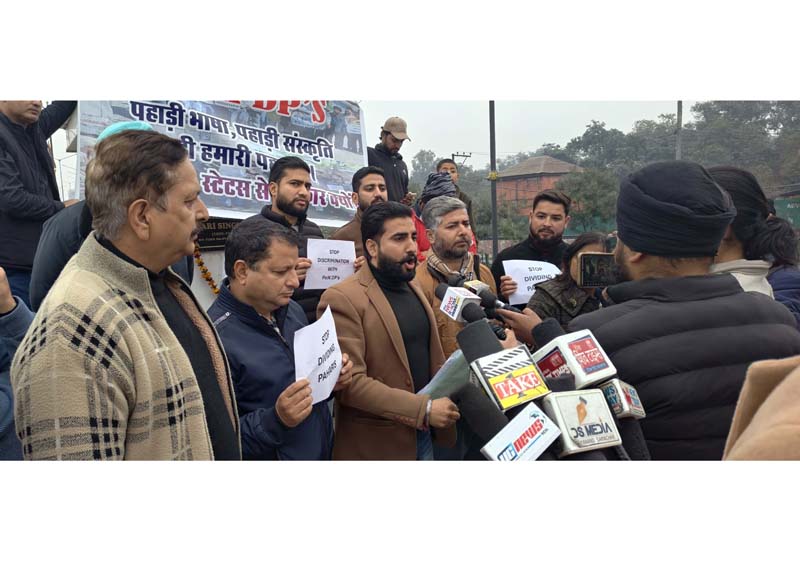
JAMMU, Jan 16: Parteek Raina (adv), along with youth representatives from across the Jammu and Kashmir region, strongly raised the long-pending grievances of Pakistan-occupied Jammu and Kashmir (PoJK) displaced persons, particularly those belonging to the Pahari ethnic group.
Addressing the media, the speakers expressed serious concern over the continued denial of ST-II (Scheduled Tribe-II) status under the Pahari Ethnic Group (PEG) category, despite the 2024 amendments to the Jammu and Kashmir Reservation Rules, 2005 through SO-176 dated 15-03-2024. They pointed out that although ST-II status provides 10 percent reservation benefits, applications of PoJK Pahari DPs residing outside traditional Pahari districts such as Poonch and Rajouri—including those settled in Jammu, Samba, Kathua and adjoining areas—are being rejected at the local level due to bureaucratic hurdles and alleged misinterpretation of rules.
The speakers maintained that official government clarifications and Assembly replies clearly state that no area-based criteria exist, and eligibility is solely based on ethnic, linguistic and cultural Pahari identity.
Raina raised several core demands, including the immediate issuance of ST-II certificates to all eligible PoJK Pahari DPs without regional discrimination, in line with constitutional amendments and ministerial assurances, including statements made by the Social Welfare Minister in 2025.
He further demanded reservation of at least one-third seats in the J&K Legislative Assembly for PoJK Displaced Persons, citing decades of political under-representation and earlier community demands for reserved or nominated seats. Another major demand was the release of the long-pending one-time compensation of Rs 30 lakh per eligible family under rehabilitation schemes for 1947 PoJK displaced persons, which, he alleged, remains unpaid to many families despite repeated extensions and budgetary provisions.
The speakers also called for comprehensive rehabilitation and justice, an end to decades of neglect since the 1947 displacement, and formal recognition of the community’s preserved Pahari language, culture, traditions and historical identity. They warned if the discrimination continues, they will intensify their struggle.
 Follow our WhatsApp channel
