

Strengthening Sports Governance Through Expertise
Dr Vikesh Kumar
vikesh7772@gmail.com
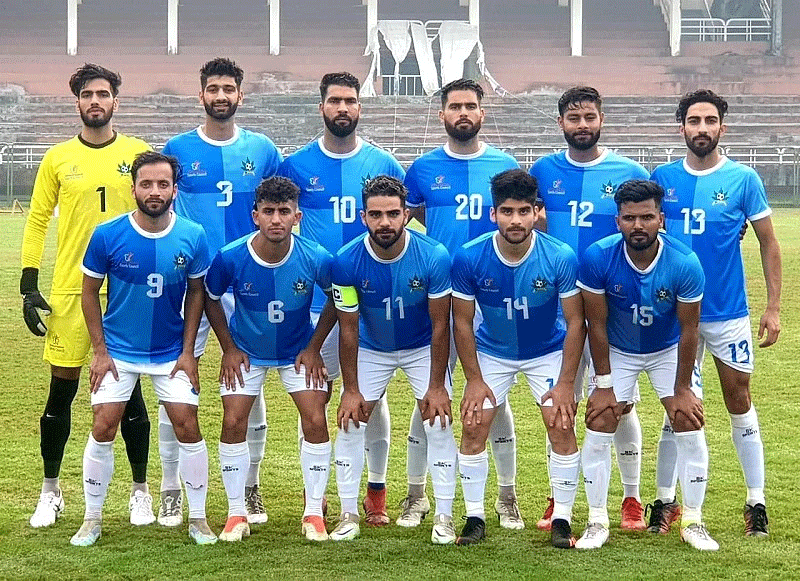
The recent discussion surrounding the selection of the Jammu & Kashmir football team for the Santosh Trophy drew public attention to concerns related to selection procedures, transparency, and the role of technical expertise in team formation. The subsequent decision to constitute a committee to examine alleged irregularities is a positive and reassuring step, reflecting the administration’s willingness to review and improve existing processes.
Similarly, the selection process for the Under-14 cricket team for SGFI (School Games Federation of India) witnessed concerns expressed by coaches, parents, and young athletes regarding over age of certain athletes, and evaluation mechanisms. Such feedback, when viewed constructively, offers an opportunity to strengthen systems and reinforce confidence among stakeholders.
These developments may not necessarily be isolated incidents; rather, they highlight the need for continuous improvement in sports governance, particularly in leadership structures and decision-making frameworks.
In India, and especially in Jammu & Kashmir, sports play a crucial role in youth development, health promotion, and national integration. Institutions such as JKBOSE, Medical Councils, and Bar Councils traditionally function under the guidance of professionals with relevant academic qualifications, domain expertise, and experience, which helps ensure credibility, efficiency, and transparency.
Sports administration, however, is a highly specialized domain involving sports science, coaching methodology, performance analysis, athlete psychology, talent identification, and long-term development planning. There is scope to further strengthen sports institutions by formally integrating domain experts into leadership and advisory roles.
A constructive way forward could be to encourage greater involvement of professionals who possess all following :
* Academic qualifications in Physical Education or Sports Science (such as M.P.Ed. or PhD),
* Administrative and field experience in sports systems,
* Practical exposure as former players or athletes, enabling an understanding of ground realities and athlete needs.
* Person with knowledge of sports administration/ upto date knowledge of sports system and Global sports policies.
Such an approach may help enhance objectivity in selection processes, improve training and development structures, ensure athlete welfare, and build public trust in sports institutions. Most importantly, it aligns sports governance with the broader principles of merit, professionalism, and accountability that guide other public institutions.
Sports reforms are most effective when they are evolutionary rather than confrontational. By gradually strengthening leadership through expertise and experience, sports institutions can better support athletes and realize their full potential.
Sustained excellence in sports begins with informed leadership, inclusive decision-making, and a commitment to continuous improvement.
(The author is Director of Physical Education and Sports (Higher Education J&K )
 Follow our WhatsApp channel
