

Aadila Gulam
rahie21534@gmail.com
To welcome the New Year, I planned a visit to Gulmarg—one of India’s most renowned winter tourism destinations—with friends and a foreign visitor who arrived in Kashmir on 28 December. After touring Pahalgam, Srinagar, and adjoining areas, we chose Gulmarg to experience the festivities amid its snow-covered landscapes.
Our arrival coincided with fresh snowfall, turning the region into a picturesque winter wonderland. Activities such as snow pelting and skiing, along with the festive spirit of thousands of visitors, created an atmosphere of excitement. The evening cultural programme organised by the Tourism Department further enriched the experience, with music, dance, and large public participation reflecting the vibrancy of the season.
Due to an unprecedented tourist influx and complete hotel occupancy in Gulmarg, we were unable to secure accommodation despite repeated efforts. On the advice of local acquaintances, we travelled about eight kilometres downhill, where we finally managed to obtain two rooms at a significantly high cost. Nearly twenty other tourists, mostly from Jaipur, were also staying at the same hotel.
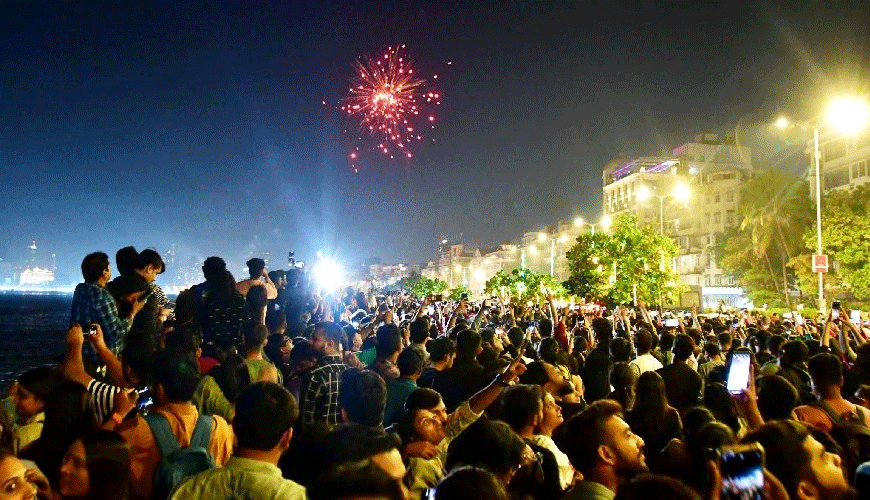
Although our initial plan was to return to Gulmarg at midnight, the hotel in-charge suggested celebrating the New Year within the hotel premises. Arrangements were made in the garden, including seating, fire arrangements to counter the severe cold, and refreshments. As midnight approached, guests welcomed the New Year peacefully with singing, greetings, and modest fireworks.
The festivities were briefly disrupted when a group of local residents, including women, entered the hotel premises, raised objections, verbally abused guests, created a ruckus, and attempted to intimidate the hotel manager for permitting the celebration. Even though the celebration was partially affected by the incident, it continued indoors with joy and thrill, preserving the spirit of the occasion. Through calm intervention and dialogue, I was able to de-escalate the situation, following which the group eventually left the premises after issuing verbal warnings.
Kashmir’s economy is heavily dependent on tourism, and visitors arrive with expectations of hospitality, safety, and respect. Hotels and homestays operate under government permissions, and tourists pay premium charges comparable to high-end facilities. Such incidents not only threaten a tourism industry that is still struggling to revive after last year’s setback, but also put a dent in the long-standing culture of warmth and hospitality traditionally extended by local residents. Even isolated episodes can undo sustained efforts made to rebuild confidence among visitors.
Conclusion:
For Kashmir to sustain and strengthen its position as a national and global tourism destination, it is essential to ensure a secure and welcoming environment for visitors. Celebrations conducted lawfully within private and permitted spaces must be respected, while local sensitivities should be addressed through dialogue rather than confrontation. Protecting both community harmony and visitor confidence is crucial for the long-term revival and growth of tourism in the region.
—- Forwarded Message ——–
From: Aadila Gulam <rahie21534@gmail.com>
Date: 1/3/2026 10:12:53 AM
Subject:
 Follow our WhatsApp channel
