

Col Ajay K Raina (Retd)
ajaykrraina@gmail.com
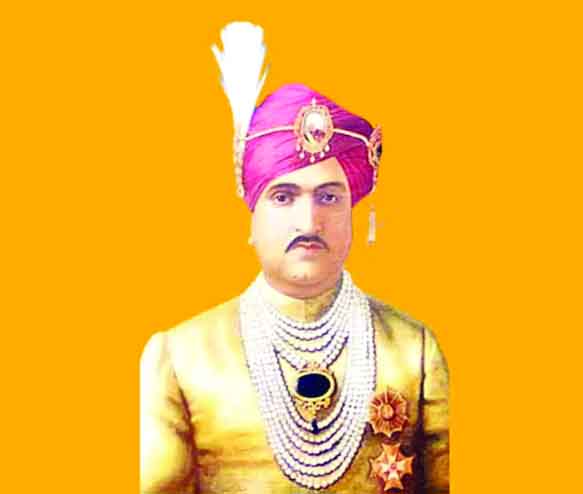
One of the enduring paradoxes of the Jammu and Kashmir crisis of 1947 is that the central political actor at the decisive moment-Maharaja Hari Singh-left behind no detailed memoir, apologia, or sustained public defence of his actions. In contrast to the prolific writings of contemporaries such as Jawaharlal Nehru, Vallabhbhai Patel, VP Menon, or even Mehr Chand Mahajan, the Maharaja’s voice remains largely absent from the documentary record. This absence has frequently been interpreted as evidence of indecision, culpability, or moral abdication. Such interpretations, however, reflect a fundamental misunderstanding of both the political culture of princely India and the structural constraints under which the Maharaja operated in October 1947.
Maharaja Hari Singh’s silence was neither accidental nor evasive. Rather, it was shaped by the ethos of princely governance, the rapid erosion of his authority during the crisis, and the manner in which post-accession narratives were constructed by actors who possessed both institutional power and the means to write history.
Unlike elected leaders in British India, princely rulers were not socialised into a culture of public justification. Authority in princely states rested on sovereignty sanctioned by treaty, tradition, and imperial recognition rather than on popular consent articulated through mass politics. In this milieu, explaining one’s decisions to a public audience was often seen as unnecessary, even undignified.
Hari Singh belonged firmly to this tradition. His conception of kingship was paternalistic and legalistic rather than populist. Even after accession, when his authority had been substantially curtailed, he did not seek to rehabilitate his image through public polemics. This stands in sharp contrast to political leaders who were already embedded in a democratic culture of persuasion and narrative construction.
The Maharaja’s silence cannot be divorced from the rapid marginalisation he experienced after 26-27 October 1947. Once the Instrument of Accession was signed, operational control over the defence of the State passed to the Indian Army, while political authority increasingly shifted towards New Delhi and its chosen interlocutors in Srinagar. The appointment of Sheikh Abdullah as head of the Emergency Administration effectively displaced the Maharaja from the centre of decision-making within days of accession.
From this point onward, the dominant narratives of the crisis were shaped by those who controlled institutions: the Government of India, the Indian Army, and later the leadership of the National Conference. Maharaja Hari Singh, by contrast, lacked both access and incentive to contest these narratives, particularly as doing so would have required him to confront the very authority that had ensured the survival of his State.
Post-1947 historiography has often placed disproportionate responsibility for delays in accession and military intervention on the Maharaja. This narrative, while politically convenient, obscures the procedural rigidity imposed by Lord Mountbatten and the Defence Committee, as well as the broader uncertainty within New Delhi during the critical window between 22 and 26 October.
VP Menon’s account, for instance, emphasises the necessity of accession prior to military aid, but simultaneously acknowledges that the situation on the ground was already deteriorating beyond the Maharaja’s capacity to manage. Mehr Chand Mahajan’s memoirs further complicate the picture by revealing discrepancies in dates and sequences, suggesting that retrospective coherence was imposed on what was, in reality, a chaotic and rapidly evolving crisis.
The Maharaja’s failure to challenge these accounts allowed simplified explanations to harden into orthodoxy.
From a legal standpoint, the Instrument of Accession signed on 26 October 1947 was identical in substance to those signed by other princely rulers. Its acceptance by the Governor-General on 26 October completed the process under the prevailing constitutional framework. Yet, in the case of Jammu and Kashmir, Mountbatten’s accompanying letter-expressing a “wish” that accession be ratified by the people once law and order were restored-introduced an ambiguity that would acquire disproportionate political significance.
This ambiguity, however, was not a condition attached to accession, nor did it alter the legal finality of the act. Subsequent claims to the contrary rely heavily on selective readings of memoirs rather than on constitutional instruments themselves. The Maharaja’s silence on this point has often been misread as acquiescence, when in fact it reflected his diminished political relevance after accession.
Accounts by those who interacted with Maharaja Hari Singh in later years describe a man of restraint, inwardness, and profound personal loss. He neither publicly blamed Nehru nor sought to justify himself against critics such as Sheikh Abdullah. This temperament, while consistent with his upbringing and values, proved ill-suited to the post-1947 environment in which historical legitimacy was increasingly shaped through public discourse and published memory.
Ironically, it is precisely this restraint that has rendered Maharaja Hari Singh vulnerable to caricature. In the absence of a first-person narrative, his actions have been interpreted through the lenses of others-often those with ideological or political stakes in portraying him as an obstacle rather than as a constrained actor navigating an unprecedented crisis.
The Maharaja of Jammu and Kashmir did not “fail” to write his part of the story; he chose not to, and was structurally prevented from doing so in any meaningful way after accession. His silence reflects the intersection of princely political culture, post-accession marginalisation, and the dominance of narratives produced by actors with greater institutional power.
Understanding the origins of the Kashmir conflict requires moving beyond the convenient trope of an indecisive monarch and recognising the asymmetry between those who acted and those who later wrote. Maharaja Hari Singh’s silence is not an absence of history-it is itself a historical fact that must be interpreted with care rather than exploited for polemical ends.
(The author is the Founding Trustee of Military History Research Foundation ®, India)
 Follow our WhatsApp channel
